Acro FW's I got 'em, you treat 'em.

I think a natural remedy is always the best. Just got to find one that works and doesn't eat my crustaceans. I keep hearing about the Hawaiian Christmas wrasses with no taste for crabs and shrimp, but with my luck (found my rabbitfish munching on zoas today...), they will eat everything. I may end up trying one, though...
 
Just finished treatment 1. Talk about a lot of work.:eek1: What I did was siphoned water from the 75 into a 30 and a 20. I got the water level in the 75 down to 8.5", which was exactly 30 gallons. I then added the appropriate amount of Levamisole to get me to 40ppm. At the end of the 5 hour treatment I took each coral one by one and held it a few inches from a mag2 pump in the tank and moved the coral around making sure the flow got in the crevices. I was suprised to see a lot of large (1/4"-3/8") FW's stuck on the corals and also on the bottom of the tank. I never saw these on the corals before so they must have been hidden well. At the end of the treatment they were clear and actually looked white on the corals so they were easy to spot. It took a lot of flow to get some of them out of the nooks and crannies because they were still holdong on really tight. After blasting each coral I placed it in one of the holding tanks. Then drained all the treatment water from the 75 and wiped the bottom and walls well with some towels. I then washed the pumps and PVC fittings (used to support corals) under the faucet as some of them had FW's clinging to them. Then I filled the tank with 30 gallons of fresh saltwater (aged for 2 weeks) and then filled as much from the holding tanks as I could before starting to expose the corals. Then I moved each coral one by one back into the quarantine tank.

Now what I am very suprised about is the amount of FW's still alive at the end of the treatment. 2 hours into the treatment I saw a lot of dead ones blowing around that were about the size of this "o" or a little smaller. But the large ones were still alive and clinging to anything they could in the end. Hopefully I was able to get them all out as they were somewhat easy to spot on the corals and blow off. I'm really hoping that the little ones did die and only the big ones survived but that I got them all out. Otherwise, this may be a never ending battle.:( I did save the large ones that were still living and will be performing some tests on them to try to find out what will kill them. If I get really ambitious I may set up a tank for them and try to learn more about their life cycle.

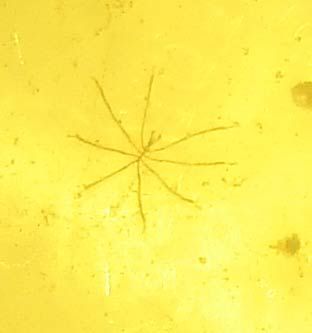
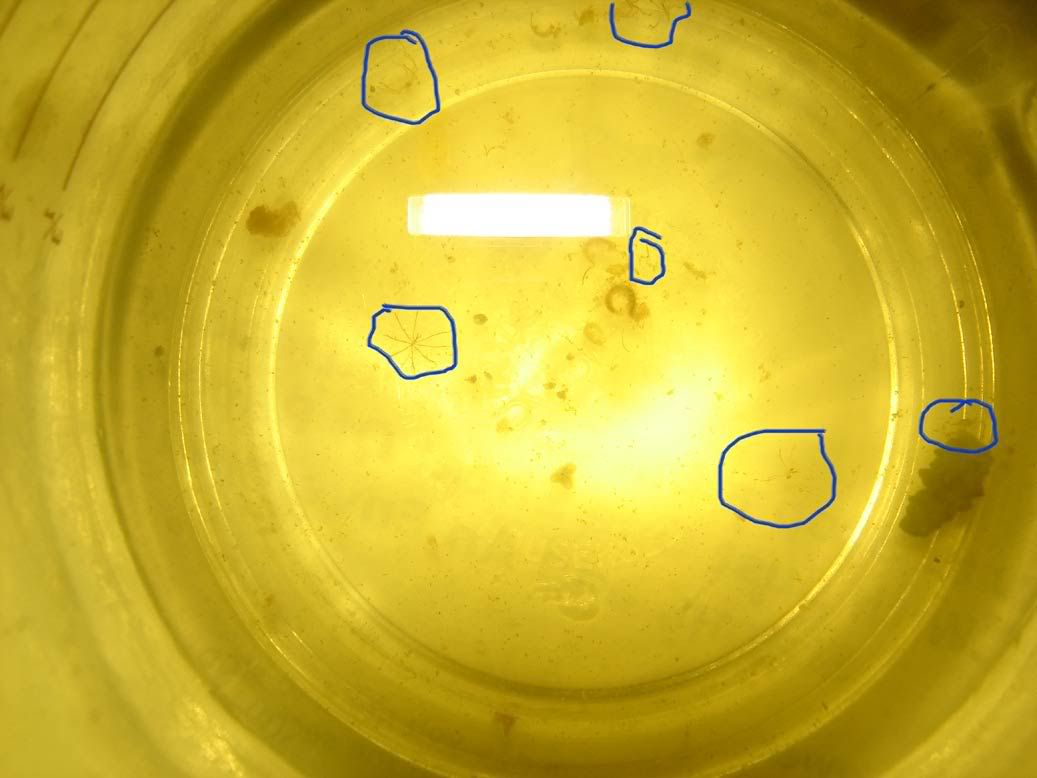
Here is a pic of the live ones that I saved in the bottom of a 5 gallon bucket. This picture was taken about 10 minutes ago. The water in the bucket is the treatment water. So they have been in 40ppm Levamisole for 8.5 hours and are still alive.
142_4224.JPG
 
<a href=showthread.php?s=&postid=7139456#post7139456 target=_blank>Originally posted</a> by clkwrk
Hey guys I just though I would let you know that I found 5 pycnogonids in a colony which also had AEFW's. YES I RETRACT MY LAST POST :( Anyways I seen AEFW damage on one lonesome acro in its own corner . I proceeded to pull the colony and dip in 800ml of water and 4 full squirts of TMPCC . 10 mins later I had already seen 5-10 AEFW's come off and squirming on the bottom of the cup. As a basted the coral the pycnogonids came off also they were now dead . I also noticed a few dead pods and a bristle worm dead.

Anyways I am now on the look out for the seaspiders.Mine were the really thin ones.

Just though I would share.

clkwrk, sorry to hear you still have these bastards. I know how you feel. What are pycnogonids? Another acro predator I'm guessing. Man, this stuff just never ends.
 
Thanks. The other guys are sea spiders , very small and thin. They are talked about in a RK mag article.
 
clkwrk, so it never does end. I'm off to read that article...

So I have to admit, I got lazy last night. With all that has been going on (finding FW's, tearing down display, setting up QT, treating, etc., etc.) I only got 8 hours of sleep in 3 days. So after the treatment last night I pretty much passed out and left the surviving FW's in the bucket. Went down to check on them 5 minutes ago and they are definitely toasted. Tried to irritate them by touching them with a toothpick and all of them immediately turned to slime.

What finally killed them could be:
MOST LIKELY:
The extended exposure to the medication (19 hours total).
NOT VERY LIKELY:
Stagnant water and lack of 02 as there was no circulation in the bucket.
LEAST LIKELY:
Reduced temperature due to no circulation or heater. The temp in the bucket is probably at around 73-74. I think this is the least likely considering how tuff these things are.

When I went to check on the corals this morning I was expecting them to still looked stressed out. I was even expecting some RTN, possibly on some of the pieces that didn't look like they were going to make it before I found out I had FW's. To my suprise, the corals looked really good. No bleaching, no loss of color, and good polyp extension in all of the corals that were exhibiting good polyp extension before the treatment. What definitely didn't expect to see was increased polyp extension from some of the corals that were looking very bad and exhibiting minimal to zero polyp extension before the treatment. Some of the corals are extending mesenterial filaments out the wazoo. It is hard to tell if this is due to stress or if it is a feeding response. I am adding ZEOvit AAHC (a high concentrate ammino acid supplement) and CV (a high quality coral food) so it could likely be a feeding response to these. I had just started adding these 2 supplements to my display a couple days before finding the FW's and I did notice an increase in mesenterial filament extension at night after adding them.
 
how much to AEFW's move around? i've been staring at 2 spots that i thought looked fishy ;) and they haven't moved since 2am....do they sit in one spot that long?

Lunchbucket
 
Travis,

Keep us posted. I want to figure out what is causing my rtn...

Lunchbucket,

I've never watched them for any period of time, but they can move pretty quick when they want to... Try hitting them with a baster and see if they fly off. Once in the water column, it's pretty easy to tell if they are what you think they are. My purple tang and PJ cardinals both gobbled them up when they were floating around after being bastered.
 
gflat, I don't think it was your blasting them with a MJ 1200. I had to blast mine pretty darn hard with a mag2 to get some of the FW's off. It also may not have been the large water change. When I put the corals back in the quarantine tank they went into water that was approximately 60% new saltwater (but it was aged for 2 weeks). So it may have been some other factor. I do know that during subsequent treatments I am going to do the water changes with water from my display, which should be less stressful on the corals. Then the display will get a water change at the same time too.:)
 
Checked on quarantine tank this morning (2 days after treatment). Corals are dropping like flies now. RTN has set in on several that I would have expected as well as several that were super healthy before the treatments.
:mad: :mad: :mad: :mad: :mad:
 
That's when it hit me, too. I did the first full treatment on Wednesday (did a botched 1 hour treatment because I misread the time frame on Monday) and noticed rtn on Friday. Try doing 25%water changes and see if that helps. It seems to have slowed my rtn down. I'm doing at least some level of water change each day now. My Berlin HOB turbo hasn't pulled enough skimmate to even fill the bottom of the cup more than 1/4" throughout the whole treatment process(except when I let it run during the last treatment-then it overflowed tea), but the stuff that is stuck to the sides of the wall of the collection cup is pretty nasty and dark looking (not as green as most skimmate) so I think it is still pulling meds out. Hopefully, the WC's will help. I'm doing some of new salt water , but most are from the display. Keep us posted. We're going to get this figured out...
 
<a href=showthread.php?s=&postid=7148633#post7148633 target=_blank>Originally posted</a> by Travis
Checked on quarantine tank this morning (2 days after treatment). Corals are dropping like flies now. RTN has set in on several that I would have expected as well as several that were super healthy before the treatments.
:mad: :mad: :mad: :mad: :mad:

Man that sucks :(
 
I think the medication played a significant role in the RTN. But can't blame it solely on that. I mean these corals have been through a lot in the last few days. They were removed from the display where they were accustomed to for a long time. They were then added to a quarantine tank with much less water flow and basically, insufficient skimming power. They also used to be in a big tank and well spaced out. Now they are in a small tank and crammed within 1/4" of each other. Add to that the stress of soaking in levamisole, being blasted by a powerhead, moved to another holding tank, then moved back to the quarantine tank again and you have a LOT OF STRESS. But I do think the levamisole played the largest role. All I can do now is sit back and wait and see what happens and evaluate what my next course of action will be after a few days. One thing about acros, is they never show immediate signs after a majorly stressful event. It is always a few days later when it is too late to do anything.
 
Decided to go ahead and do round 2 last night. I was going to wait until the Reef Dip came in but I decided that if I wanted to keep on track with the treatment protocol, I would not be able to wait. The Reef Dip won't be here until Monday at the earliest. These treatments take me about 8.5 hours to do so I don't have time to do them during the week. This means if I waited for the Reef Dip, I wouldn't be able to do round 2 until next weekend, which is 2 weeks after round 1. So I decided to give the levamisole another shot.

Note to self: don't start treatment at 10pm ever again.:lol: I got some weird hair up my bum and ended up pulling an all-nighter and got to bed at 7am.

I went down to check the tank at 4 hours into the treatment and couldn't believe what I saw. A bunch of large live AEFW's stuck on the bottom of the tank again.:mad: I was expecting to not see a single FW this time around. These were large and obviously survived through round 1. There were still more blowing off the corals when I blasted them too. This time I made sure to really blast them good getting every nook and crannie the best I could. After blasting each coral I examined every inch of it for any more AEFW's that I could see or any egg clutches. I found several egg clutches. Before, I thought they would only lay eggs on dead/receded areas of the coral. I proved myself wrong. They had layed eggs at the bases of several corals that had no recession. The eggs would be on the live rock base or epoxy base right next to the healthy tissue of the coral. I guess they want to plant their young in convenient areas so all they do is hatch and go right to town on the coral. I found probably the same number of adult live FW's as I did in round 1. On average, they were smaller this time and could easily have gone by unseen had I not stared at certain areas for a while. In some cases, I looked a spot over real good and didn't see anything only to look at the same spot again 1 minute later only to find a couple FW's there. Even when you know what you are looking for, these things can be hard to see.

The corals look much less stressed this time around. Hopefully, that means I will suffer less RTN in the next couple days (as I knock on wood).

I did save as many live ones as I could find by sucking them into a gallon pail with a 1/4" RO line. And this time I put fresh tank water in the pail so they wouldn't die on me right away.

This levamisole treatment just doesn't seem to be working out for me. I was surprised to see so many FW's alive at the end of round 1 and blown away to see almost the same # alive again after round 2. Unfortuanately, I will need to start over from scratch with my 4 treatments because I have not yet broken the FW life cycle, since I found a bunch of adults that had survived the first round. I plan to treat for 3 more weeks after the first treatment I do where I treat and see no live adults. That means I still have 4 or more treatments/weeks to go. I need to stay the course and not bail out prematurely or I will have waisted my time.

I did test 1 FW in a cup of water with 1 cap of Reef Dip. The FW was pretty much mush by the end of the 15 minutes. But I'm not sure if I feel safe putting a coral in that solution for that amount of time yet. The solution was pretty much black and you couldn't see anything in it. I've had acros bleach from much weaker Reef Dip solutions at only 10 minutes. The test FW may have already been weak as it had just gone through 5 hours of 40 ppm levamisole so that could have contributed to the Reef Dip working so well also. I plan to let a couple of them "recover" a bit and then try the Reef Dip again. I may take a "less desirable" frag and put a live adult FW on it and try the dip and see what happens with the FW and the coral.

 
Dang man...I am think the same as you...gonna try round two of levamisole...at same concentration as last time...under overestimated water by 5 gallons...did treatment for 40 and had 35 gallons...oh well...I might not be seeing them or I do not have them...blasting corals, and dipping...but not seeing any?

I will let you know how they go for me starting Monday again...1 week after...will see...

Good luck, God helping, me praying...no more RTN

Grant
 
Back
Top