
You are using an out of date browser. It may not display this or other websites correctly.
You should upgrade or use an alternative browser.
You should upgrade or use an alternative browser.
Diagnosis with picture please?
- Thread starter pipebash
- Start date
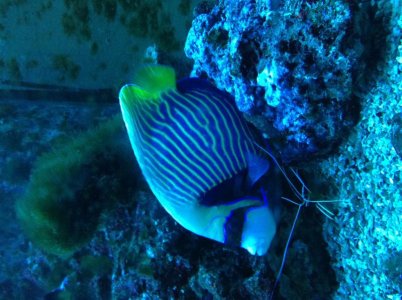

What do you think just based on a visual?
Picture is not sufficient resolution for me. Please describe behavior (which is always a primary indicator) and how long you have had him.
Ahh dang it. Hopin the pic was better. Alrighty, I've had him about 2 years.
Amm. .25? On api
Trate 60
Trite 0
Ph 8.2
Salinity 1.025
210 gallon
Working on getting nitrates down with water changes and macro. I think they shot up when I pulled a bunch of HA out of the tank that was consuming it. My husbandry has been lacking to say the least.
Recently added a foxface and flame angel without qt. Yaaaaa lame I know.
As far as behavior of the angel goes. The only thing I see different is he's trying to be cleaned by the cleaner shrimp quite often
His overall color and appetite are still good. He has grayish white spots on his body but they are flush with the skin not raised. His eyes may be a little clouded, I can't quite tell. I'm leaning towards ich but not sure because I thought ich was raised bumps. I will be doing a 30 gal water change tomorrow.
If indeed ich what size tank would you suggest for qt for a naso, sailfin, emperor, foxface, and flame? Maybe 2 50 gallons? The biggest is the naso at 7
inches.
Thank you kindly for any help.
Amm. .25? On api
Trate 60
Trite 0
Ph 8.2
Salinity 1.025
210 gallon
Working on getting nitrates down with water changes and macro. I think they shot up when I pulled a bunch of HA out of the tank that was consuming it. My husbandry has been lacking to say the least.
Recently added a foxface and flame angel without qt. Yaaaaa lame I know.
As far as behavior of the angel goes. The only thing I see different is he's trying to be cleaned by the cleaner shrimp quite often
His overall color and appetite are still good. He has grayish white spots on his body but they are flush with the skin not raised. His eyes may be a little clouded, I can't quite tell. I'm leaning towards ich but not sure because I thought ich was raised bumps. I will be doing a 30 gal water change tomorrow.
If indeed ich what size tank would you suggest for qt for a naso, sailfin, emperor, foxface, and flame? Maybe 2 50 gallons? The biggest is the naso at 7
inches.
Thank you kindly for any help.
Well, not quarantining (!) . . . cleaning behavior is not an indication necessarily of cryptocaryon irritans (cleaning shrimp don't eat ich). I would look for a sprinkling of salt as a visual symptom, hanging out near pumps or water returns, reclusiveness, shyness, sensitivity to light. With any of those, you have a problem that just needs to be diagnosed. Also look at any other fish for this behavior.
Ya I'm not seeing the sprinkling of salt. Do you think I should dose Prazi as a just in case for flukes? I haven't added fish in quite some time and completely spaced on the fw dip for the newcomers. Thanks for the help snorvich I'll continue to monitor. In case the salt sprinkles appear do you think 2 50 gal QTs would suffice?
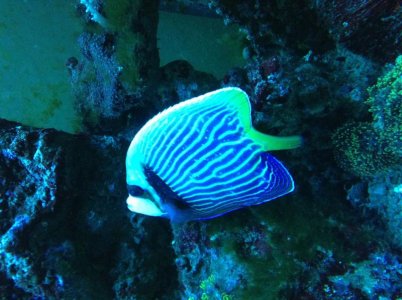
Hopefully this pic is a little better. He looks a bit worse this morning.
Still not sufficient. As you know, P. imperator can be blotchy at time depending on time of day and mood. I cannot tell if these are blotchy spots or discrete salt sprinkles.
Ok then I think I'm gonna do a half dose to the DT and see if there are any improvements. From what I've read of users experiences it's reef safe. I'll just keep an eye on my shrimp and rbta. Unless someone has negative info on doing that. In which case what size QT should I get?
Small update: Emperor angel was looking a bit worse this morning. Did a 30 gallon water change yesterday. Didn't dose anything.
This morning I gave him a 15 minute fw dip. About 6 flukes came off. Did another 25 gallon water change. He was looking really stressed after putting him back in the DT which is to be expected. Going to get a QT set up but in the meantime I'll continue doing water changes to try and get the nitrates down. Other fish have small signs of ich and I'm thinking its always been in the tank. My old hippo tang used to get small cases every great while. I've made some changes in the tank recently coupled with poor husbandry and new additions at the very least bringing in flukes if not different ich and now everything is breaking out.
Hopefully everyone can hang on til I get the qt up. Thanks for the help snorvich. When I get the qt up I'm going to run cupramine and prazipro and do daily water changes. This sound good?
This morning I gave him a 15 minute fw dip. About 6 flukes came off. Did another 25 gallon water change. He was looking really stressed after putting him back in the DT which is to be expected. Going to get a QT set up but in the meantime I'll continue doing water changes to try and get the nitrates down. Other fish have small signs of ich and I'm thinking its always been in the tank. My old hippo tang used to get small cases every great while. I've made some changes in the tank recently coupled with poor husbandry and new additions at the very least bringing in flukes if not different ich and now everything is breaking out.
Hopefully everyone can hang on til I get the qt up. Thanks for the help snorvich. When I get the qt up I'm going to run cupramine and prazipro and do daily water changes. This sound good?
Flukes – General Guidelines
Some facts:
Flukes are not true flukes. They are actually parasitic flatworms belonging to the class of Monogeans.
There are 13 families of flukes. However, only three families infect saltwater fish.
1. Ancyrocephaladae – common to freshwater, brackish and marine fish. They have 14 hooks which insert into the fish’s skin to maintain contact. They are oviviparous (egg layer). They are not host specific and they prefer the fish’s gills and esophagus.
2. Gyrodactylidae – common in freshwater but can be found on saltwater fish. They have 16 hooks and are viviparous (live bearing). This family of flukes is considered “Russian dolls” meaning that a live daughter is inside the mother and the live daughter can also be carrying a live daughter.
3. Capsalidae – common in saltwater fish. They have 2 hooks and are oviviparous. The most common genus of Capsalid found in saltwater aquaria is the Neobenedenia. It is host specific, attacking angelfish, butterflyfish, and elasmobranchs, to name a few targets and location specific (face, lips, and eyes). However, if a fish has an extensive infestation the fluke will find somewhere else on the body to host.
Luckily for aquarists, the life cycle of flukes has been researched due their ill effects on aquaculture farming and the fishing industry. Extensive studies have been done on Neobenedenia, the most common in saltwater aquaria.
Life Cycle
At 78-79° F eggs hatch within 4-6 days. Once the egg hatches the oncomiridium (ciliated larva) finds a host and crawls on the body to their preferred site. Once they dig their hooks into the fish’s flesh they feed on it for 17-19 days. At that point it has matured to an adult and it begins to lay eggs. The cycle starts over. At lower water temperatures, 34-36°F the timeline can extend to 5-6 months.
Symptoms
Fish can become lethargic, swim near the water surface, develop clamped fins, hide in the corner of the aquarium or behind rocks, lose appetite, shake the head, flash, or scratch. They may exhibit yawning, cloudy eyes and loss of color at the insertion site. For example, Neobenedenia prefers the face, lips and eyes; therefore you may notice the skin color faded in those areas. If flukes are present in the gills they may be swollen and pale, increase respiration, and begin piping (gulping air at the water surface). Fish generally become less tolerant of low oxygen conditions. Secondary infections are also very common. Some fish may not show any symptoms at all which is why quarantining is so important.
Treatments
Because flukes are naturally clear a visual confirmation is nearly impossible. Confirmation of flukes can be obtained via a freshwater dip. After 3-5 minutes the fluke will become opaque and dislodge from the fish. Although helpful, it is not a necessity, to identify the fluke’s family to aid in treatment. A microscope can confirm a species, however, Neobenedenia, can be seen with the naked eye.
1. Praziquantel or Prazipro – There have been several studies demonstrating various applications of Prazi. For practicality only a couple is listed. Prazi does not kill flukes. It induces uncontrollable spasms to where the fluke dislodges from the fish and continues to spasm. Studies have shown that after 10 hours the fluke dies. Prazi is very gentle on fish to the point it can be overdosed with no ill effects. The exception is wrasses. They are able to handle the 2.5 mg dosage but anything over that can be detrimental. It has also been reported that Prazi is safe to use in a reef aquarium with minimal casualties such as feathers and other worms. A word of caution: Prazi can act as an appetite suppressant. It also depletes the oxygen in the tank so be sure to fully aerate during treatment.
a. The most common method of dosing Prazi is dosing 2.5 mg for 5-7 days, then performing a water change, and finally redosing the full amount for another 5-7 days. A third and fourth dose may be necessary. Prazipro is reportedly (via personal communication with Hikari) “out of the water” 72 hours after the initial dose. However, once treatment is concluded it is recommended to do a large water change and add carbon to remove all traces of Prazi.
b. Another method is to do (2) 40 hour baths 48 hours apart in 5 mg/L Prazi.
NOTE: In 2013 research done, as reported in Aquaculture Volumes 404-405 Prazipro was shown to be 82% effective against Neobenedenia girallae.
2. Hyposalinity – Scientific research also showed hyposalinity at 15 ppt for 2 days eliminated juvenile and adult flukes. When maintained for 5 days, egg hatching was prevented.
3. Formalin dips – Water temp <70° 250 ppm for 30 minutes, water temp >70° or formalin sensitive fish 150 ppm for no more than 45 minutes. These dips can be repeated every 5-7 days. As always with formalin aerate for at least one hour prior to dip.
4. Freshwater dips – can be effective against skin flukes, however, it is ineffective against flukes in the gills.
Monitoring the fish for 30 days after treatment has concluded is important. Fish may continue to scratch after treatment due to their skin healing from the fluke’s hooks that were inserted into their skin. Confirmation of eradication can be confirmed by performing freshwater dips, skins scrapes and fin clipping. Obviously these should only be done by those with experience.
The lifecycle without a host can be completed within a few days. An adult can live up to 6 days without a host. After an egg hatches the oncomiridium must find a host within 36 hours or it will die. A fluke cannot attack an invertebrate or coral. There are no reports of flukes or eggs lying dormant as in Cryptocaryon. Equipment can be cleaned with hot water and bleach and thoroughly dried. As with all parasites and diseases avoid cross contamination with hands, equipment, water and food.
(prepared by Newsmyrna80)
Some facts:
Flukes are not true flukes. They are actually parasitic flatworms belonging to the class of Monogeans.
There are 13 families of flukes. However, only three families infect saltwater fish.
1. Ancyrocephaladae – common to freshwater, brackish and marine fish. They have 14 hooks which insert into the fish’s skin to maintain contact. They are oviviparous (egg layer). They are not host specific and they prefer the fish’s gills and esophagus.
2. Gyrodactylidae – common in freshwater but can be found on saltwater fish. They have 16 hooks and are viviparous (live bearing). This family of flukes is considered “Russian dolls” meaning that a live daughter is inside the mother and the live daughter can also be carrying a live daughter.
3. Capsalidae – common in saltwater fish. They have 2 hooks and are oviviparous. The most common genus of Capsalid found in saltwater aquaria is the Neobenedenia. It is host specific, attacking angelfish, butterflyfish, and elasmobranchs, to name a few targets and location specific (face, lips, and eyes). However, if a fish has an extensive infestation the fluke will find somewhere else on the body to host.
Luckily for aquarists, the life cycle of flukes has been researched due their ill effects on aquaculture farming and the fishing industry. Extensive studies have been done on Neobenedenia, the most common in saltwater aquaria.
Life Cycle
At 78-79° F eggs hatch within 4-6 days. Once the egg hatches the oncomiridium (ciliated larva) finds a host and crawls on the body to their preferred site. Once they dig their hooks into the fish’s flesh they feed on it for 17-19 days. At that point it has matured to an adult and it begins to lay eggs. The cycle starts over. At lower water temperatures, 34-36°F the timeline can extend to 5-6 months.
Symptoms
Fish can become lethargic, swim near the water surface, develop clamped fins, hide in the corner of the aquarium or behind rocks, lose appetite, shake the head, flash, or scratch. They may exhibit yawning, cloudy eyes and loss of color at the insertion site. For example, Neobenedenia prefers the face, lips and eyes; therefore you may notice the skin color faded in those areas. If flukes are present in the gills they may be swollen and pale, increase respiration, and begin piping (gulping air at the water surface). Fish generally become less tolerant of low oxygen conditions. Secondary infections are also very common. Some fish may not show any symptoms at all which is why quarantining is so important.
Treatments
Because flukes are naturally clear a visual confirmation is nearly impossible. Confirmation of flukes can be obtained via a freshwater dip. After 3-5 minutes the fluke will become opaque and dislodge from the fish. Although helpful, it is not a necessity, to identify the fluke’s family to aid in treatment. A microscope can confirm a species, however, Neobenedenia, can be seen with the naked eye.
1. Praziquantel or Prazipro – There have been several studies demonstrating various applications of Prazi. For practicality only a couple is listed. Prazi does not kill flukes. It induces uncontrollable spasms to where the fluke dislodges from the fish and continues to spasm. Studies have shown that after 10 hours the fluke dies. Prazi is very gentle on fish to the point it can be overdosed with no ill effects. The exception is wrasses. They are able to handle the 2.5 mg dosage but anything over that can be detrimental. It has also been reported that Prazi is safe to use in a reef aquarium with minimal casualties such as feathers and other worms. A word of caution: Prazi can act as an appetite suppressant. It also depletes the oxygen in the tank so be sure to fully aerate during treatment.
a. The most common method of dosing Prazi is dosing 2.5 mg for 5-7 days, then performing a water change, and finally redosing the full amount for another 5-7 days. A third and fourth dose may be necessary. Prazipro is reportedly (via personal communication with Hikari) “out of the water” 72 hours after the initial dose. However, once treatment is concluded it is recommended to do a large water change and add carbon to remove all traces of Prazi.
b. Another method is to do (2) 40 hour baths 48 hours apart in 5 mg/L Prazi.
NOTE: In 2013 research done, as reported in Aquaculture Volumes 404-405 Prazipro was shown to be 82% effective against Neobenedenia girallae.
2. Hyposalinity – Scientific research also showed hyposalinity at 15 ppt for 2 days eliminated juvenile and adult flukes. When maintained for 5 days, egg hatching was prevented.
3. Formalin dips – Water temp <70° 250 ppm for 30 minutes, water temp >70° or formalin sensitive fish 150 ppm for no more than 45 minutes. These dips can be repeated every 5-7 days. As always with formalin aerate for at least one hour prior to dip.
4. Freshwater dips – can be effective against skin flukes, however, it is ineffective against flukes in the gills.
Monitoring the fish for 30 days after treatment has concluded is important. Fish may continue to scratch after treatment due to their skin healing from the fluke’s hooks that were inserted into their skin. Confirmation of eradication can be confirmed by performing freshwater dips, skins scrapes and fin clipping. Obviously these should only be done by those with experience.
The lifecycle without a host can be completed within a few days. An adult can live up to 6 days without a host. After an egg hatches the oncomiridium must find a host within 36 hours or it will die. A fluke cannot attack an invertebrate or coral. There are no reports of flukes or eggs lying dormant as in Cryptocaryon. Equipment can be cleaned with hot water and bleach and thoroughly dried. As with all parasites and diseases avoid cross contamination with hands, equipment, water and food.
(prepared by Newsmyrna80)
Similar threads

- Replies
- 0
- Views
- 118
- Replies
- 0
- Views
- 105
- Replies
- 0
- Views
- 129
- Replies
- 0
- Views
- 110
