NT Nano
New member
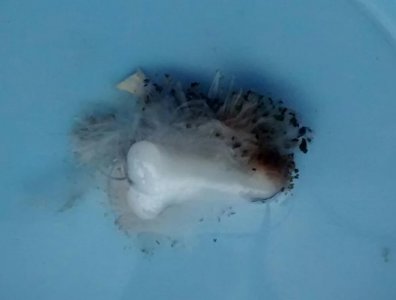
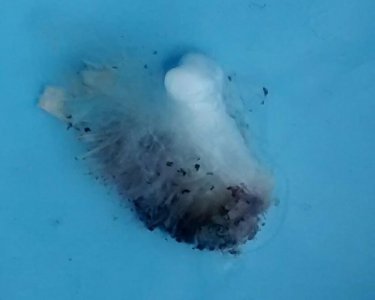
Although I am no expert, I have had a few clams over the years, and have a pretty good feel for what "normal" is. Years ago as a new clam keeper I panicked the first time a clam ditched its foot and I subsequently found it nearby in the tank. I have read many posts over the years of new clam owners in a similar panic, and many misguided predictions of doom from other clam keepers. I finally got some decent photos to document a "normal" separation. (Remember, once the byssal threads "glue" to a rock, it is somewhat permanent. If a clam wants to move, it often has to go through this process. You may or may not ever see the byssal "foot" if you have a good cleanup crew.)
If trying to determine whether your clam is in trouble, there are some important factors.
1. The clam has to do this voluntarily. If you pulled on the clam and tore the foot, that is very different.
2. Clams decide to move for many reasons. The one in this photo is a gold maxima that I inadvertently placed in too bright light. It cut attachment to move to a nicer location. If your clam is moving due to stress over water conditions, parasites, predation, etc, it might still be in trouble.
3. Clam should be otherwise healthy...no gaping, bleaching, pinched mantle, etc.
Please note on the photo, the smooth rounded end is what was attached to the clam. The ragged threads are what attaches to the rock. If the end is not smooth, it was torn, which isn't good.
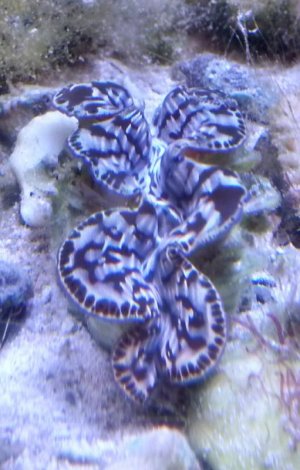
This clam had formed new byssal attachments in a new lower place within 24 hours, and is now happy and growing.
If trying to determine whether your clam is in trouble, there are some important factors.
1. The clam has to do this voluntarily. If you pulled on the clam and tore the foot, that is very different.
2. Clams decide to move for many reasons. The one in this photo is a gold maxima that I inadvertently placed in too bright light. It cut attachment to move to a nicer location. If your clam is moving due to stress over water conditions, parasites, predation, etc, it might still be in trouble.
3. Clam should be otherwise healthy...no gaping, bleaching, pinched mantle, etc.
Please note on the photo, the smooth rounded end is what was attached to the clam. The ragged threads are what attaches to the rock. If the end is not smooth, it was torn, which isn't good.
This clam had formed new byssal attachments in a new lower place within 24 hours, and is now happy and growing.