Rock- dead/live.

Breeing

New member
I seem to have conflicting responses and very conflicting research on this, please let me know what you think!
Starting with live sand what would you recommend in this newly setup 20 gallon as far as rock?

10 pounds CaribSea South Seas Base Rock (new)
10 pounds live rock

OR:

20 pounds live rock

OR:

20 pounds CaribSea South Seas Base Rock (new)


Now the thing with the live rock- Every piece which is available has diatom algae on it as it has not been in RO water, it does look like healthy rock, but... diatom algae...

Will my adding these diatom algae covered live rock cause major issues to my new tank? Only doing dead rock- will this cause MAJOR ammonia spikes causing cycling issues? Or doing 50/50, happy medium?

I am using RO DI water of course.

Thanks!
 
First off I would use dry sand, not "live" sand since dry sand is less expensive (you don't have to pay for the water that "live" sand comes packaged with) and is easier to wash. If you use live sand you need to rinse it in saltwater to remove the fines (dust) where you can simply dump dry sand into a 5 gallon bucket and rinse it with a garden hose.
As far as rock goes there are pros and cons to using live rock where you often get good hitchhikers but also risk getting pests where with dry rock you get neither. The last few tanks I've set up I have used 100% dry rock.
 
Depends on your budget and how patient you are. Buying cycled live rock is expensive but advances the game. Buying dead rock will take eons to come alive.

I have a 28g and have about 50lb of live rock. I had to add a power head to move water in and around all these rocks. I did 40lbs of live sand. My goal was to have as little maintenance as possible. I don't do water changes, have only 3 small fish, and have a ton of corals, snails, and crabs.
 
If you purchase "Live Sand", do not rinse it.

Open the bag and pour it right in. If there is anything left alive or dormant in there, rinsing will kill it all. Why pay so much money for "Live Sand" just to kill everything beneficial that comes within it?

I seem to be pretty alone in this, but I'm a big advocate of "Live Sand". I believe it does exactly what it says it does, and I use it in all of my new tanks.

As far as rock goes, the more the better in my opinion. If you can afford it, I'd personally go with 20-30 pounds of Live Rock. 20 gallons is a fairly small amount of water, and the more rock/sand for filtering that water, the better.

GL! :bigeyes:
 
You want to get some quality wild or maricultured live rock. These are the best source for cryptic sponges and other bugs and stuff that are essential for a healthy ecosystem. You'll need to quarantine it for a month just like anything else you put in your DT. You do not need 20 lbs just 5 or 10 and some dry rock will work. As far as the pests that come in on live rock, I've run into all of them over the years, most have come from stuff from other peoples tanks and by far the animal that has caused more loss of life are BTAs
 
I've already bought the live sand and will stick to it, price was actually only $2 difference between live and dry sand. And it seems people are 50/50 on live/dry sand so figured the benefits of going live if they are true are worth it.

Is there harm in adding the live rock with diatoms into my new setup? I will be running filters with elite plus carbon, and lots of poly pads. High circulation and RO DI water.

Although i've already bought the caribsea base rock i can trade it for the live rock and do the 20lbs + of live instead.

This is my very first salt setup and i want it done right, but live in an area where things are VERY limited. So whats avail is all there is for live rock right now.
 
And thanks everyone! I will see what the 20lbs looks like in the tank, and know that i will be adding more! So it sounds like 20lbs of the live sand is the right amount, and maybe more like 30lbs of (ideally) live rock?...Or could i get away with 20lbs live and 10lbs dry?

Haha trying so hard to work with what i have but also want to do this right!
 
You might give the rocks a light bristle scrubbing (old tooth brush) in a bucket/tub of saltwater before adding. The diatoms will die off eventually, but they will usually come back again anyway during the cycle process.

You can stick with the base rock...I think it just comes down to personal preference and other factors like Shawn stated above. I was just trying to stress the poundage earlier. Whether it's all Live Rock, 1/2 and 1/2, all dead, or whatever - just try to make sure that you have plenty. If you are running a sump, some of this rock can be placed down there if you would like to have less in the DT.

As long as you have the recommended lbs. of rock/filtration, the rest comes down to looks and money. :bigeyes:
 
If your set on live rock, check out tbsaltwater. They have some killer rock. Lots of critters. It's shipped in water so no die off. Flys out in the morning and you pick it up that night from your nearest major airport.
 
Now the thing with the live rock- Every piece which is available has diatom algae on it as it has not been in RO water, it does look like healthy rock, but... diatom algae...

You're going to have diatoms in a new tank no matter what. Maybe you mean dinos? Anyway, I'd be way more worried about the rock having absorbed things like copper from tap water. I wouldn't use that rock.
 
You're going to have diatoms in a new tank no matter what. Maybe you mean dinos? Anyway, I'd be way more worried about the rock having absorbed things like copper from tap water. I wouldn't use that rock.

I agree with this. Having it sit in none RO could cause some issues as far as what was in it. And has this live rock been in another tank?

If I were you I would put the dry rock in a Brute with a heater and powerhead to cure after rinsing it. If you then move it DIRECTLY to the tank with the live sand you should have a very short cycle.

This is exactly what I did with my 80 pounds of Pukani in my 150 gallon. I did add a bottle of BioSpira to help populate bacteria on the sand dust that was suspended. My tank was cycled so fast it wasn't even funny. It took about 3 weeks for them to get through the curing cycle but I literally did nothing to them during that time. Yeah, the rocks were pretty sterile looking for a bit but it only takes one snail or frag with a little purple to change that.
 
I live in northern Canada so shipping is very difficult, i was able to find one supplier who would ship but only 50lb boxes of live rock and the cost was far to high for my budget.

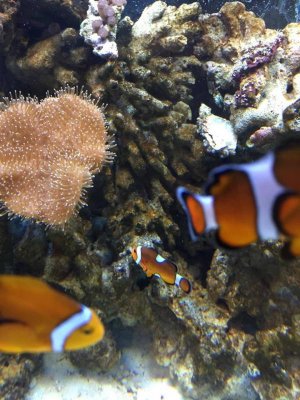
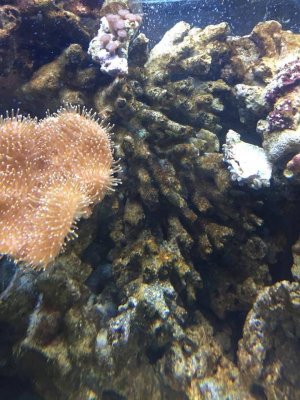
This rock has been in a tank, pictures attached of some of the pieces.
I may just do the 10lbs of dead and 15-20lbs of this live rock, but will brush it off with saltwater and a toothbrush first.... I won't be setting this tank up for another week so will keep looking for other options for the live rock scene, but may just have to work with this in the end. :(
 

Attachments

  • 12713964_959297924148832_1546617086_n.jpg
    12713964_959297924148832_1546617086_n.jpg
    87.3 KB · Views: 3
  • 12476113_959297890815502_1340868072_n.jpg
    12476113_959297890815502_1340868072_n.jpg
    89.2 KB · Views: 3
I didn't see in your first post that the Live Rock had not been in RO water. What has it been in? Is it the rock in your photos?

If you feel any apprehension about the Live Rock, I wouldn't use it. Where is that rock coming from? An LFS? A fellow Reefer? Bug them with questions about it: Has it been subjected to tap water? Has it been exposed to medications? etc., etc. If it doesn't feel right, then I would definitely not use it.

Do you have a Local Fish Store?
 
LFS has only a single 30 gallon salt tank which is where this rock would be coming from, no other reefers within 3-4 days drive of my area- I'm remote...Haha

They use tap water with aqua plus, fluval sea salt, carbon and poly in the 110 aqua clear filter, 2 powerheads, sand, basic cleanup crew and 4 long term clownfish. Medication has never been needed apparently, rock is 4 years old and been in use the whole time- same tank.

And yes, its the rock in the photos...
 
Well then it seems like it would be fine. RO/DI is the way to go, but there are many hobbyists out there who use treated tap water in their applications without any issues.

If you end up using it, just examine it for hitchhikers that you may not want to introduce into your tank. If it's the rock in the photos, I wouldn't even bother brushing it off. :bigeyes:
 
Well that makes me feel MUCH better! And i am using 100% RO DI water in my own setup so hopefully that will help things out a lot! I'm excited again to get this tank up and running!

Now i need to figure out the cycling, theres a fun sounding subject! I'm used to fresh water, not saltwater, so this will be interesting.
 
I would cook that rock before adding to setup. I have been doing this myself.

What you do is get Rubbermaid containers, heater, and power head for each container. Put a sheet or lid to make it completely dark for 24hrs/7 days a week. Change water every week at night. Check for evaporation at night. Once the rock has no smell to it your good to go. This basically recharges the rock. Make the salinity at 1.025. You will be stunned how dirty the water is every time. This is the best way in my opinion especially if rock wasn't in RO water.

The only drawback is can take 1 to 2 months. My rock has been in containers 1 month today and still need at least another 2 weeks or more. I would say most likely 2 months. However, if you just add that rock to setup you will have major problems in my opinion.

When you make the RO/DI water TDS must be 0. Every time you change the water give it a good shake, use a brush, and have saltwater mix ready. The less time rock is supposed to air the better. You want a 100% water change every time that's why it's better to use containers less salt and water.

Good luck
 
Back
Top