1st quarantine, need advice (pics included)

Ron448

New member
Hello fellow Reefers,
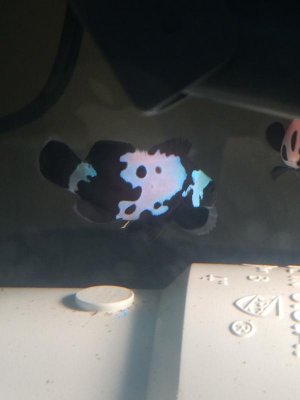
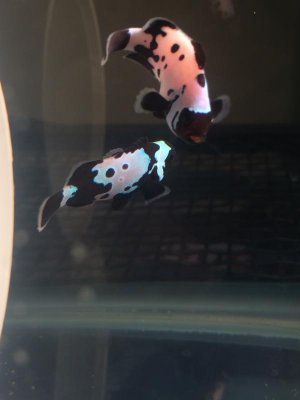
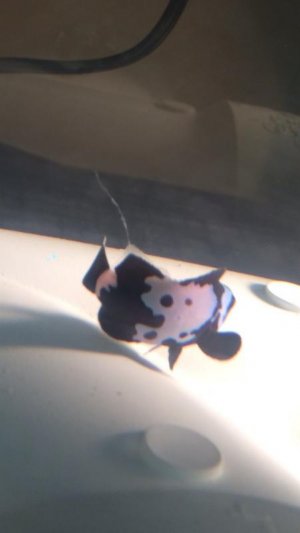
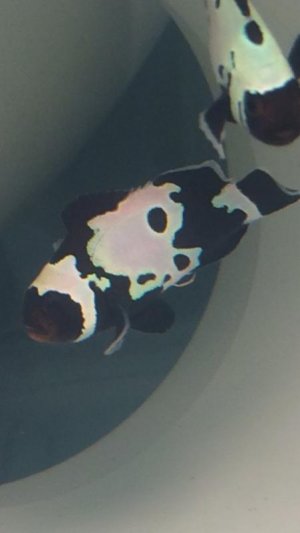
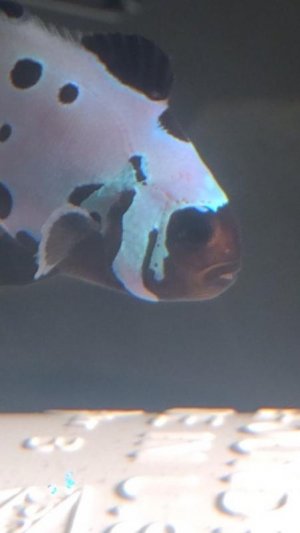
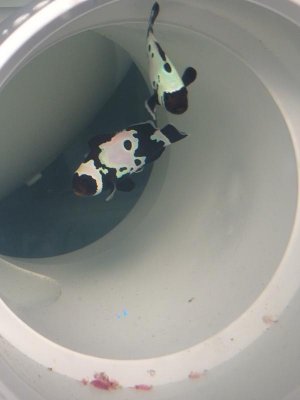
I started my first quarantine yesterday for two black snowflake clownfish. One of them has white stringy feces which is usually an indication of a parasite. It also has a spot on it that seems like it could be a parasite but i also think it might be part of his natural markings. The spot seems to be a little recessed which is the part that concerns me. They also are not eating very much. I fed them some brine shrimp yesterday and they were not showing much interest. i tried feeding them a small amount 3 separate occasions yesterday, they did eat a couple pieces of brine shrimp and then this morning i tried feeding them again and they showed no interest. I added half the recommended dose of prazipro to the tank yesterday as well as a couple drops to the food. I will also be treating with Tetra Paraguard once i am finished treating with Prazipro. They are swimming normally as well as breathing normally but just not eating much at all. I got some pictures of the feces as well as the spot that was questionable but i have never posted a picture to this site so I'm going to try my best to get them up. Any help is greatly appreciated.
After choosing files to upload, the pictures appear to just the small jpeg thumbnails. if anyone can let me know how to post them so the images will automatically show full size upon just entering the tread that would help a lot, but until then the Jpeg links will have to do.

Its a little hard to see in the picture but the second two pictures you can see the spot I'm asking about. its dead center of the second picture and about half way between two black spots but a little lower on his body. its a pale white spot i think it could just be part of his markings but I'm not sure. i also apologize if my wording has been a little confusing, but i am wondering if prazipro and Paraguard are good enough to rid them of any diseases and if not what other medications i should get.
 

Attachments
  • IMG_2221.jpg
    IMG_2221.jpg
    25.5 KB · Views: 7
  • IMG_2222.jpg
    IMG_2222.jpg
    25.3 KB · Views: 4
  • IMG_2223.jpg
    IMG_2223.jpg
    25.4 KB · Views: 6
Last edited:
I would get them eating well before medicating further. I never start meds until the fish has been eating well for a few days. In addition, Prazipro can suppress appetite, which might be why they are not eating much. The spot could be just its natural marking. I would keep an eye on it to see if it changes over time.
 
Thanks for the input Deinonych. I will be sure to give them a break between the next treatment. Another question i just thought about will Prazipro and Paraguard treat most diseases or should I look into a few others?
 
Prazi and Paraguard aren't intended for diseases, they are only used for parasitic infections which the stringy poo is a good indicator of. What QT method are you currently using? I would certainly recommend TTM for these 2 fish first, then get them into 30 days observation while treating 2x doses of prazi and determine what other meds you should need at that point. There are some great threads in here recommending meds to keep on hand and what they are used for. good luck with these guys!
 
Thanks biomek. I was using disease as a kind of general term of any problem they might have. I currently have them in a bare bottom 10 gallon with some PVC pipe to hide. I have a small bio wheel filter with only a sponge from my DT, a powerhead, a heater and a flood light are all the equipment I have running in it. I did find a list of many medications and what they cure. It's just difficult to make an accurate diagnose. I do also plan on keeping the two for a long term and plan to attempt to breed them as well. I just want them to be in good condition for a long term life. Would the best bet to be to treat only for the parasites I suspect them to have or should I treat for as much as I can just to be safe? Or should I only treat in the future as problems occur? I am also not familiar with the TTM abbreviation.
 
TTM is Tank Transfer Method. Here on the forums and validated by Snorvich, TTM is considered one of the easiest and most efficient methods to QT fish for ich to avoid any issues of it popping up down the line. No chemical interaction is used so most folks put all new fish through TTM as part of their standard QT protocol as a safety precaution first and then do a 30 day QT/Observation period in which they treat prazi for internal parasites as well just in case. From there, many people treat as needed should any signs of disease show itself.
 
So is the TTM method just the standard seperate quarantine tank with no medications for a while until there is a confirmed problem with the fish?
 
I gave that thread a look and There's still a few things unclear to me. I don't understand how it actually works. Why does just switching tanks make the parasites fall off? Am I supposed to use newly mixed salt water or water from my tank? And does this work for all parasites? And how can I be sure that the parasites did actually fall off? I'm also starting to believe they might have hole in head disease as well which I'm pretty sure is also hexamita. One has a couple small red dots on its head and they both have white stringy feces which also come with hexamita. I'm trying to get a picture of it but it's difficult because the spots are currently so small.
 
Last edited:
I gave that thread a look and There's still a few things unclear to me. I don't understand how it actually works. Why does just switching tanks make the parasites fall off? Am I supposed to use newly mixed salt water or water from my tank? And does this work for all parasites? And how can I be sure that the parasites did actually fall off? I'm also starting to believe they might have hole in head disease as well which I'm pretty sure is also hexamita. One has a couple small red dots on its head and they both have white stringy feces which also come with hexamita. I'm trying to get a picture of it but it's difficult because the spots are currently so small.

Switching tanks doesn't make the parasites fall off, they do that on their own over a period of 7 days. TTM takes advantage of the cyst stage (Tomite and to some extent Tomont). The cysts harden to a surface somewhere in the tank (glass, heater, airstones, PVC, etc), but generally (99.999% rule) not on the fish itself. So... TTM waits for them to harden, but prior to them hatching (minimum 80 or so hours from the start of Tomont), so when you move the fish to the clean tank and dry out the prior tank, the cysts die never having released Theronts (new Ich parasites).

Life cycle in a nutshell:
Trophont / when attached to the fish / 3 to 7 days attached to the fish
Protomont / crawls on substrate / 2 to 18 hours
Tomont / begins to encyst on a hard surface / hardens in 8-12 hours
Tomites / while a cyst, it splits into daughter parasites / 3 to 72 days inside cyst, however most take 4 to 8 days
Theronts / new parasites hatched from the cyst / 24 hours to find a fish host or die

My personal preference is using water from my DT, however you need to be absolute sure that there is no Ich in your DT already... meaning you always QT'ed everything, or you have since ran your DT fallow for 72 days. Using new mixed saltwater after mixing for 24 hours or so is perfectly fine as well.

You can be sure that the parasites fell off by two things: (1) trusting the research done my scientists showing the life cycle described above in addition to the experience by many hobbyists and (2) by observing the fish for 4 weeks after TTM ends to see if the fish shows any signs of Ich being present. In my multiple years of doing TTM I have only had TTM fail once and am sure that it was user error in some way. Likely not drying the equipment long enough as I was doing 2-day transfers rather than 3-day.
 
Thanks for your input spar. Really helpful. Is the TTM method only good for ich though? My clowns at not showing signs of ich. Another update on the clowns I did a water change to dilute the prazipro because they haven't been eating much and also because ammonia was up a bit. I just tried feeding them and they showed a lot of interest in the food but would not actually eat it. I added some brine shrimp to the tank and get darted over to the food but didn't actually eat any once they got to it. Also if it's day 4 is it too late to try the TTM method?
 
TTM only treats for Cryptocaryon (ich), so fish should be observed for at least 2 weeks beyond TTM to ensure no other ectoparasites (e.g. Amyloodinium, Brooklynella) are present. You can start TTM at any point, so you are not too late to start. Again, I would ensure they are eating well before beginning any treatment regimen, including TTM.
 
Yeah I've been doing water changes to dilute the prazipro I added the other day in hopes that they will start eating more. Since I've been doing the water changes they have been showing much more interest in the food but they still have not been eating much. When I fed them today they both darted over to the food but they still only ate like a single piece of brine shrimp each. I've heard garlic will help entice them to eat but is it better to use fresh garlic or something from a pet store out of a bottle?
 
I would recommend trying some different foods to see if you can get them to eat more voraciously. It's very possible they prefer foods other than brine shrimp. You might check with your LFS (or wherever you purchased the fish) to confirm the foods they were fed. Alternatively, I would try mysis shrimp (Hikari brand is the right size for clowns), Rod's Food, and/or NLS pellets.

I am not a big fan of using garlic as it is not a natural food for marine animals. There have been studies that show long-term detrimental effects of feeding garlic to marine fish.
 
Yeah I have been meaning I get some rods food but my local stores have been closed for the holidays. I have some really old rods food that might have melted a little bit and red rose so idk if that or the age of it could be bad. I purchased them from live aquaria so I might be able to find out what they were being fed previously to me purchasing them. Their feces has also changed from the white strands to clear longer and stringier strands. I'm gonna try to post a pic from my phone but idk if it will work.
 
The last pic was the feces after a short treatment of prazipro and this is before.
 

Attachments

  • image.jpg
    image.jpg
    21.3 KB · Views: 5
And here is the best pic I could get about the possible lesions on his head. They are small red spots if you look closely.
 

Attachments

  • image.jpg
    image.jpg
    22.2 KB · Views: 6
looks like HLLE to me? never seen that on clowns before though. i will let others with more experience jump in though.

if HLLE, soak food in selcon or whatever vitamins supplement you can find (selcon is better). and keep water conditions in good condition. both good to do whether it has HLLE or not.
 
What is HLLE? I'm not familiar with many of these abreviations. I wasn't every active on this site in the past so I don't know many of them. And is there a sticky somewhere that has most of the abbreviations?
 
Back
Top