22 clowns; 2 separate species, 12 months

hypnoj

Member
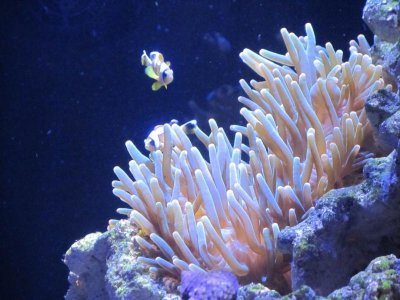
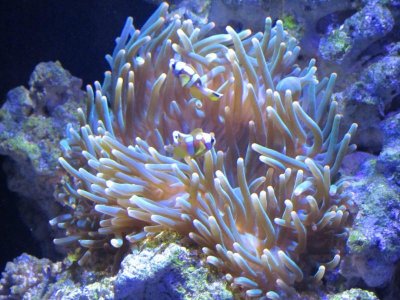
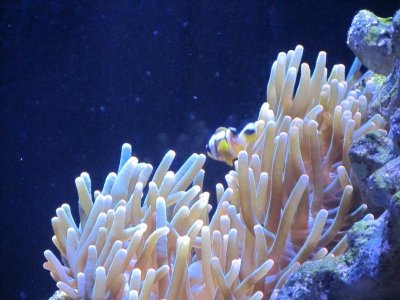
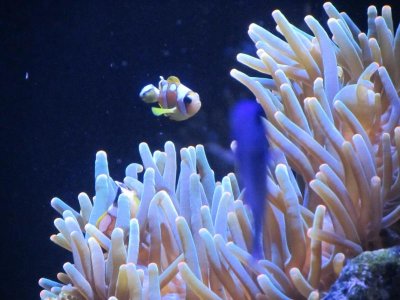
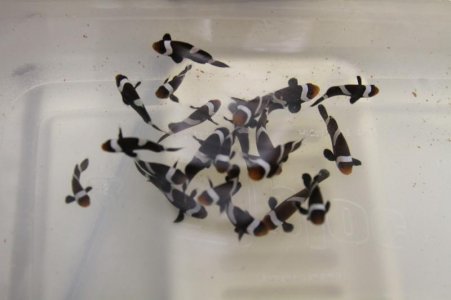
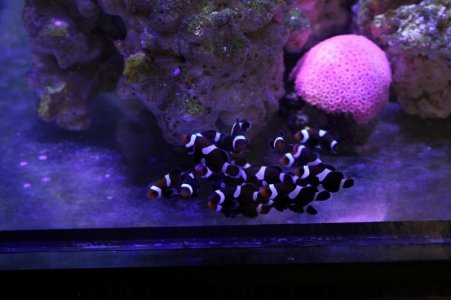
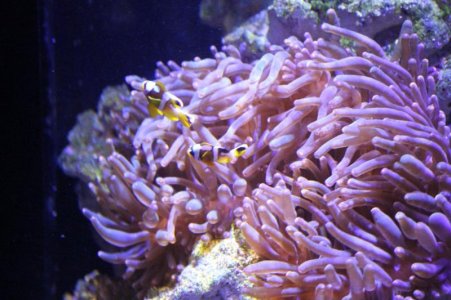
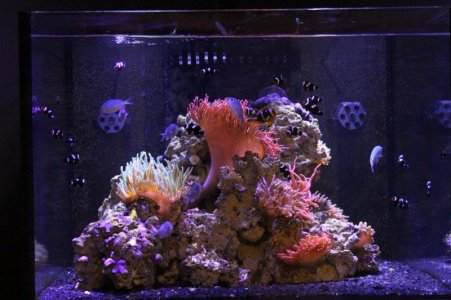
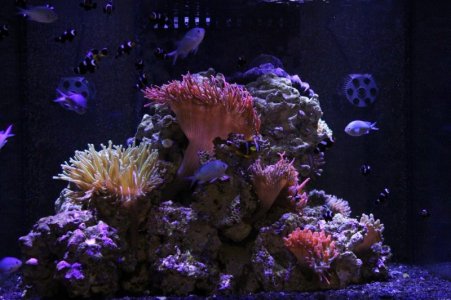
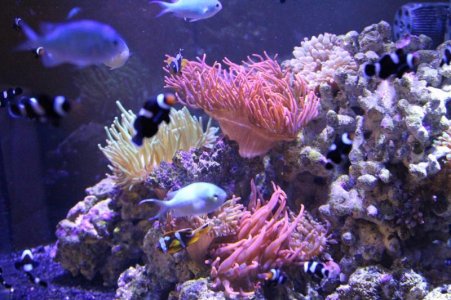
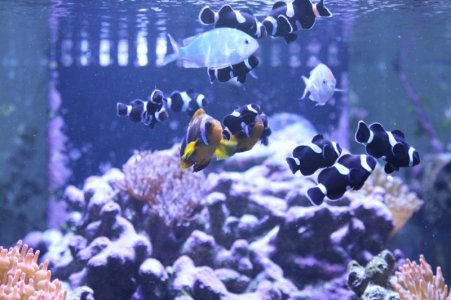
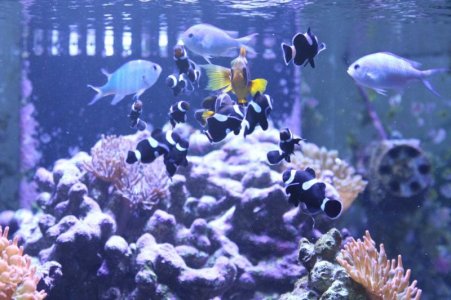
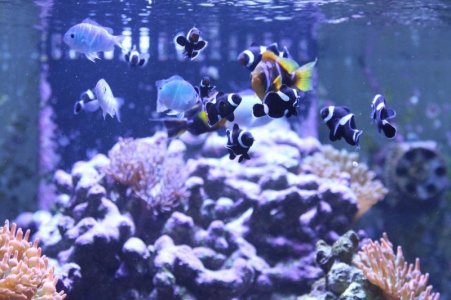
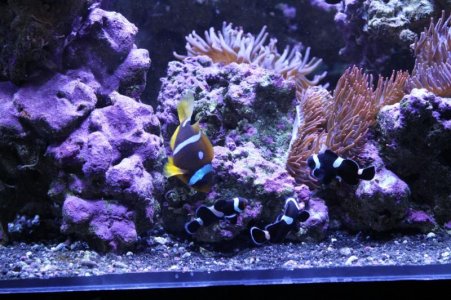
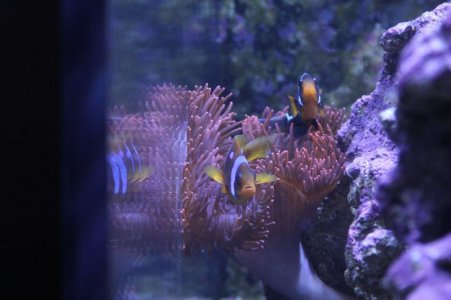
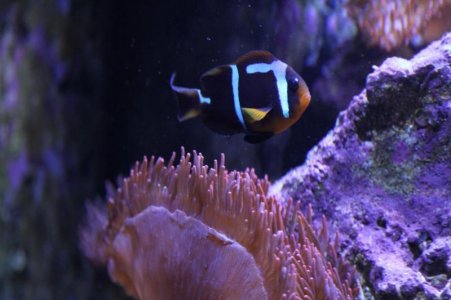
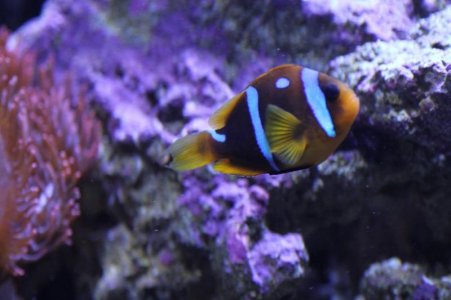
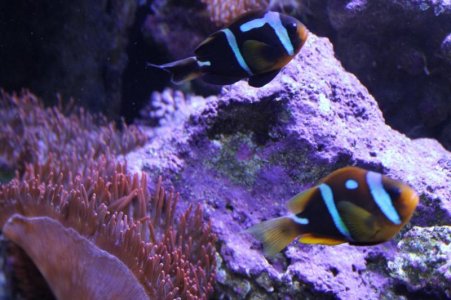
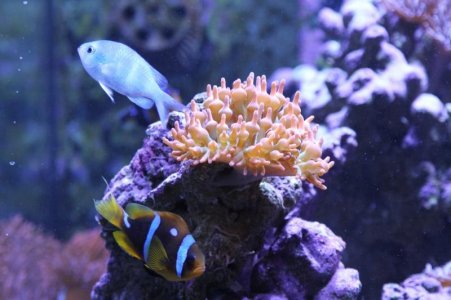
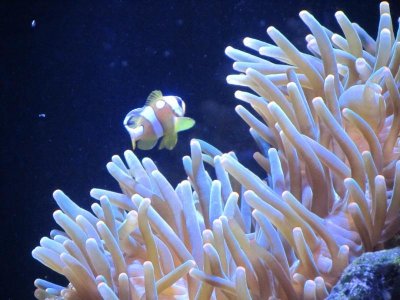
Well, with much trepidation I post the results of my clown fish experiment. After reading and studying Moberts long lived stickied thread 1.5 years ago I decided to repeat the process in a slightly tweaked fashion. I began a new tank to house my experiment. I had a custom built 80 gallon cube built with LED lights to start. The only other fish in the tank, besides the clowns, would be 7 adult chromis. After cycling the tank and introducing the chromis for a few weeks, I special ordered a juvenile pair of spotcinctus clowns. I let the spots have the run of the tank for around 2 weeks and then I order my 20 b & w juvenile occe's. You'll clearly see the difference in size of the fish over the last year, especially with the dominant spots. The all started out the same size, but then the spots took off over time.
Please make no mistake. I don't condone doing this. I spent hundreds of hours studying ways to have the best possible outcome from it and avoid bullying and death of the clowns. I still look at this very much as an experiment with perhaps a different outcome still around the corner. But I hadn't ever heard of anyone else succeeding in this so I'd thought I'd try it out. Please fill free to ask all the questions you want. I'll do my best to answer them. Maybe we can even get this thread stickied as well for people to better follow the progress. Anyways, enjoy.
I'll post as many pictures with my crappy camera as I can.
 

Attachments

  • cf153.jpg
    cf153.jpg
    65.6 KB · Views: 17
  • cf151.jpg
    cf151.jpg
    68.5 KB · Views: 6
  • cf155.jpg
    cf155.jpg
    84.9 KB · Views: 15
  • cf152.jpg
    cf152.jpg
    64.7 KB · Views: 15
  • cf154.jpg
    cf154.jpg
    61.5 KB · Views: 17
first pics of b & w occe's
 

Attachments

  • cf162.jpg
    cf162.jpg
    32.2 KB · Views: 10
  • cf163.jpg
    cf163.jpg
    46.8 KB · Views: 13
  • cf166.jpg
    cf166.jpg
    56.1 KB · Views: 12
  • cf169.jpg
    cf169.jpg
    64.3 KB · Views: 14
  • cf1612.jpg
    cf1612.jpg
    68.5 KB · Views: 16
more pics
 

Attachments

  • 2011-09-10_00007.jpg
    2011-09-10_00007.jpg
    69.2 KB · Views: 15
  • 2011-09-10_00001.jpg
    2011-09-10_00001.jpg
    65.8 KB · Views: 14
  • 2011-09-10_00004.jpg
    2011-09-10_00004.jpg
    58.3 KB · Views: 16
  • 2011-09-10_00003.jpg
    2011-09-10_00003.jpg
    82.6 KB · Views: 13
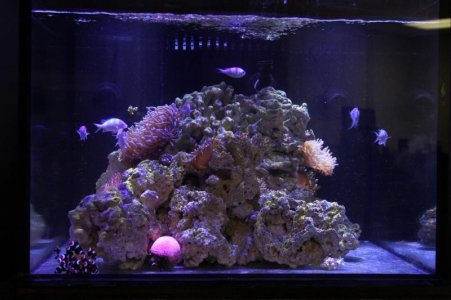
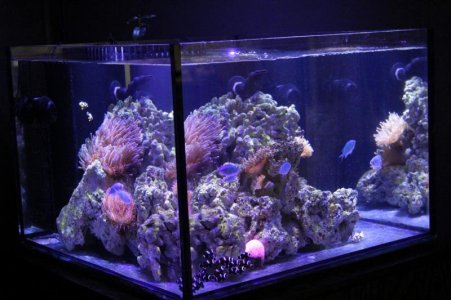
Alright. Fast forward a year. These were taken yesterday. A couple of things have changed with the tank, namely, I lost lots of anemone's using LED's. I've switched to 250 w MH's and will probably back down again to a single 175 MH bulb on the tank. Just too much light for my nems. Anyways. You'll really be able to see the difference between the 1 year old fish now.
 

Attachments

  • cf4.jpg
    cf4.jpg
    63.5 KB · Views: 10
  • cf5.jpg
    cf5.jpg
    68.7 KB · Views: 16
  • cf6.jpg
    cf6.jpg
    64.7 KB · Views: 11
  • cf7.jpg
    cf7.jpg
    94.5 KB · Views: 10
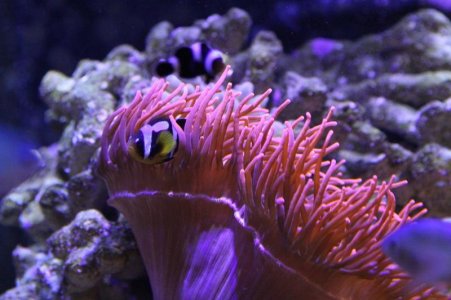
The spotcinctus control all of the BTA's. I introduced a small purple LTA 6 months ago and the spots leave it alone, so now the occe's all sleep together in it every night. I'll try to get a sleeping pic of them at some point.

The larger, lighter spotcinctus is the female, the slightly smaller, darker spotcinctus is the male.
 

Attachments

  • cf10.jpg
    cf10.jpg
    45.1 KB · Views: 14
  • cf12.jpg
    cf12.jpg
    48.8 KB · Views: 13
  • cf13.jpg
    cf13.jpg
    46.2 KB · Views: 14
  • cf18.jpg
    cf18.jpg
    66.4 KB · Views: 18
  • cf3.jpg
    cf3.jpg
    56.4 KB · Views: 16
This is actually typical. In any population, the dominant will turn female, next one male. The rest will often stay juvenile and not select a sex. Only if one of the pair dies or goes missing will another change sex.

Given enough room and other resources, they don't fight.

Jeff
 
This is actually typical. In any population, the dominant will turn female, next one male. The rest will often stay juvenile and not select a sex. Only if one of the pair dies or goes missing will another change sex.

Given enough room and other resources, they don't fight.

Jeff

Yup. I agree. There have been plenty of cases shown where this is accomplished. I just wanted to try doing this with two separate species and see if it could be accomplished. So far, so good. :strange:
 
Last edited:
I'm curious about your LED's. Are you sure it was the lights that killed your anemone's? What were you using? Just curious because I use LED's, for the last 2 years almost the whole time with the exception of the winter months for a MH swap for heat reasons, and my anemone's all do fine.

Nice experiment. Your tank looks great. Thanks for sharing.
 
I'm curious about your LED's. Are you sure it was the lights that killed your anemone's? What were you using? Just curious because I use LED's, for the last 2 years almost the whole time with the exception of the winter months for a MH swap for heat reasons, and my anemone's all do fine.

Nice experiment. Your tank looks great. Thanks for sharing.

I used non dimming PAR 38 LED bulbs from nanotuners with 40 degree optics and fried em. I know it was my LED's because as soon as I switched over to MH's the anemone's started to grow better. Still lots of improvement with them needed. What type of LED's are you using? I would like to go back to LED's I'm just gun shy now.
 
I made mine. Reefledlights.com I have a mertens, sebae, gig, and RBTA. All love the lights. Mine are about half and half, older XRE and newer XPE and XPG's. Non-dimmable. I also fried a few corals when I first switched, a bit of a learning curve. I've never tried the PAR lamps, but I did get one for a fuge that worked very good for growing cheato.
 
Also, I don't use any optics. I don't think you need them, my tank is 29" tall and can grow in the sand.

+1, no optics needed and my LEDs are doing well for me too.

Congrats on the success hypnoj, I hope they continue to get along. Has it been difficult to maintain water quality with so many fish?
 
+1, no optics needed and my LEDs are doing well for me too.

Congrats on the success hypnoj, I hope they continue to get along. Has it been difficult to maintain water quality with so many fish?

No it hasn't. I attribute that to biopellets. I feed every other day. I change the water once every 6 months. I run a biopellet reactor, midsize refugium full of cheato, and run a reactor with carbon. So far so good. I think as long as I feed lightly, it's ok. I only feed the nems once or twice a month.
 
I hope things work out for you. I tried a group of 10 a while back, but they started fighting and then got clownfish disease somehow and ended up all dieing. Did you find 20 to be a magic number or something?
 
Back
Top