MadReefist
New member
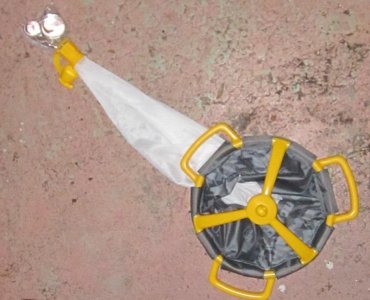
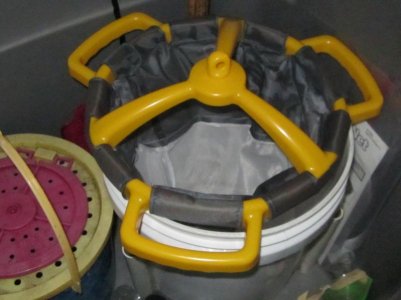
Flipping through an old marine biology book I have I found this cool plankton net concept; with lab exercises. (I picked up a stack of them for $0.25 each from a thrift store a few years ago; some real nice ones in the lot)
I'll scan the pages later when I figure this cheapo device out...
First webpage I brought up in a search also mentioned Amphipod Traps...
And here be some DIY tips for that:
"I designed two kinds of super-cheap light traps. First light traps were made of transparent 1.5 litre plastic bottles, placed in reverse position. Each trap presented vertical rectangular slits (1 cm wide x 15 cm long) in its upper part. They were anchored to the bottom using a 2 kg lead weight, and a float attached to the top of the trap insured that it remained vertical in the meadow canopy. A diving emergency light stick was fixed in the bottleneck of each trap. These sticks emit light for >12 hours, and the vagile invertebrates, attracted by the light, entered the trap through the slits, and gathered in the bottleneck. Traps were placed at twilight and recovered the next morning.
After a few sampling campaigns, I used a slightly different model of light trap. They were made of two nested 1 litre translucent plastic containers. The top container was pierced with slits, and was then inserted in the bottom one. In addition, they were not anchored to the bottom by using lead weights. Instead, I used metal stakes (diameter 3mm) that were directly stuck in the matte. This model was preferred to the old one for three reasons. First, these traps were much more robust, and withstood numerous successive re-uses. Second, since they are made of translucent plastic, the light was only emitted through the entrance slits, thus maximizing the attraction of animals towards the "œuseful" part of the trap. Third, the presence of an additional bottleneck in the middle of the trap limits the potential escape of animals. I used these traps a lot, they were very efficient devices to catch amphipods but also mysids and cumaceans. (There were some polychaetes in the traps, but they were less present than crustaceans (mostly amphipods, mysids and cumaceans).) They cost nearly nothing, and can be built by anybody in a few minutes... And if you want to keep the prices even lower, get your light sticks from a party supplier instead of a diving one, you can find equally efficient models at half the price..."
http://www.researchgate.net/post/Ho...pling_anphipods_of_Posidonia_oceanica_meadows
And another:
"Best known as "˜beach hoppers', the little crustaceans that spring around when you disturb seaweed on the beach are amphipods. Out here on the seabed these amphipods mostly make their living by scavenging dead animals that fall to the seafloor from the ocean above. That makes them easy to tempt into traps with some fresh fish as bait. Our traps are simple containers with funnel entrances that work just like lobster pots. The water is too deep for a rope line to the surface, so we use a free-fall mooring system. The traps are sent to the bottom in a weighted frame, when we want them back we send an acoustic signal (coded sound) out from the ship that tells the trap frame to drop its weight. Buoys attached to the frame can then float it back to the ocean surface "“ it takes a little over 90 minutes for the trap to reach the surface. The ship's bridge officers then spot the trap and carefully manoeuvre the ship alongside of the trap, allowing the deck crew to catch the trap and bring it back onboard."
https://jc120.wordpress.com/2015/04/25/the-art-of-trapping-amphipods/
I'll scan the pages later when I figure this cheapo device out...
First webpage I brought up in a search also mentioned Amphipod Traps...
And here be some DIY tips for that:
"I designed two kinds of super-cheap light traps. First light traps were made of transparent 1.5 litre plastic bottles, placed in reverse position. Each trap presented vertical rectangular slits (1 cm wide x 15 cm long) in its upper part. They were anchored to the bottom using a 2 kg lead weight, and a float attached to the top of the trap insured that it remained vertical in the meadow canopy. A diving emergency light stick was fixed in the bottleneck of each trap. These sticks emit light for >12 hours, and the vagile invertebrates, attracted by the light, entered the trap through the slits, and gathered in the bottleneck. Traps were placed at twilight and recovered the next morning.
After a few sampling campaigns, I used a slightly different model of light trap. They were made of two nested 1 litre translucent plastic containers. The top container was pierced with slits, and was then inserted in the bottom one. In addition, they were not anchored to the bottom by using lead weights. Instead, I used metal stakes (diameter 3mm) that were directly stuck in the matte. This model was preferred to the old one for three reasons. First, these traps were much more robust, and withstood numerous successive re-uses. Second, since they are made of translucent plastic, the light was only emitted through the entrance slits, thus maximizing the attraction of animals towards the "œuseful" part of the trap. Third, the presence of an additional bottleneck in the middle of the trap limits the potential escape of animals. I used these traps a lot, they were very efficient devices to catch amphipods but also mysids and cumaceans. (There were some polychaetes in the traps, but they were less present than crustaceans (mostly amphipods, mysids and cumaceans).) They cost nearly nothing, and can be built by anybody in a few minutes... And if you want to keep the prices even lower, get your light sticks from a party supplier instead of a diving one, you can find equally efficient models at half the price..."
http://www.researchgate.net/post/Ho...pling_anphipods_of_Posidonia_oceanica_meadows
And another:
"Best known as "˜beach hoppers', the little crustaceans that spring around when you disturb seaweed on the beach are amphipods. Out here on the seabed these amphipods mostly make their living by scavenging dead animals that fall to the seafloor from the ocean above. That makes them easy to tempt into traps with some fresh fish as bait. Our traps are simple containers with funnel entrances that work just like lobster pots. The water is too deep for a rope line to the surface, so we use a free-fall mooring system. The traps are sent to the bottom in a weighted frame, when we want them back we send an acoustic signal (coded sound) out from the ship that tells the trap frame to drop its weight. Buoys attached to the frame can then float it back to the ocean surface "“ it takes a little over 90 minutes for the trap to reach the surface. The ship's bridge officers then spot the trap and carefully manoeuvre the ship alongside of the trap, allowing the deck crew to catch the trap and bring it back onboard."
https://jc120.wordpress.com/2015/04/25/the-art-of-trapping-amphipods/