Anemone looks to be bleaching

farlsincharge

New member
Okay So I've done a little research on here concerning the bleaching of anemone's and by reasonable deduction I believe that is what I'm faced with.

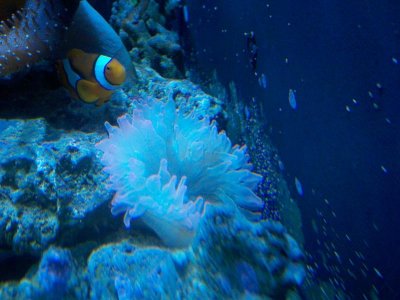
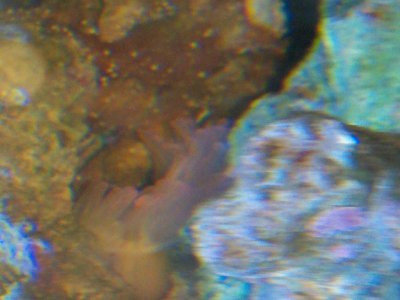
He tentacles were rosy and he had a green to brown base. However, recently he has under took a transformation to bright pink tips and a white-ish base. He does not stay out in the light long and I believe this is due to the depletion of zooxanthellae within him.

I do feed him about once a week either krill or rods food blend (he still eats). He is hosted by my clown and I have seen the clown share some bits not much though.

I am current experiencing a cyanobacteria outbreak and in the process of clearing that up with out the use of additives, i.e. weekly water changes.

my parameters:
calc: 345
PH: 8.0
ALK: 1.7-2.8
PO3: 0.0-0.25
NO: 20-40 ( this reading is iffy due to the test kit still high and in the process of lowering nitrate levels.)

An lastly I use TAP water (gasp!) I know my R/O DI unit comes tomorrow try not to beat me up too much for that.


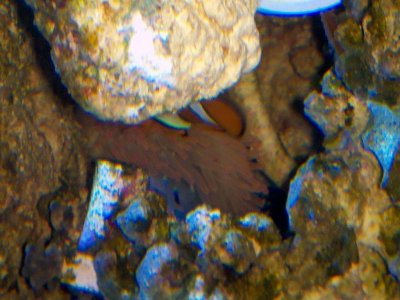
The attached pictures are of him being deflated, I will try to get some when he inflates. On an added note I dont see him poop as much anymore didnt know if that had any importance (I'm a two a day guy myself lol).

So to end the post any help or advice would be greatly appreciated, Thank you for your time in advance.
 

Attachments

  • 2011-07-25_16-22-27_233.jpg
    2011-07-25_16-22-27_233.jpg
    51.1 KB · Views: 3
  • 2011-07-25_16-22-45_119.jpg
    2011-07-25_16-22-45_119.jpg
    67 KB · Views: 4
1. Your PO4 should be below 0.05
2. Your NO3 should be below 20
3. Tap water can add both of those to your water when you do water changes, sometimes making the levels higher.
4. There are also heavy metals and chemicals in tap water that are not so good for anemones.
5. You are right, the RBTA is bleaching. If you can get the water clean enough and keep feeding it, it should spend more time out and recover.

BTW, what size tank and what lighting? (color, type, and wattage)
 
Last edited:
Ok, then you're set for light. Just watch the temp under that much light. Oh, and your salinity should be 1.025-1.027, since you didn't list it. Otherwise, as above, clean water, good food, and patience. :)
 
Totally forgot about salinity I run at 1.026 with an auto top off. Also the canopy has been raised and a fan installed. My temp is running at 84-82 but it is the hottest time of the year, still I know it needs to be brought. Looking to invest in a chiller or retro fit a led fixture.
 
So I decided to keep this thread going documenting my attempt at recovering my RBTA from bleaching.

1. Today I fed the RBTA (PE mysis) with a baster and he consumed all of it.
2. Water quality has not changed
3. Considering dosing my taking to remove Cyanobacteria bloom.
 

Attachments

  • 2011-07-26_14-44-59_570.jpg
    2011-07-26_14-44-59_570.jpg
    62.1 KB · Views: 4
So I decided to keep this thread going documenting my attempt at recovering my RBTA from bleaching.

1. Today I fed the RBTA (PE mysis) with a baster and he consumed all of it.
2. Water quality has not changed
3. Considering dosing my taking to remove Cyanobacteria bloom.


What is it that youare dosing for your Cyanobacteria bloom ?
 
I am using Ultra life Red slime remover recommended by the LFS, we'll see!

On another note RO/DI unit came in made 15 gallons right away for a water change.

RBTA ate the same amount of mysis shrimp, and seems to inflate more during the night light cycle.
 
farlsincharge,
Having kept BTAs in the past I had a similar experience. I had an anemone that went from PCs at the local fish store to my MH lighting and it hid behind the rocks for some time. It would also spit out zooanthelae (which I considered self regulation to compensate for the increased light). It would extend out at night and look much better but the second the MH came on it would shrivel up and hide. It almost completely bleached itself but ended up making a very strong come back. It took months, literally months.
 
I would say that it's receiving too much light and that's why it's hiding. Especially as it inflates more at night. Use 3 layers of window screen placed in between your lights and the anemone. Remove one layer every week to ten days until its acclimated to your light. It may take longer but you will have to judge that by the reaction of the anemone when the screen is removed. Keep feeding it regularly to help make up for the loss of anything it may have otherwise have received from its zooxanthellae. With regular feeding and careful light acclimatisation it should eventually recover its original colour but be prepared for it to take a while.
 
Okay so taking all the good advice in I continued with the feedings however, I have been unsuccessful in removing thebnem to place lower in the tank.

Today I woke to find that the RBTA has intact split? ! Pretty cool and unexpected. I do know they can split as a means of self preservation so my fingers are crossed they both live.
 
Usually when they split its because they are stressed... :( I wish you luck, but keep an eye on them... :)
 
Weekly update:

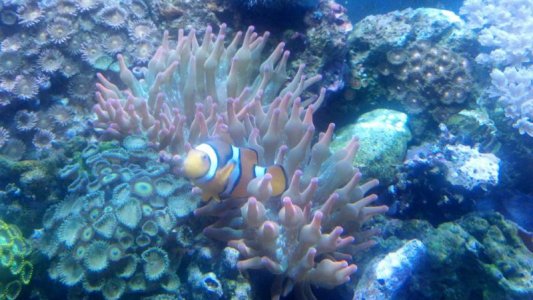
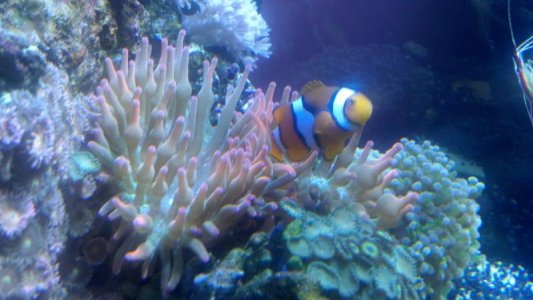
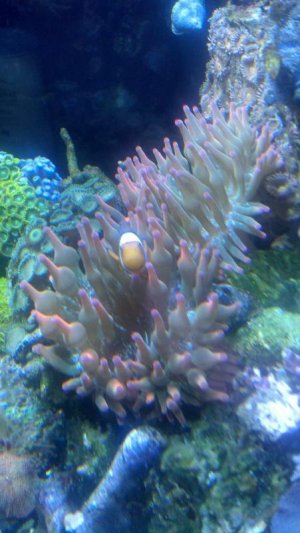
Both nems are looking good healed and inflated. Coloration seems to be improving pink tips but base is starting to get greenish like before. Feedings have been reduced to 3 times/week goin to try krill next week.

On a side note I have read that keeping different anemones in a single tank can cause a sort of chemical warfare? Does anyone have experience with this? I currently have 2 RBTA's 1rock nems and 2 mini maxim's.
 
been a long time but here are pictures of the 2 RBTA's now being feed on a clam diet once a week. I'm just thankful that my story was a success.
 

Attachments

  • 2012-02-21_17-11-05_502.jpg
    2012-02-21_17-11-05_502.jpg
    57 KB · Views: 4
  • 2012-02-21_17-10-39_535.jpg
    2012-02-21_17-10-39_535.jpg
    70.6 KB · Views: 4
  • 2012-02-21_17-11-27_532.jpg
    2012-02-21_17-11-27_532.jpg
    54 KB · Views: 4
Back
Top