jimmy_beaner
New member
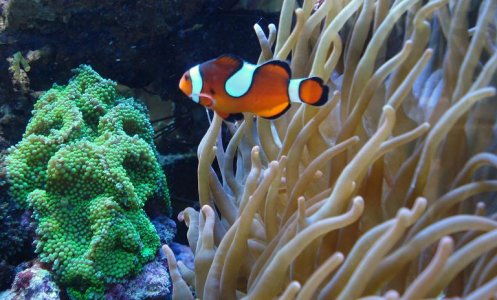
So, noticed some of these little black spots on the clownfish today... and am just trying to make sure that it's nothing to panic over. Nothing has been added to the tank in ~1 month and there are only two clownfish in the tank.... they've been there for around 3 months. I can see maybe 7 black spots on the dominant fish, none on the submissive.

This same fish also seemed to have a larger black spot (like a beauty mark?) on the other side for a couple weeks but it seems to have gone away.
My girlfriend was diagnosed with a mycobacterium marinum infection on her hand (I guess rare, but can occur with open cuts on the hand when you reach into the aquarium). I don't know if this might be related or not. The clowns typically eat cyclopeeze every day or every other day. My other thoughts are that it could be sting marks. I've never had ick in a freshwater or my saltwater tank, so I don't know what to look for. They have been acting normal and tank parameters are stable as always.
Temp. 79
pH - 8.2
Salinity - 1.025
Ammonia, Nitrite - 0
Nitrate ~ 0
Alk - 9 dKh
Calc - 460
Sorry for the bad pic... I'm in a hurry for class and focusing a macro lens can be tricky when the fish won't stop swimming (or even slow down)
This same fish also seemed to have a larger black spot (like a beauty mark?) on the other side for a couple weeks but it seems to have gone away.
My girlfriend was diagnosed with a mycobacterium marinum infection on her hand (I guess rare, but can occur with open cuts on the hand when you reach into the aquarium). I don't know if this might be related or not. The clowns typically eat cyclopeeze every day or every other day. My other thoughts are that it could be sting marks. I've never had ick in a freshwater or my saltwater tank, so I don't know what to look for. They have been acting normal and tank parameters are stable as always.
Temp. 79
pH - 8.2
Salinity - 1.025
Ammonia, Nitrite - 0
Nitrate ~ 0
Alk - 9 dKh
Calc - 460
Sorry for the bad pic... I'm in a hurry for class and focusing a macro lens can be tricky when the fish won't stop swimming (or even slow down)