anybody know if i need to do anything for my hippo. spots went away for the most part but they are noticeable again. he does rub him self against my rock at times. just turned lights on and he came out and is swimming as though nothing is wrong.

You are using an out of date browser. It may not display this or other websites correctly.
You should upgrade or use an alternative browser.
You should upgrade or use an alternative browser.
Blue hippo white dots back again.
- Thread starter Hminor00
- Start date
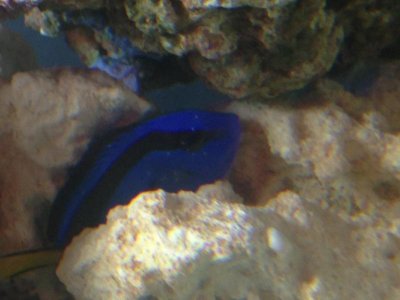
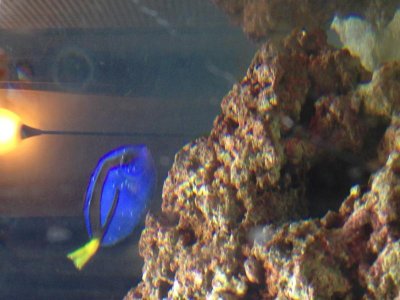

How big is this tang? It looks like Ich to me... but the dots look too large to be trophonts. But maybe this is a really tiny tang?
IMO...most tank have ick...including all three of mine. I've had many blue and/or hippos in the past with severe cases of ick and they go away within a week or so. Then they get immune to it. I wouldnt worry to much assuming that they are ick and not velvet. If its velvet then fish be dead by now or swimming lethargically at surface of water or in front of power head. Hippos are prone to ick when in 1.20+ salinity and introduce to our tanks...but do just fine given proper pars and eating good...other than that treat hypo and copper which can be very stressful for the caretaker and fish. all my tangs go through cases of ick but recovery without any problems...good luck and let us know what happens.


ganjero
saiperchémibatteilcorazon
The tang might be weak due to stress from collection to transportation to being in such a confined space. If possible treat as other mentioned but more importantly make sure it is eating well. A healthy fish will fight off ich.
I would try to get it healthy and out of a 29g as soon as you can. Don't introduce him into the 90g before treating if you have other fish. Not only can you get ich on other fish but they can increase the stress on the tang and make it even weaker.
I would try to get it healthy and out of a 29g as soon as you can. Don't introduce him into the 90g before treating if you have other fish. Not only can you get ich on other fish but they can increase the stress on the tang and make it even weaker.

Mrscribbled
Team RC
reef80 said:IMO...most tank have ick...including all three of mine. I've had many blue and/or hippos in the past with severe cases of ick and they go away within a week or so. Then they get immune to it. I wouldnt worry to much assuming that they are ick and not velvet. If its velvet then fish be dead by now or swimming lethargically at surface of water or in front of power head. Hippos are prone to ick when in 1.20+ salinity and introduce to our tanks...but do just fine given proper pars and eating good...other than that treat hypo and copper which can be very stressful for the caretaker and fish. all my tangs go through cases of ick but recovery without any problems...good luck and let us know what happens.
Hmmm Sounds like you know your stuff........... Little reading of good sources and less listening to the lfs would do you some good.
Posted from ReefCentral.com App for Android

MrTuskfish
Team RC
IMO...most tank have ick...including all three of mine. I've had many blue and/or hippos in the past with severe cases of ick and they go away within a week or so. Then they get immune to it. I wouldnt worry to much assuming that they are ick and not velvet. If its velvet then fish be dead by now or swimming lethargically at surface of water or in front of power head. Hippos are prone to ick when in 1.20+ salinity and introduce to our tanks...but do just fine given proper pars and eating good...other than that treat hypo and copper which can be very stressful for the caretaker and fish. all my tangs go through cases of ick but recovery without any problems...good luck and let us know what happens.
If the post above is true; whay do so many die from ich? Why even QT at all?I think you have a disaster waiting to happen. Fish do not develop PERMANENT immunity to ich. Some strains MAY develop some temporary immunity to some strains of ich. I don't know anyone who I would take advice from (personally, on-line, or by way of publication) who is managing, rather than eradicating ich. Our hobby has a tremendous turn-over rate. I think failure to properly eradicate ich could be the #1 reason, certainly in the top five. I have seen many pics of fish with coming & going" ich; much of the time it isn't even ich. I have over 1000 gals of ich-free DT space and will do anything to keep it that way.
yall guys and gals are really helpful. i am about to put him in my 90g, he looks good no spots, eating well, may have been from him rubbing against the rocks at night. he is doing fine eating good and looking good tonight. Just picked up some stuff from a place in northern va, omg can i say great prices. pictures coming shortly after i get everything in tank.
If the post above is true; whay do so many die from ich? Why even QT at all?I think you have a disaster waiting to happen. Fish do not develop PERMANENT immunity to ich. Some strains MAY develop some temporary immunity to some strains of ich. I don't know anyone who I would take advice from (personally, on-line, or by way of publication) who is managing, rather than eradicating ich. Our hobby has a tremendous turn-over rate. I think failure to properly eradicate ich could be the #1 reason, certainly in the top five. I have seen many pics of fish with coming & going" ich; much of the time it isn't even ich. I have over 1000 gals of ich-free DT space and will do anything to keep it that way.
I think just as many fishes survive ick as die from it...honesty the ick comes and go but not visibally at all and only one or two fishes every another month if that...I qt more for velvet and flukes and to help fish to recover from being shipped, collected and get them eatting...guess iam counting the days before an outbreak....456 days so far and going strong...just my .00000002 cents...
MrTuskfish
Team RC
I think just as many fishes survive ick as die from it..Only half die from it? Pretty lousy odds. So people should half their fish die rather than eradicate it? With proper QT & treatment, almost all can survive. I like those odds a lot better. Sorry, I just can't imagine having that attitude toward my fish. BTW, long term, ich will kill a lot more than half.
I think just as many fishes survive ick as die from it..Only half die from it? Pretty lousy odds. So people should half their fish die rather than eradicate it? With proper QT & treatment, almost all can survive. I like those odds a lot better. Sorry, I just can't imagine having that attitude toward my fish. BTW, long term, ich will kill a lot more than half.
I think that most fishs die from other types of parasites and poor caring and ick is secondary to those issues also. For example a fish maybe on its way out and vulnerable to death due to flukes, worms, velvet, brook, starvation, poor immune system, poor husbandry and care taking but ick is more of a common explanation for dead fish, when it may of be secondary to the cause of a fish death. Velvet is commonly diagnose as ick also and usually what kills fish but is being diagnose as ick. I think noway days, there are many more unexplanable deaths in our saltwater communities and dieases that we are not sure what they are or explane why a fish is dead. I'am not advocating for going w/ the motions of living w/ ick but it never has been a problem for me nor for others that share the same experience. I'm all for copper and medication tx but will avoid it if not necessary.
Just wondering how the hippo is doing BTW...
Similar threads

- Replies
- 8
- Views
- 843


- Replies
- 5
- Views
- 1K

