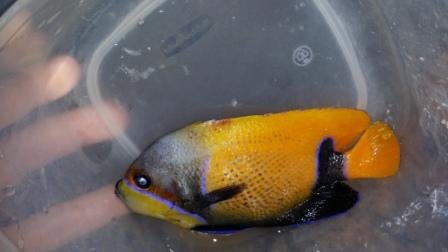
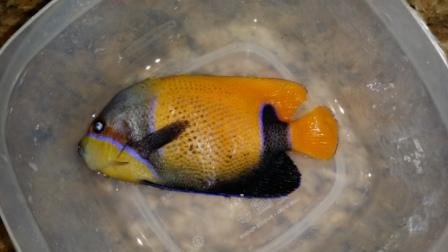
diagnosing majestic angel with lesion

Dcash88

New member
My majestic angel died and I'm trying to figure out if my tank is at risk. My 240 fowlr broke out with ich about 3 months ago. This was due to adding a powder blue tang with out qt. So I removed all fish to a 125g and treated with copper for 4 weeks. The treatment was successful and I didn't lose any fish. I was leaving my display fallow for 8 weeks. However around 6 weeks I got water damage to my wood floor requiring me to break down the 240 to get new floors. While I did this I put the rock in tubs and threw away the sand. The process and my schedule didn't allow me to set it back up for 2 more months. During this time I lost some fish due to poor husbandry in the qt.

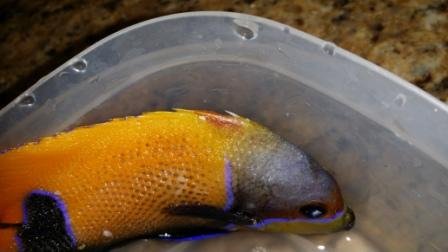
I set my 240g back up and put new dry sand in, and the live rock from the tubs that was fallow for 3+ months. I let it run for a week and then put in my majestic, maroon clown, flame angel, and blue damsel. They were all drip acclimated. The next 2 days they all ate vigorously. 3rd day angel ate very little and hid a lot , 4th day one piece of mysis and stayed in corner, 5th day ate nothing, didn't move, developed red sore on back, and died that night.

My three other fish seem healthy and are still eating well. The powder blue has been in a 55g for a while because I want to put it back in last after restocking to reduce it being territorial. So it was not stressing it. What caused this? I am looking for the cause because I plan to restock the 240 and don't want to start with a disease lurking.

Sorry for the novel just trying to give some background.

Params: 8.1ph . 80 degrees. 1.022sg. 0 ppm nitrate.

Thanks
Daniel
 
What are the sizes of the fish?

How have you been managing ammonia from livestock in QT?

Have you fed the rock with ammonia for the 3 or more months idle?

"During this time I lost some fish due to poor husbandry in the qt."

What do you mean by poor husbandry?
 
The damsel is 2" flame angel 3.5" maroon clown 3.5" and the majestic was 5".

In qt I was managing ammonia with water changes. I kept up through the copper treatment but did not after. This is what I meant by poor husbandry, not enough water changes. The two fish that I lost were small butterflies. The tank got overrun with algae. I monitored the ammonia with a seachem badge which changed to .02ppm after the first butterfly died, but went back to 0 within 12hrs from a water change. Other than that I never saw the badge change colors.

I had the live rock in two separate 55g rubbermaids. One had some snails and cc stars in it. One of the snails died and I occasionally fed the stars so I assume that live rock was fed. I did not feed the other tub. This brings me to another question I have read often to let your dt go fallow for 8 to 9 weeks for ich. Does it need to be fed for that too or was it the extra 3 weeks?

Thanks for your help
 
here are some pics, sorry couldnt get to a computer to compress them any sooner
 

Attachments

  • angel1c.jpg
    angel1c.jpg
    23.3 KB · Views: 5
  • angel2c.jpg
    angel2c.jpg
    20.9 KB · Views: 5
  • angel3c.jpg
    angel3c.jpg
    22 KB · Views: 5
The damsel is 2" flame angel 3.5" maroon clown 3.5" and the majestic was 5".

In qt I was managing ammonia with water changes. I kept up through the copper treatment but did not after. This is what I meant by poor husbandry, not enough water changes. The two fish that I lost were small butterflies. The tank got overrun with algae. I monitored the ammonia with a seachem badge which changed to .02ppm after the first butterfly died, but went back to 0 within 12hrs from a water change. Other than that I never saw the badge change colors.

I had the live rock in two separate 55g rubbermaids. One had some snails and cc stars in it. One of the snails died and I occasionally fed the stars so I assume that live rock was fed. I did not feed the other tub. This brings me to another question I have read often to let your dt go fallow for 8 to 9 weeks for ich. Does it need to be fed for that too or was it the extra 3 weeks?

Thanks for your help

Instead of WC, ammonia badge, and living with some ammonia, better (to put it mildly) is to be prepared with robustly cycling the medium intended for QT.

Ammonia is very toxic and WC to manage it is very taxing and wasteful. Often, when the bioload is heavy, 100% WC with transfer of fish is needed to remove decayable waste matters (poop and food) that can cause ammonia to surge quickly.

I often do not need to do any WC at all during 12 or more week of QT session, even with heavy bioload. This is because I always robustly cycle medium for QT a few weeks before the QT session.

Ammonia could only be a problem in QT if I ever need to use a drug that harms nitrification bacteria. Such a drug is almost always an antibiotic to treat bacterial infection. That is to say, if bacterial infection does not happen, then I will not need to do any WC during the entire 12 weeks of QT session.

With moderately heavy bioload as yours, WC likely will not do and your fish likely had been exposed to ammonia for too long.

You should have ghost fed the rock while the rock is idle, not processing ammonia from livestock.
 
Last edited:
I had a sponge filter that was cycled but I don't know how much good that did in a 125 with 55 sump. How much media, what kind, and how would you set it up? Does that look like an ammonia burn?
 
I had a sponge filter that was cycled but I don't know how much good that did in a 125 with 55 sump. How much media, what kind, and how would you set it up? Does that look like an ammonia burn?

A sponge can be a big one and can be good enough if you had cycled it robustly. But often a sponge is small and you will need several sponges.

Medium for QT for even moderate bioload like yours MUST be cycled separately and you should know certainly that there is enough bacteria.

How do I know for sure that my medium is robustly cycled enough to handle all possible bioload in QT? I do so by putting in several times the ammonia that could possibly be generated by the greatest possible bioload during the cycle. Just put in several times the amount of food you intend to feed the fish daily or every three days for the first half of the cycle.

I hope that you are not hinting on just leaving some medium in DT for a few weeks and calling it cycling the medium for QT; it is not. You can do so, in fact. But before a medium is ready for QT, it must have independent processed a strong pulse of ammonia in a separate container. This "boosting" may last only about 10 days.
 
Last edited:
Yeah it was just one sponge filter left in the sump of my display until needed. This is actually the first time I have heard of cycling a medium for a qt differently. I always leave a sponge filter or hob filter running in the sump in case of qt as this is the only advice I had read before. So where do you do this boosting in the empty qt or a rubbermaid? If I understand correctly I would take the filter after it sitting in my sump and put it in an empty container and feed it fish food for at least 10 days? Say there is an emergency and I don't have the 10 days, would it work if after boosting I put it back in my sump until needed or does the boosting need to take place right before using it? Sorry for all the questions I read a lot on here and you have brought up things I've never heard before.

Back to the fish, if the angel died from ammonia poisoning in the qt, isn't it strange for it to behave normally until a few days after the tank transfer? Assuming this is what happened, after giving my tank more time to cycle it would be safe for more fish as this was likely not due to some sort of parasite or disease?
Thanks for all the information it is very helpful
Daniel
 
Yeah it was just one sponge filter left in the sump of my display until needed. This is actually the first time I have heard of cycling a medium for a qt differently. I always leave a sponge filter or hob filter running in the sump in case of qt as this is the only advice I had read before. So where do you do this boosting in the empty qt or a rubbermaid? If I understand correctly I would take the filter after it sitting in my sump and put it in an empty container and feed it fish food for at least 10 days? Say there is an emergency and I don't have the 10 days, would it work if after boosting I put it back in my sump until needed or does the boosting need to take place right before using it? Sorry for all the questions I read a lot on here and you have brought up things I've never heard before.

Back to the fish, if the angel died from ammonia poisoning in the qt, isn't it strange for it to behave normally until a few days after the tank transfer? Assuming this is what happened, after giving my tank more time to cycle it would be safe for more fish as this was likely not due to some sort of parasite or disease?
Thanks for all the information it is very helpful
Daniel

For a myth to persist, it has to work occasionally.

Robbing the DT a little and providing just a little less bacteria than needed work on very low QT bioload.

Basically at equilbrium, the bacteria population is in balanced with the bioload in DT; such population is all it has and all it needs, none to spare.

There is the fudge factor of feeding fish in DT more while the sponge is in and feeding less after the sponge is removed. This can actually work if the bioload in DT is very much greater than that intended for QT. Such is not the case for you.
 
Back
Top