Dinoflagelates Algae Help/Ideas

topher3f

New member
Well hello to everyone and I have another insightful questions I hope. I recently discovered that I incorrectly labelled an algae within my own tank. I did take a sample and my LFS laughed and told me I had the dreadful Dino.

So I searched this website from top to bottom (as i trust most input from the experience guys) and read many posts. I decided the best way to rid these dreaded Dino's was to black it all out for 3.5 days. This stuff was growing everywhere and even killed my Cheato so I had to do something. I had GFO, Carbon, and even Phosgaurd running but this stuff kept coming back in full force. So anyway I did the 3.5 day blackout.

I did make several mistakes before the blackout though, I did constant siphoning and water changes all the time. Only putting fuel on this incredible fire. Anyway now 4 days after my 3.5 without any light the darn Dino is starting to creep its way back in. So I have one more idea to rid myself of the Dinos before I give up the salt water hobby. I am looking for some opinions and thoughts before I proceed forward.

My last ditch effort plan is as follows:

I will start with a fresh water dip my entire sump and refugium. Then clean every square inch of tubing, dosing, reactors, pumps, skimmer, heaters, and ect. Then remove all sand from the tank and throw it back into the Pacific. Then freshwater dip all my live rock for about 10 minutes then place all of them back into my tank. From there I planned on blacking out my tank again for 5 days and dosing with Hydrogen Peroxide (H2O2) during this period instead of vodka. I DO NOT plan on removing the 75 gallons from the display tank as fish will be in there the entire time. After the cleaning and blacking out I will again start the sump and begin the filtration/skimmer process. The refugium will be completely empty as I don't have any Cheato anyway. I will put some back in there later if this works.

I do have a quarantine tank running but it currently has an occupant and either way it cant hold my fish anyway due to its 20 gallon size. I planned on leaving all my fish and invertebrates inside of the tank during this entire process.

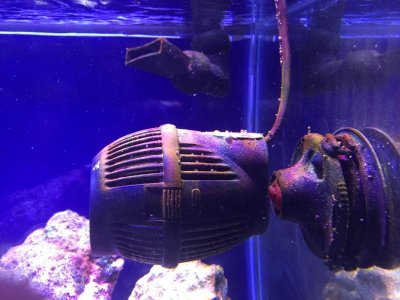
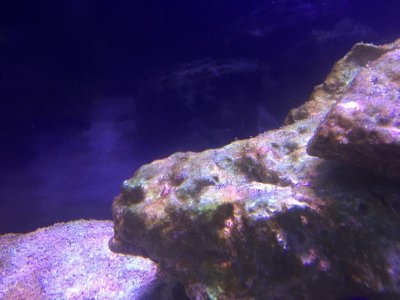
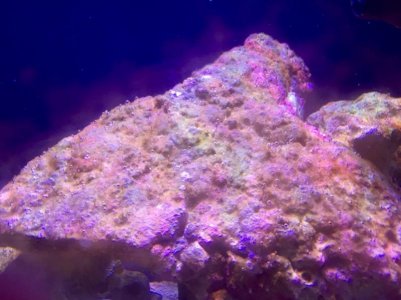
Any thoughts about my plans? I have pictures of the Dinos prior but am trying to figure out how to get them down to 800x800. I will post those shortly.

Thank you!
 
Pictures

Pictures

Ok I figured out the pictures.
 

Attachments

  • IMG_2505.jpg
    IMG_2505.jpg
    64.1 KB · Views: 4
  • IMG_2506.jpg
    IMG_2506.jpg
    62.5 KB · Views: 3
  • IMG_2507.jpg
    IMG_2507.jpg
    47.5 KB · Views: 4
You may shoot me dude. But that don't look like dinos to me. That looks like plain old cyano bacteria. And your testimony that blacking it helped adds evidence to that as dinos are a protean and are not photosynthetic and black outs won't do much for them. Furthermore, h2o2 dosing is known to have a drastic effect of reducing cyano outbreaks as well from the oxidation effects. Just google "peroxide dosing cyano reef" and you'll see what I mean.

What's your nitrate and po4 levels? I bet that's the culprit. What's your bio load and feeding routine? I'm going through something similar on my end.

Edit:
Really looking hard at those photos. I'm 100% that is cyano and someone needs to punch your LFS in the mouth.
 
Last edited:
Reply

Reply

Oh I wont shoot you! LOL I will take some help though. So I carbon dose and test regularly; also I have been running GFO, Carbon, and phosgaurd as I thought I had a silicate problem. I am at 0 Nitrate and 0 Nitrite at all times. I even bought a Hanna for P04 and that read 0.01 ppm.

I only got the stuff tested because my silicate tests came back 0 as did all other parameters. The only low item I had was calcium at 380 ppm. My Ph only runs about 7.8 too which I have an extremely hard time changing.

People have had success on here with removing sand and using peroxide so I thought it was worth a try.

Only other way is a complete restart and I don't want to go through all that. Especially since I have no where to put all my animals.
 
Ok a couple details.

What are you using for the no2 and no3 tests?

Are you using the Hanna ULR checker and converting? or are you using the actual po4 checker?

What carbon source are you dosing and how much? This might even be a bacterial bloom directly from your carbon dosing.

What is your alkalinity at that PH?

As far as the pH goes I wouldn't worry about it. Most of the time the culprit that's keeping the pH down is the co2 retention from your home. Some people have raised it successfully by running a line to the outside next to thme sump. This allows some of the co2 to escape and raises the pH. Plenty of people have had successful reefs at that pH so, again I wouldn't worry about it.

Hit me with the answers to that stuff and we'll try to get to the bottom of this.
 
Ok I use the Hanna for Po4 because the API does not seem very accurate.

I do use API for my Ammonia, nitrate, and Nitrate. I now use ATI for my calcium and Ph. I had my LFS test it too. My one BIG issues is I do not have a good selection for LFS because I am in Hawaii. Especially since its a reef tank the selection is around 3 total.

I use vodka at 5ml around 2100 at night through an auto dosing machine from BRS. I do not use an ATO yet as I have only been in this hobby for a year and am still working everything. I am looking into a Tunze and Kalkwasser from BRS in the near future. I have been using vodka for several months with no issues.

I have never tested my alkalinity and I don't even think I have a tester for that.

I should mention that this tank was up for 8 months with no issues at all. I moved 11 miles down the street in November and all these issues suddenly arose. I even bought the additional carbon block and resin for my RO/DI so now its a 6 stage. Still did not help. I was able to transport and keep approximately 60 gallons of the old water and I lost no animals in the process.
 
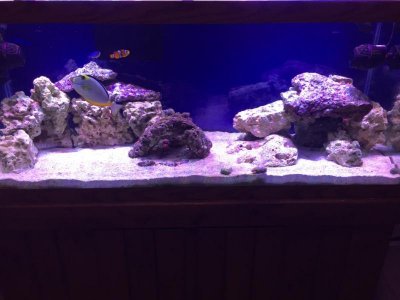
This is about two weeks old and you can see the darkness within the sand.
 

Attachments

  • IMG_2439.jpg
    IMG_2439.jpg
    49.7 KB · Views: 2
That Naso needs a 180 gallon tank. I wouldn't even put it in a 180. IMO it needs at least a 250. That fish is gonna get big, like a 1 1/2 - 2 foot long. Anyways back to the algae talk.

Cant tell if its dinos or not.

Tang police I know I know.
 
He was just a little guy when I put him in there last year. He is no longer with me though as I released him back in to the pacific about a week after that picture. Probably December time frame. I do agree he does get huge and diving here I have seen those guys up to 12 inches.
 
Ok I use the Hanna for Po4 because the API does not seem very accurate.

I do use API for my Ammonia, nitrate, and Nitrate. I now use ATI for my calcium and Ph. I had my LFS test it too. My one BIG issues is I do not have a good selection for LFS because I am in Hawaii. Especially since its a reef tank the selection is around 3 total.

I use vodka at 5ml around 2100 at night through an auto dosing machine from BRS. I do not use an ATO yet as I have only been in this hobby for a year and am still working everything. I am looking into a Tunze and Kalkwasser from BRS in the near future. I have been using vodka for several months with no issues.

I have never tested my alkalinity and I don't even think I have a tester for that.

I should mention that this tank was up for 8 months with no issues at all. I moved 11 miles down the street in November and all these issues suddenly arose. I even bought the additional carbon block and resin for my RO/DI so now its a 6 stage. Still did not help. I was able to transport and keep approximately 60 gallons of the old water and I lost no animals in the process.

Ok it's a cyano outbreak. Here's why.

1: there are two types of Hanna checkers. One is an actual po4 unit that will not give you accurate results at the minor level we are looking for. The number you are getting from that unit is .01 parts per million. We need parts per billion. The only instrument capable of reading that low is the Hanna ULR total phosphorous checker and convert it to phosphate. To do that, you would run the test which would, for example, give you a reading of 10 (just a number for example purposes). You would multiply that by 3.066 which would give you parts per million. So 10x3.066 is 30.066 parts per million. Then divide by 1000 to get to parts per billion and your total po4 would be .036ppb. Algae and Cyanobacteria tend to grow out at levels higher than .03-.04ppb. Which is much lower than the .01ppm that your currently reading. Does that make sense? So let's just assume that your po4 levels are too high.

2: the API nitrate test also lacks the resolution needed in order to detect the tiny amounts of po4 needed to grow cyano and other bacteria. You can actually increase the resolution of the test by diluting it. I actually just read it because, like I said I'm having a similar issue. So let's assume your nitrates are high enough for a cyano bloom as well.

Now that we've said that, I'll also say that testing in the presence of the nuisance subject is not accurate as the nuisance subject is currently up taking it and causing falsely low readings. Now that we've successfully made a case for innacuracies on both ends of the testing spectrum, we can throw the numbers totally out the window, look at the problem at hand and most decidedly say that we have a nutrient problem. The question is, why now?

The answer is, because you moved. You stirred up all that garbage moving the tank and the rocks and detritus and now the nutrient levels (phosphate and nitrates) are high enough to cause the cyano bloom you are seeing.

My suggestion would be to increase your carbon dosing, decrease your feedings as little as possible, do large water changes daily and skim as wet as you can. I bet the problem goes away.

Some people have used chemiclean with great results, I have not tried it. You could use it as a litmus test. If you use it and the stuff disappears then you'll know for a fact that it is indeed cyano and you'll be confident that increasing your export and lowering your nutrients will be the preventative measure you want to take.
 
Logical. I do understand that any outbreak will give you some out of the ordinary results. This cynao has killed of my cheato too. Is that normal? I have this string looking algea with bubbles in my refugium and it over took my poor plant.

I am going to Amazon now to get Chemiclean and try it out.

I do value and appreciate your input and I am going to find the manual to my Hanna and double tap that reading again tonight.

I feed 1/2 cube of misses one day then the next just a piece of seaweed. Should i still reduce that?
 
That Naso needs a 180 gallon tank. I wouldn't even put it in a 180. IMO it needs at least a 250. That fish is gonna get big, like a 1 1/2 - 2 foot long. Anyways back to the algae talk.

Cant tell if its dinos or not.

Tang police I know I know.

Same with the Koran.
 
Logical. I do understand that any outbreak will give you some out of the ordinary results. This cynao has killed of my cheato too. Is that normal? I have this string looking algea with bubbles in my refugium and it over took my poor plant.

I am going to Amazon now to get Chemiclean and try it out.

I do value and appreciate your input and I am going to find the manual to my Hanna and double tap that reading again tonight.

I feed 1/2 cube of misses one day then the next just a piece of seaweed. Should i still reduce that?

It's likely not the feeding. It's probably just all a by-product of the move. But you do have a good size bio load in there.

I'd say that just increasing your husbandry by vacuuming the substrate and sump, doing frequent WCs, increasing your carbon dose and not having to disturb everything again your problem will go away on its own eventually. The chemiclean will give you a definitive diagnosis though.

Edit:
Hanna Instruments HI736 Phosphorus Ultra Low Range Checker HC for Saltwater Aquariums https://www.amazon.com/dp/B003UNK3I8/ref=cm_sw_r_cp_awd_pDQ0wbSRP7HWC

This is the Hanna that you need. It will say ppb over the lcd screen. If it says ppm, then it's the wrong one.
 
Thank you for the advice.

I do regular cleaning of the substrate and do change about 15 gallons of water a week. Of course that change is because of the substrate cleaning. Mostly to tackle this outbreak i am having. I have about 95 gallons total water capacity so I will try some 30 gallon changes. Tomorrow I will empty the sump and give her a good scrub. I recently installed an awesome Vertex 150 in my sump so I will make it a more liquid skimm versus my dry now.

I will continue my GFO and Carbon from BRS. I am taking the phosgaurd off line though as I think that has made almost no difference. I am skeptical if the GFO is making a big difference but I will keep it running.

Note:

Ha I do have the HI713 and never noticed the difference. I feel ripped off now!
 
Just if it helps...

Over the week I've done so far about 3 water changes of about 50g a piece on a 100 gallon total volume system with very minor impact on nitrate levels. So it's possible you aren't changing enough.

Edit:
Yeah if your Hanna is reading 1.0 parts per million your po4 level is way too high. .01ppm equates to about 10.0ppb and we are shooting for less than .03ppb.

I'm convinced at this point that it's a cyano outbreak from the release of nutrients caused by the tank move. Once you get those down, the cyano will go away.
 
If you are going to use chemiclean then follow instructions for dosing options. Also something I did not understand well on my first round is let the skimmer run but pull the drain plug and just let it overflow back into tank for the duration. Also turn off your Gfo and carbon reactors for the duration as well.

Richard
 
Follow-up

Follow-up

Ok I had to order the Chemi-Clean off amazon and it finally arrived. I have shut-off the GFO, Carbon, and Phosban. I dialed down my vertex 130 and dosed the Chemi-clean as prescribed on the package. I also hooked up a fairly large air stone and placed that in my first set of baffles.

Keeping my fingers crossed and lets see what happens.

All the air bubbles and dark brown algea were beginning to take over the tank this past week again so I hope this does the trick. I did do two 30 gallon water changes (1/3 volume). Cant do a lot of maintenance right now as I had knee surgery Tuesday so Im fairly confined to a bed for a few more weeks.

P.S I know the Koran has over grown my tank. I am looking into a swap with my LFS for something more my size. Maybe a dwarf angel.
 
Well Chemi-Clean did nothing. I am not going to dose a second time since the first made no dent.

Im going to spend this week doing good vacuuming of the sand and water changes. Going to do fairly large water changes (20 gallons) and see what happens. Im thinking it may be diatoms at this point but Im close to a full restart.
 
Did you recheck your nitrates?

I'm not shocked the chemi-clean did not work the first time. I would keep dosing it per the instructions, many people here had no results with the first attempt depending on the severity of the outbreak.
 
Sounds and looks like Dino to me. Check out the Dinoflagellates forum here on RC started by DNA. Most helpful thread ive come across

By the way, if it is indeed Dinos, you are being told to do the EXACT OPPOSITE of what should be done. NEVER do water changes when you have dinos. And they ARE photosynthetic

Also, during a dino bloom, they suck out and consume nearly all nitrate and phosphate, so that explains your 0 readings.

Start reading that thread started by DNA and dont listen to people that have never had dinos. You dont treat it like any other algae problem. Most people have success by doing 3 day blackouts followed by the "dirty method". Feed more, no water changes.

First things first, make sure you do have dinos. But it looks and sounds like them to me
 
Back
Top