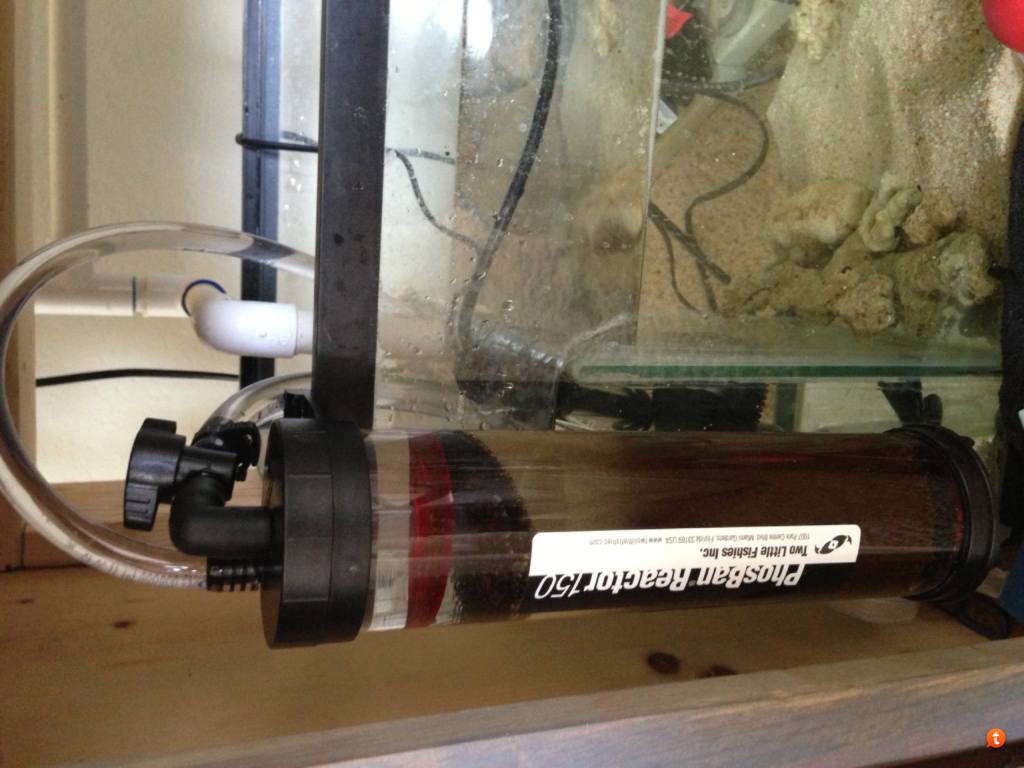
GFO is granulated ferric oxide. Iron, in other words, in a particular form.
It can be added in a bag for a very small tank, BUT---to really be effective, you need a GFO reactor. These, fortunately, are comparatively cheap, and require only a small pump to run. They also come in more than one size.
Here's what they do:
A GFO reactor sucks up phosphate, which you do not want in your tank---because it makes corals and fish and inverts unhappy---and it fuels hair algae. If you have a hair algae problem, especially a bad one, a refugium won't necessarily do it. You need a GFO reactor.
A GFO reactor also sucks up silicates, *once it's gotten all the phosphate.* If you have DINOFLAGELLATES this is something dinos require that you can remove.
GFO reactors come in two sizes: a smaller one that holds one container of GFO. That is good for a 50 gallon, or a larger tank with a moderate to small problem. With a seriously bad problem in a tank above 50 gallons, you can upsize to the larger reactor, which will handle 3 containers of GFO. It works faster. I personally recommend getting one WITH a pump, so that pump and reactor size are properly matched: getting a medium to absorb something well means matching the flow rate to the recommendation, and putting the wrong pump on many kinds of helpful flow-through devices isn't going to get the best exposure: it needs to be not too slow---not too fast.
There is also a bioactive beads stuff called NPX, which works well, too, and you can use a GFO reactor (with an adapter that prevents the beads escaping: they sell these adapters) to run NPX. I have both going in my tank.
Plan on a bad case of hair algae taking about 3 months to vanish. In the meantime keep pulling it off your rock. I also have (in a 100 gallon) two short-spine urchins who are doing a nice job---once the phosphate started going down. Apparently there was so much phosphate in the water it curdled their little appetites: I have no proof, but I know once I added the GFO and it worked for a week, the urchins started doing what urchins should, nibbling algae down to bare rock---they'll nibble a little coralline, too, but don't freak: coralline in a properly balanced tank is a renewable resource. It's sort of like complaining the goat you hired to eat the tall weeds nibbled a little of your Bermuda grass in the process. There'll be more coralline once you get the tank in good order.
Once you're rid of phosphate to such an extent it's starting to slow down cheato growth in your fuge, you'll want to pull the reactor out...unless you need it to go after dinos. In that case, sacrifice the cheato growth and get rid of the dinos. You can buy more cheato, but removing silicate is a priority.
You could also use the reactor for carbon in a softie tank---carbon is a good idea because softies spit at each other. Carbon removes coral spit.
Having a dial valve on your flow line from the GFO lets you gentle-down the flow so as not to grind your carbon to bits.
Note: GFO does NOT start spilling what it's collected once it reaches saturation. Carbon does: it 'fills up' with nastiness, then starts releasing the nastiness back into your water. So be aware that while you should change out GFO now and again, changing out your carbon every few weeks is mandatory!
It can be added in a bag for a very small tank, BUT---to really be effective, you need a GFO reactor. These, fortunately, are comparatively cheap, and require only a small pump to run. They also come in more than one size.
Here's what they do:
A GFO reactor sucks up phosphate, which you do not want in your tank---because it makes corals and fish and inverts unhappy---and it fuels hair algae. If you have a hair algae problem, especially a bad one, a refugium won't necessarily do it. You need a GFO reactor.
A GFO reactor also sucks up silicates, *once it's gotten all the phosphate.* If you have DINOFLAGELLATES this is something dinos require that you can remove.
GFO reactors come in two sizes: a smaller one that holds one container of GFO. That is good for a 50 gallon, or a larger tank with a moderate to small problem. With a seriously bad problem in a tank above 50 gallons, you can upsize to the larger reactor, which will handle 3 containers of GFO. It works faster. I personally recommend getting one WITH a pump, so that pump and reactor size are properly matched: getting a medium to absorb something well means matching the flow rate to the recommendation, and putting the wrong pump on many kinds of helpful flow-through devices isn't going to get the best exposure: it needs to be not too slow---not too fast.
There is also a bioactive beads stuff called NPX, which works well, too, and you can use a GFO reactor (with an adapter that prevents the beads escaping: they sell these adapters) to run NPX. I have both going in my tank.
Plan on a bad case of hair algae taking about 3 months to vanish. In the meantime keep pulling it off your rock. I also have (in a 100 gallon) two short-spine urchins who are doing a nice job---once the phosphate started going down. Apparently there was so much phosphate in the water it curdled their little appetites: I have no proof, but I know once I added the GFO and it worked for a week, the urchins started doing what urchins should, nibbling algae down to bare rock---they'll nibble a little coralline, too, but don't freak: coralline in a properly balanced tank is a renewable resource. It's sort of like complaining the goat you hired to eat the tall weeds nibbled a little of your Bermuda grass in the process. There'll be more coralline once you get the tank in good order.
Once you're rid of phosphate to such an extent it's starting to slow down cheato growth in your fuge, you'll want to pull the reactor out...unless you need it to go after dinos. In that case, sacrifice the cheato growth and get rid of the dinos. You can buy more cheato, but removing silicate is a priority.
You could also use the reactor for carbon in a softie tank---carbon is a good idea because softies spit at each other. Carbon removes coral spit.
Having a dial valve on your flow line from the GFO lets you gentle-down the flow so as not to grind your carbon to bits.
Note: GFO does NOT start spilling what it's collected once it reaches saturation. Carbon does: it 'fills up' with nastiness, then starts releasing the nastiness back into your water. So be aware that while you should change out GFO now and again, changing out your carbon every few weeks is mandatory!
Last edited: