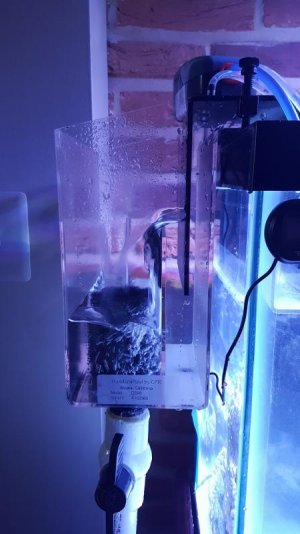
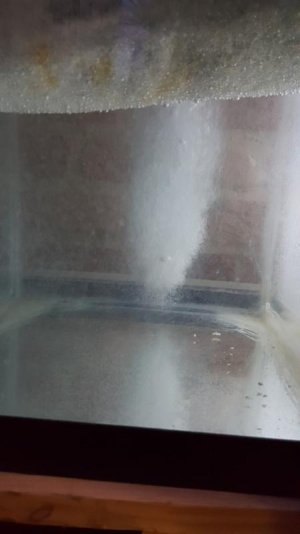
Ill take one when I get home to better illustrate what I think is happening.
As for the return.. the pump is a sicce rated for 1300 gph. I currently have approx 5-6ft and 8 90 degree elbows (way overkill.)
the elbows = 1 additional foot of head pressure and the chart that came with the pump says that comes out to around 200-300..
I can easily eliminate 3 of the elbows, probably even 4. This should bring me in range according to the chart....
However, as you mentioned, how this will translate to the overflow is what I am curious about.
Currently the drain in the overflow is not completley submerged as the water coming in is so slow it cant "fill" it. I was thinking if the flow increases to at least cover the drain partially it will eliminate some of the air getting sucked down.
As for the return.. the pump is a sicce rated for 1300 gph. I currently have approx 5-6ft and 8 90 degree elbows (way overkill.)
the elbows = 1 additional foot of head pressure and the chart that came with the pump says that comes out to around 200-300..
I can easily eliminate 3 of the elbows, probably even 4. This should bring me in range according to the chart....
However, as you mentioned, how this will translate to the overflow is what I am curious about.
Currently the drain in the overflow is not completley submerged as the water coming in is so slow it cant "fill" it. I was thinking if the flow increases to at least cover the drain partially it will eliminate some of the air getting sucked down.