How to plumb my sunp

mskvarenina

Member
So I just picked up my new reef ready tank and it came along with these bulkhead fittings.

I've picked up a 1 1/2" and 1" threaded PVC to sweat adapters to experiment with but I'm unsure what the next method is for connection.

I've heard a few people mention Spa pipe but this pipe at The Home Depot appears to be very flexible but also not very sealable.

The sump will be in the basement one floor below the tank and I'm trying to minimize the noise of the water coming from and to the tank.

Should I hard plumb the connections with PVC and cement or is there a flexible pipe that people use and if so where do you get it and the fittings?
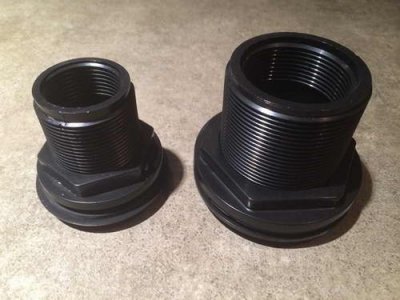
 

Attachments

  • bulkhead_resize_resize.jpg
    bulkhead_resize_resize.jpg
    35.4 KB · Views: 1
You can use either one, it's personal preference and you can find all the hoes and fitting at just about any hardware store. Lowes Or Home Depot.
 
Spa flex is a white flexible type of PVC that must be glued. You might have been looking at something different.

To keep noise to a minimum, use as few 90's as possible, keep both overflow lines the same length. I know some say to use ball valves, I tried it and ended up removing them because they caused to much noise.

Yee's instead of tees are also a good way to keep water flowing smoothly.
 
I've set up many systems for people where the filtration is located in seperate rooms or basements, sometimes the runs have been hundreds of feet one custome had me plumb everything under ground to a shed setup as a filtration room. Spa flex, clear tubing, PVC are all personal preference however if your going through floors or walls I would suggest to use only sch 40 PVC for at least the transition areas, the reason I say that is that rigid pipe is needless to say more durable and less likely to leak as well as better at holding tempature in the transition areas through floors once you've plumbed through you can easily transfer to clear tubing and make the rest of the run out of that however I'd be glad to pm you directions and a material list you would need to complete it all with PVC. If done properly it would be completely silent and fail safe. Now if you decide to take another route with either spa flex or tubing I'll give you some pointers on that as well. Spa flex would be a pretty expensive option to the clear tubing but it is easier to work with and there is no need to glue spa flex it's ends are made of a softer tapered plastic that you push in to fittings tightly and use a zip clip to secure it this would not be ideal to go through floor due to its ability to dry rot and crack very easily also the spa flex has a tendency to bounce around a lot more with water running through it and cause noise. Clear tubing would be my second preferred method it holds up pretty good with barb fittings and hose clamps however it is a little more difficult to fish down walls and through floors due tie the bending factor and it usually comes in a roll so you have the constant curve to deal with. Over time the tubing becomes hard and tends to crack around hose clamps and fittings, this doesn't mean it will leak but the potential is there much more than PVC. In any of theses circumstances you would want to limit the amounts of 90s that you install and try to use 45s. If you plan correctly you can replace every 90 with two 45s so that it's a rolled bend not sharp.
Good luck and keep us posted
 
Spa flex would be a pretty expensive option to the clear tubing but it is easier to work with and there is no need to glue spa flex it's ends are made of a softer tapered plastic that you push in to fittings tightly and use a zip clip to secure it this would not be ideal to go through floor due to its ability to dry rot and crack very easily also the spa flex has a tendency to bounce around a lot more with water running through it and cause noise.

I'm not sure what you are referring to, but spa flex is very stiff walled flexible PVC and must be glued. Zip ties will do nothing to hold it in place.
 
We'll the run is only about 10-12 feet, nearly straight down through 2 2-inch holes I put in the floor then a slight bend into the sump and really one going left for the supply and one going a bit right for the return. Something flexible would probably be best especially if I can get quick disconnect unions. Years ago I used a big think hose from Eheim and their quick disconnects but I doubt they may one 1.25 inches which is what I think the supply hose will be.

There seems to be some debate on what spa flex is and if it needs to be glued. I'd prefer not to have to glue anything so I can take it apart of it need to to move things around or whatever. Maybe someone can post a picture of spa flex and/or the tubing they recommend?
 
http://www.mrsupply.com/approved-ve...0810002.html?gclid=CNHc-MT6m7wCFaxxOgodIn0ANw

Here's a link to where we purchase the spa flex, I think what the above poster is referencing is the spa flex tubing you purchase by the roll from Home Depot or lowes it doesn't have the fitted ends on it, you can purchase the spa flex tube with the fitted ends on it so you can press them together into other fittings such as 45s you can also purchase tapered fittings to glue directly into the bulk heads then press the spa flex hose directly on it and secure it with a clip or hose clamp usually I use the hose clamps because a box of 100 2 " hose clamps is $12.95 vs a bag of those clips for 50 bucks.
Also many of the material I may be speaking of might not of been heard of by someone not in a plumbing field of work but again I am happy to send you any links for suppliers where you can purchase the material and also get accurate directions for use
 
With that run your talking about I would use the PVC for most of the run then transfer over to the clear tubing for everything close to the sump and tank so that you can make those slight bends your talking about easier you can also use threaded unions in the run to be able to disconnect later to clean
 
If someone could tell me how to add a picture here to my reply I could show you in detail my filter romm plumbing so you have a better idea of what I'm talking about
 
I just did the measurements and the new bench/counter is in place. It's an 11' run from the base of the countertop to the top of the tank.

There is not a clear straight path between the drilled holes on the tank and the holes I drilled through the stand and floor. This was for a few reasons, first the stand had a brace in the position where the holes would have lined up perfectly and I didn't want to compromise the integrity of the stand. Second right below is the floor is a huge HVAC plenum. If I were to hard pipe it, I'd have a lot of minor twists and turns to get the pipe down.

I do want some quick disconnect valves so I may end up going from clear flex tubing connected to barbs at the bulkhead, then to the Cepex ball values then either to sch 40 or back to tubing into the sump.

To post a picture just click on the imagine that looks like a postage stamp or mountain picture above.
 
The true spa flex, roll stuff at HD or Lowes can be heated slightly in a 170 degree oven and bent slightly as needed.

The ribbed stuff that is shown in the posters pic will give you more turbulence because of it not being smooth inside and could be noisier.
 
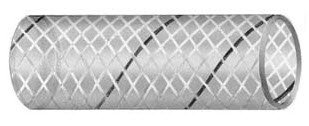
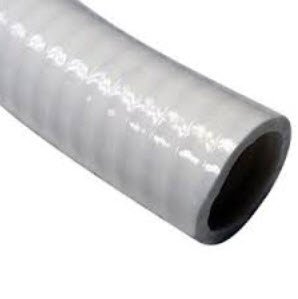
So how is Spa flex different from plain old clear reinforced tubing as shown in these 2 photos?


Oh and for the gentleman above, my mistake. Just click the Go Advanced button then do a file attachment of your image(s).
 

Attachments

  • tubing.jpg
    tubing.jpg
    9.7 KB · Views: 2
  • tube2.jpg
    tube2.jpg
    8 KB · Views: 3
All is good. I found the spa flex at my local HD. It was labeled pool vacuum hose which is why I missed it the first time.

Also did a bit more research and this definitely gets glued to sch 40 fittings. Picked up 11' of each size I needed.

Thanks everyone for the advice.
 
Back
Top