I'm new to Reefs and have questions

kntry

New member
Hi everyone.

I've had freshwater and planted tanks all my life, as well as my present 11,000 gallon koi pond, 1800 gallon QT tank and 1800 gallon goldfish/lily pond. I know the importance of testing water and starting with the right equipment so I have some, a lot:lmao: of questions.

Thank you in advance for all the help!

I'm thinking about getting either the JBJ 28 gallon tank or the Coralife 29 gallon tank. I know it's not much water to work with, especially being a beginner, but any larger would be out of my price range due to the cost of live rock and corals.

Which tank would be better for coral and fish? The JBJ comes with an "intermediate light" which I have no idea what that means. The Coralife has 4 slots to add additional light strips.

Would it be better to buy a tank and light instead of an "all in one" tank? If so, what light is best?

Do I have to have a sump?

Would it be ok to buy mostly dry rock and add some cured live rock and live sand, to cut down on the cost? From what I've read, the live rock and sand will seed the dry rock and it will become "alive"??? IF I can do this, I may be able to afford to change my 75 gallon over to a reef but I'm working on the idea of having to use the smaller tank.

With these 2 tanks, are there certain corals that would thrive more than others? Mushrooms, clams, feather, anemone, starfish?

Would 4 small, 4", fish overcrowd the tank? What determines how many fish and corals one can have in a saltwater tank?

Once I put the rock and sand, how long does it take to cycle a saltwater tank before I can add coral and fish?

What minerals/supplements will I need to dose besides calcium?

What would be a good auto dispenser for the minerals/supplements?

I'm planning on using only premixed salt water from the LFS, doing 10% water changes weekly.

I have a SunSun 256 gph canister filter that can be added for additional filtration, if needed. I also have an inline heater and small powerhead, if needed.

I started reading the "newbie" section and got overwhelmed when I got to the sumps. Having koi for 27 years, I know there are easier ways to do things that involve lots of equipment and expense and there are other ways as long as you're diligent, which I am.

Any other pertinent information would be greatly appreciated. I don't want to fail at this!

Thank you,

Sandy
 
Sounds like you already know the importance of QT, so you are halfway home.:-)

I don't have any experience with all in one tanks. As you say, bigger is easier up to a certain point but I think that's mitigated somewhat by having an ATO (Auto Topoff) unit, which you are going to want anyway (believe me).

Having said that, I would recommend that you start by finding your local reefing community. At least where I am there is a steady stream of used tanks that come on the market, often with useful hardware. Reef addicts upgrade and downgrade like Ivana buys shoes, it seems like. And people have to move unexpectedly and sometimes practically give away tanks if you're patient.

You should first consider what kind of fish, coral and inverts appeal to you, and then check the size requirements and amount of light to support them. Liveaquaria.com is a good resource to check basics requirements, and I think they have sections on beginner fish and coral.

Coral contribute very little to the bioload and therefore can be crammed into a tank. However, some corals don't like each other and so that takes some research. In general, saltwater tanks support less fish per gallon than freshwater. Once you settle on a tank and start on a stocking list, you can post it here and get feedback as to capacity and potential personality conflicts.

You can certainly start with dry rock and cycle it, to make live rock. The live part just means that it has enough resident bacteria to support the ammonia, nitrite, nitrate cycle. Of course, eventually it will also become live in the sense of hosting various worms, copepods, starfish and other cool stuff. IMO, this is where the reef tank beats freshwater hands down, but maybe I'm weird.:-)

IMO- don't worry about supplements yet. If you are doing 10% water changes weekly, you won't need to worry about supplements until you get a significant amount of coral in place or start stocking SPS (small polyp stonys) which suck up calcium. Put that on the worry about later list.

Things to worry about first- learn about protein skimmers, water circulation, lights and ATO units. A sump is not necessary, but very useful for holding your skimmer and increasing your water volume. The return pump helps provide flow in your tank. I know it can be intimidating if you aren't handy with plumbing (I am fortunate that my DH is willing and able), but they really are a significant advantage. another good reason to look for a used system in good shape with plumbing already in existence.

You may find that lugging saltwater back from the store gets to be expensive and a real chore. Do a little reading about RODI and consider making your own. It's not hard, but it does take some space.

Welcome to RC.
 
I've never gone with AIO tanks as I prefer to have more control and options over the lighting and filtration. That said, there are many fine examples of AIOs out there.

A sump is not necessary, but if you are eventually going to skim, dose, ATO, etc you'll be happier with one. It keeps all the clutter out of the display and makes for easier maintenance.

Starting with dry rock is absolutely OK, as you mentioned, seeding with a piece of live rock can help things along a bit.

I typically let the tank cycle naturally, by ghost feeding and test ammonia and nitrite often. The cycle can take a few weeks, but I prefer to be conservative rather than rushing it. Start slow once you start adding livestock.

Dosing can wait until you get a few corals. Make sure you get good test kits for everything you want to dose. I dose calcium, alkalinity, and magnesium - those are the basics along with routine water changes.

I agree with the comment on getting a RO/DI unit - getting water from the LFS gets old...

Good luck!
 
Hi everyone.

I'm thinking about getting either the JBJ 28 gallon tank or the Coralife 29 gallon tank. I know it's not much water to work with, especially being a beginner, but any larger would be out of my price range due to the cost of live rock and corals.Either one would work well for you I think. AIO (all in one) tanks are a great starting point. Or destination point if you don't want to go bigger.

Which tank would be better for coral and fish? The JBJ comes with an "intermediate light" which I have no idea what that means. The Coralife has 4 slots to add additional light strips. Since both are designed to be a reef tank, you should be able to keep soft corals, most LPS and lower to moderate light corals.

Would it be better to buy a tank and light instead of an "all in one" tank? If so, what light is best? Your choice really. Either way works. If you just want to have a pretty much plug and play system that will work for you without tons of extra stuff then an AIO is a good choice.

Do I have to have a sump? Nope. Most people do, because it makes so many things easier and provides a place to stick all the equipment and have a refugium. But with an AIO tank you have a built in filter compartment area. Lots of benefits to having a sump, but you can manage without one.

Would it be ok to buy mostly dry rock and add some cured live rock and live sand, to cut down on the cost? From what I've read, the live rock and sand will seed the dry rock and it will become "alive"??? IF I can do this, I may be able to afford to change my 75 gallon over to a reef but I'm working on the idea of having to use the smaller tank. Yes! Absolutely and it will eventually all be live rock.

With these 2 tanks, are there certain corals that would thrive more than others? Mushrooms, clams, feather, anemone, starfish? Mushrooms will do well. You would probably need to upgrade your lighting for a clam as they need intense lighting, but I don't keep clams so I'm not an expert there. Feather?? Oh, feather duster? They are filter feeders and can be hard to keep alive long term. Starfish: generally not a good choice. The ones that will do well and not starve will eat everything in the tank. The reef safe ones have a poor survival rate. There are a couple kinds that do a bit better, but I'm not sure which. Anemone: not for a while. They need a mature tank with stable parameters and decent lighting. Down the road, a bubble tip is a good choice.

Would 4 small, 4", fish overcrowd the tank? What determines how many fish and corals one can have in a saltwater tank? That's the million dollar question! No one answer. Besides the bioload issue, you have to keep in mind that many marine fish are quite territorial. I wouldn't go more than 4 fish in a 29gal AIO (and remember the true volume is less than 28-29 gallons) and even then, only 4 if they were small 1-2, maybe 3 inch fish. Think along the lines of a couple small fish. Corals, well you can stuff more of them in!

Once I put the rock and sand, how long does it take to cycle a saltwater tank before I can add coral and fish? It depends. It can take a couple weeks to a couple months, but hopefully a couple weeks.

What minerals/supplements will I need to dose besides calcium? I don't dose anything, but I have an easy mostly soft coral reef.

What would be a good auto dispenser for the minerals/supplements?

I'm planning on using only premixed salt water from the LFS, doing 10% water changes weekly.Sounds like a good routine. But plan ahead for emergency water changes. Believe me, it will happen. It's very worth it to have your own RO/DI maker. You will need RODI for topoffs anyway. Your LFS probably sells RODI as well.

I have a SunSun 256 gph canister filter that can be added for additional filtration, if needed. I also have an inline heater and small powerhead, if needed. Most people avoid canister filters as they are unnecessary and create nitrates. An additional PH for water flow can be helfpul.

I started reading the "newbie" section and got overwhelmed when I got to the sumps. Having koi for 27 years, I know there are easier ways to do things that involve lots of equipment and expense and there are other ways as long as you're diligent, which I am. I get it! All that plumbing. I don't have a sump either. If I didn't have an easy to keep reef I would want one though. Ironically, it's more complicated at the beginning but makes managing the tank much easier long term. But you can do fine without one, just keep up on your water changes and routines for the tank.

Any other pertinent information would be greatly appreciated. I don't want to fail at this! Persistence is all you need! :) Well, also patience and research and all that stuff. I'm sure you will succeed though, it's just how much you want to do it.

Thank you,

Sandy

Welcome to the hobby! It's addictive :)
 
Thank you for the responses.

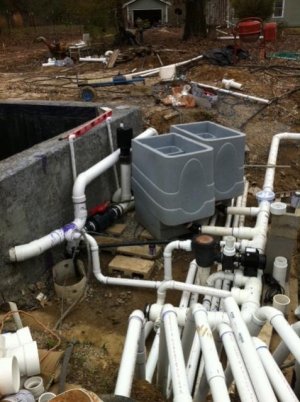
I'm not afraid of plumbing. I build my own ponds and filtration. This is the plumbing coming from my filter pit to sand and gravel filters! My hubbie is a retired med gas plumber and he can't figure it out! LOL

I'm just not familiar with a sump, what it's used for and how it works. Is it basically just a place to keep powerheads, skimmers, etc or does it serve another purpose? What keeps it from overflowing, especially during power outages which we have on a weekly basis? When you say skimmer, are you talking about a protein skimmer?

BTW, I'm building a foam fractionator which is a protein skimmer on steriods for my pond today.

I will continue to look on Craigslist for a used tank. We don't really have clubs here. I live in the country and the only LFS are PetsMart and Petco. Anything I buy will have to be online.

I would rather have a regular and not an AIO but it seems they are much more expensive. Also, I have no idea what kind of light I would need.

If I change the 75 gallon over, do I need .5 lb. or 1.5 lbs. of live rock per gallon? This is my hang up for changing this tank over. At over $500 just for live rock, it's too expensive.
 

Attachments

  • 2-18-13 Piping in pit.jpg
    2-18-13 Piping in pit.jpg
    56.1 KB · Views: 4
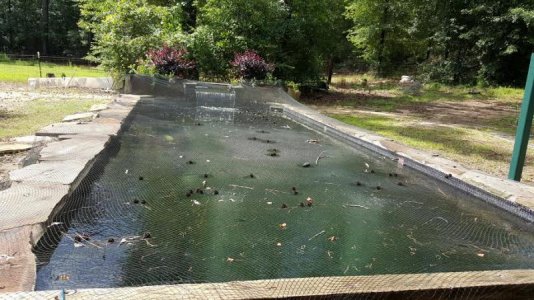
  • 5-31-15 Pond with net.jpg
    5-31-15 Pond with net.jpg
    93.8 KB · Views: 3
Back
Top