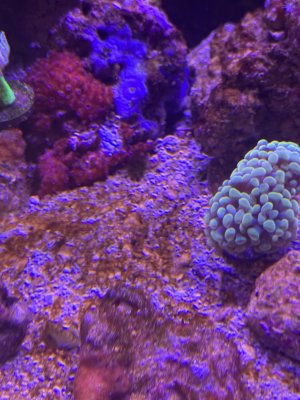
Is this just part of the process??

Oh, yeah.

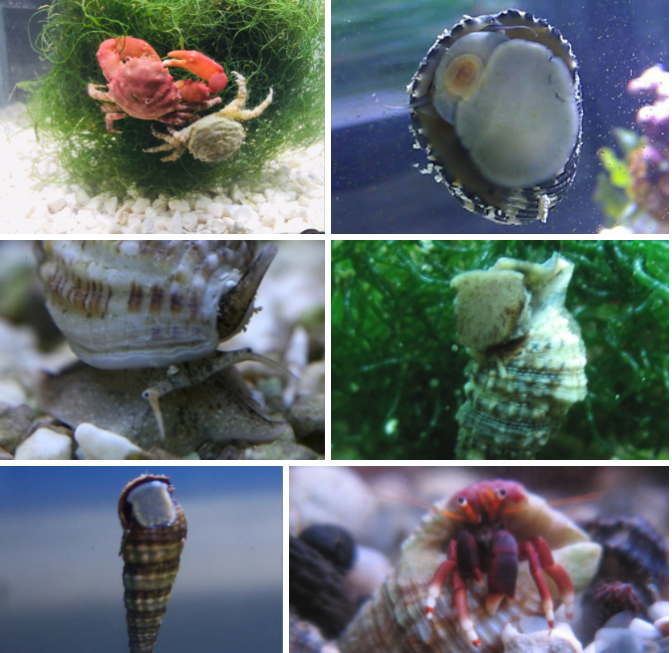
I’ve always found Reef Cleaners to be pretty spot on with the number of CUC animals. Here’s what they recommend for 50 gallons.

 
My calcium is 410 I don’t have a magnesium kit
My lights are on 8 hours total
2 hours ramp up 4 hours sun 2 hours ramp down
That’s all I’m doing for now
CA is fine at 410ppm. I’m 465ppm. Just keep an eye on it….not below 410ppm.
MG is important to maintain in the 1350-1440ppm range.

Its a buffer between Alk and CA a so they stay in the water available to organisms to uptake. Very low MG can cloud water and those two things try to come together and precipitate out of the water.

I understand what you’re saying about having no corals but I always recommend maintaining all parameters right from the start for three reasons.
1. Water Chemistry is the largest contributor to success or failure.
2. Other organisms (like coralline algae) uptake CA.
3. Overall stability decreases pest stuff development and favours the good guys allowing the micro type friends to populate and overtake the pest stuff (say Dino’s and GHA) keeping rocks clean and sand white. I find this process faster when conditions are perfect. Perfect IMM is the right level and not changing over 24 hours, especially Temp, Salinity and Alk.

Of course, if this will always be only fish, then yup, not much interested in CA and water changes will likely keep everything (including CA) in check.
 
Last edited:
So 6 weeks in this is normal?
Nothing I can do except maintain parameters and do my usual /0% weekly water changes?

I did test my nitrates again today
They are more in the 10 plus range
 

Attachments

  • IMG_6297.jpeg
    IMG_6297.jpeg
    1.7 MB · Views: 2
It could be anywhere from weeks to months before it starts to clear up. Adding a CUC, reducing lighting, water changes (siphon out the diatoms when doing your water change), etc will all help. Once the diatoms start to subside, you'll likely start seeing some higher algae like green hair and maybe some cyano.

That said, your nitrate is a bit on the high end but, not terrible. Did you test phosphates or have a phosphate test kit?

BRS Parameters.PNG
 
It could be anywhere from weeks to months before it starts to clear up. Adding a CUC, reducing lighting, water changes (siphon out the diatoms when doing your water change), etc will all help. Once the diatoms start to subside, you'll likely start seeing some higher algae like green hair and maybe some cyano.

That said, your nitrate is a bit on the high end but, not terrible. Did you test phosphates or have a phosphate test kit?

View attachment 32417113
Yeah
Phosphates were near zero

Why is this fun? Months then green hair algae?
 
Yeah
Phosphates were near zero

Why is this fun? Months then green hair algae?
It will likely be over sooner but, be prepared for a potential long haul. Many new reefers get frustrated and quit way too soon. Those without patience don't seem to last long in this hobby. I've seen it a million times over the years.

I personally have had so many setbacks in this hobby it's not funny. But, when things are going well, the hobby is very enjoyable. Plus, I've met some really great people over the years.
 
It will likely be over sooner but, be prepared for a potential long haul. Many new reefers get frustrated and quit way too soon. Those without patience don't seem to last long in this hobby. I've seen it a million times over the years.

I personally have had so many setbacks in this hobby it's not funny. But, when things are going well, the hobby is very enjoyable. Plus, I've met some really great people over the years.
I figured having actual live rock and live sand would mitigate that
 
I wouldn't pull the rock out. I would just siphon the diatoms out when doing a water change. If you feel you want to remove more frequently, you can use a brine shrimp net, stir the diatoms up and scoop them out with the net. Not sure how effective that would be as I've never tried it.
 
Great advice from griss.
The “fun” is going to happen.
But the “environment” takes time. With dry rock and sand mine was about a year. At this time, everything had left and replaced by a good guy bio film, the true CUC but are mostly unseen. It’s these guys that keep rocks clean and sand white. I haven’t touched a rock or sand in years.
But these guys are slower to populate.
You’ve already sped them up with the live stuff, you’ll mature faster than dry stuff.
For the next few months, work diligently to keep Temp, Salinity and Alk pinned with very little change from hour to hour.
Watch the direction of nitrates and phosphate week over week. Use water changes only if they rise.
Certainly take as much crap as you can out, but if nitrates are stable, put syphoned water through a sock and return that water to the DT. The good thing with this is you can vacum very frequently, without bottoming out nutrients.

I have found this hobby to be quite easy provided I was always diligent about my waters.

On phosphate, the only test that ever gave me a good answer was the Hanna UL Phosphorus Checker. I find the colour meter does a better job than my old eyes. The colour change between 0.05ppm and say .1ppm looks the same to me, clear. Phosphate is critical in super trace amounts say .1ppm. With nitrate and other DOS, they feed the entire system, including corals.

When you provide great waters, stable and unchanging in chemistry, everything you put in will do great every time.
Saves a ton of money as well.

Welcome to the uglies. Part of the maturity process as “stuff” competes for space.
 
Last edited:
Great advice from griss.
The “fun” is going to happen.
But the “environment” takes time. With dry rock and sand mine was about a year. At this time, everything had left and replaced by a good guy bio film, the true CUC but are mostly unseen. It’s these guys that keep rocks clean and sand white. I haven’t touched a rock or sand in years.
But these guys are slower to populate.
You’ve already sped them up with the live stuff, you’ll mature faster than dry stuff.
For the next few months, work diligently to keep Temp, Salinity and Alk pinned with very little change from hour to hour.
Watch the direction of nitrates and phosphate week over week. Use water changes only if they rise.
Certainly take as much crap as you can out, but if nitrates are stable, put syphoned water through a sock and return that water to the DT. The good thing with this is you can vacum very frequently, without bottoming out nutrients.

I have found this hobby to be quite easy provided I was always diligent about my waters.
You may not like testing, but I assure you it’s required.

On phosphate, the only test that ever gave me a good answer was the Hanna UL Phosphorus Checker. I find the colour meter does a better job than my old eyes. The colour change between 0.05ppm and say .1ppm looks the same to me, clear.

When you provide great waters, stable and unchanging in is chemistry, everything you put in will do great every time.
Saves a ton of money as well.

Ah yes, it's been many years since I've used the old filter sock in the sump, vacuum/siphon into that to remove gunk without doing a water change. Thanks for reminding me of that trick.
 
Great advice from griss.
The “fun” is going to happen.
But the “environment” takes time. With dry rock and sand mine was about a year. At this time, everything had left and replaced by a good guy bio film, the true CUC but are mostly unseen. It’s these guys that keep rocks clean and sand white. I haven’t touched a rock or sand in years.
But these guys are slower to populate.
You’ve already sped them up with the live stuff, you’ll mature faster than dry stuff.
For the next few months, work diligently to keep Temp, Salinity and Alk pinned with very little change from hour to hour.
Watch the direction of nitrates and phosphate week over week. Use water changes only if they rise.
Certainly take as much crap as you can out, but if nitrates are stable, put syphoned water through a sock and return that water to the DT. The good thing with this is you can vacum very frequently, without bottoming out nutrients.

I have found this hobby to be quite easy provided I was always diligent about my waters.
You may not like testing, but I assure you it’s required.

On phosphate, the only test that ever gave me a good answer was the Hanna UL Phosphorus Checker. I find the colour meter does a better job than my old eyes. The colour change between 0.05ppm and say .1ppm looks the same to me, clear.

When you provide great waters, stable and unchanging in is chemistry, everything you put in will do great every time.
Saves a ton of money as well.
Ok
That’s great advice especially with the water change and sock
Whats CUC?
 
Ok
That’s great advice especially with the water change and sock
Whats CUC?
Clean up crew.
Snails hermits and the like.
Few are ok in newer systems say under 6 months.
They can work on rocks and keep your sand turned.
it’s easy to overstock these, so go slow add a few, see what happens.

Always keep in the back of your mind that your creating a living environment and balance is paramount.
Whenever things go out of balance, bad things thrive.
 
I ordered (and received today) the 90 gallon crew from Reef Cleaners for the 150. Plus, I've moved a handful of hermits and snails over from the tank I'll be taking down.
 
I have a variety totaling 12 or so in a 60 gallon
Could I use more?
Sure, if you want. See how they do.
I have just a hand full of snails in 180g but its 7 years mature.
They do take up some algae.
I don’t use crabs because they always caused me grief and quickly learned that the frozen foods came from the surface so they became lazy. Fired them.
There inclusion is just a matter of personal preference
 
I should add, early on in a build, I always tend to overstock the CUC. No specific reason, it's just something I've always done. I do use hermits because I like them more than the cleaning they do. As Uncle said, they do quickly learn what time of day you feed.
 
Back
Top