I took great advantage of a Thanksgiving sale to pick up a bunch of Pictilis Anthias for a really great price - 60% off normal! It might cost me more in the end.
I ordered 5 females and 1 male. One of the females was DOA, less than 24 hours in the bag. Sounds suspicious.
A couple of the fish has some scuff marks on them - looks like they had some fights before getting shipped out? Sounds suspicious.
These suspicions made me decide to do CP treatment in QT rather than TTM or Copper.
I moved them into a brute can with an airstone with the shipping water, and dosed prime to bind to ammonia. I then adjusted the 40G QT tank to match salinity(1.018??) and temp.
I then dosed formalin and let the fish stew for 10 minutes before carefully moving each to the QT tank.
One female, with a red mark, then looked like she would die within a couple minutes. She was laying upside down, and barely breathing. I thought I killed her with 10 min of formalin. A couple hours later she was swimming around like nothing happened.. Yay!
That was ~68 hours ago. 48 hours ago, I dosed CP at 30mg/gal.
5 hours ago I saw the male was hiding in a PVC pipe - so cute, except he was floating upside down. Ops, well I carefully took him out and put him in a bucket. I gave him Methylene Blue and a 30 min Formalin dip, then gave him a fresh bucket of clean water. He was almost fully recovered. Yay!
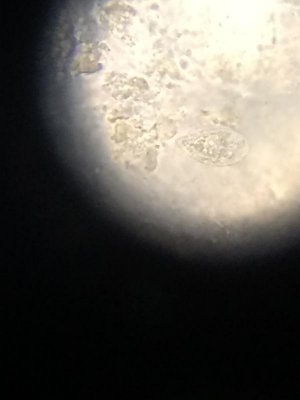
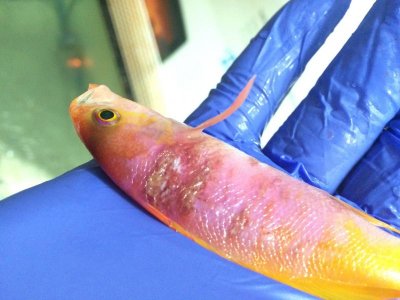
I then cought and thoroughly examined each of the remaining four females. One looks clean, two have additional discolored patches, and the fish that had the red mark from the start, now has an obvious full-blown Uronema infection with one side looking almost fully dissolved.
Good thing I am alone in the house today - I almost became international with the amount of French/sic coming out of my mouth.
I have now upped the dose of CP to 80mg/gal and added in 25mg/gal of metro. The male is still separated but with the same dosage plus 1ml/gallon methylene blue.
I thought my problem would be getting them to eat, but it now looks like my problem is to not let them get eaten.
I'll include some photos so you can join the pity party.
What am I thankful for this thanksgiving? I learned my lesson in the past, so these fish were fully QT from all my established tanks/equipment.
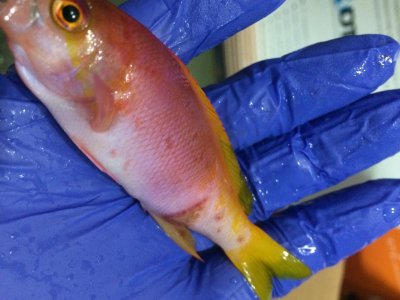
~68 hours ago - see the red freckle/mark
----
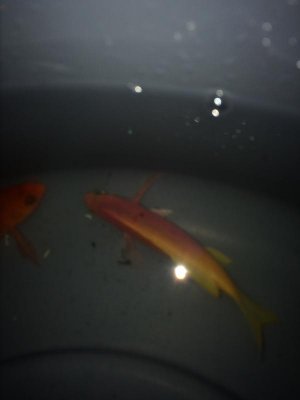
2 hours ago -
------
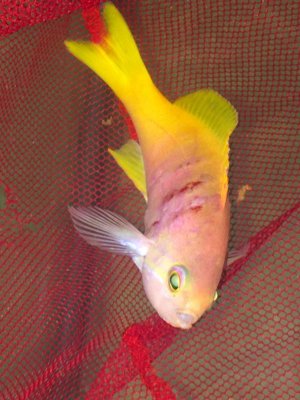
Oddly enough, this girl is still swimming around like nothing happened. She might be dead tonight.
Stay safe folks, QT your fish!
-Matt
I ordered 5 females and 1 male. One of the females was DOA, less than 24 hours in the bag. Sounds suspicious.
A couple of the fish has some scuff marks on them - looks like they had some fights before getting shipped out? Sounds suspicious.
These suspicions made me decide to do CP treatment in QT rather than TTM or Copper.
I moved them into a brute can with an airstone with the shipping water, and dosed prime to bind to ammonia. I then adjusted the 40G QT tank to match salinity(1.018??) and temp.
I then dosed formalin and let the fish stew for 10 minutes before carefully moving each to the QT tank.
One female, with a red mark, then looked like she would die within a couple minutes. She was laying upside down, and barely breathing. I thought I killed her with 10 min of formalin. A couple hours later she was swimming around like nothing happened.. Yay!
That was ~68 hours ago. 48 hours ago, I dosed CP at 30mg/gal.
5 hours ago I saw the male was hiding in a PVC pipe - so cute, except he was floating upside down. Ops, well I carefully took him out and put him in a bucket. I gave him Methylene Blue and a 30 min Formalin dip, then gave him a fresh bucket of clean water. He was almost fully recovered. Yay!
I then cought and thoroughly examined each of the remaining four females. One looks clean, two have additional discolored patches, and the fish that had the red mark from the start, now has an obvious full-blown Uronema infection with one side looking almost fully dissolved.
Good thing I am alone in the house today - I almost became international with the amount of French/sic coming out of my mouth.
I have now upped the dose of CP to 80mg/gal and added in 25mg/gal of metro. The male is still separated but with the same dosage plus 1ml/gallon methylene blue.
I thought my problem would be getting them to eat, but it now looks like my problem is to not let them get eaten.
I'll include some photos so you can join the pity party.
What am I thankful for this thanksgiving? I learned my lesson in the past, so these fish were fully QT from all my established tanks/equipment.
~68 hours ago - see the red freckle/mark
----
2 hours ago -
------
Oddly enough, this girl is still swimming around like nothing happened. She might be dead tonight.
Stay safe folks, QT your fish!
-Matt