LED and Photosynthesis

bluetmax

Member
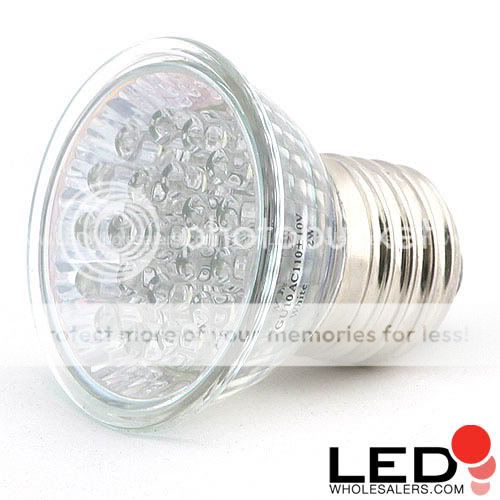
I found a light today at Lowe's that I would really like to use as opposed to my moonlights if it were possible. My primary reason for wanting to use it is that my tank is a cube with a metal halide pendant, and I found a very simple way to mount this, unlike the single moonlights that are available. Its an LED Accent Light that is actually designed for under cabinet use, that contains 20 individual LED lights. My question, though, is how will something like this only run at night - as opposed to the LED moonlights you can buy in any LFS - affect photosynthesis, if it will at all?
 
Moon lights may help with coral propergation but have no affect on nutrients. Its more for a more realistic appearance and looks then coral health.
 
Re: LED and Photosynthesis

<a href=showthread.php?s=&postid=11363340#post11363340 target=_blank>Originally posted</a> by bluetmax
how will something like this affect photosynthesis, if it will at all?
That would depend upon the wavelength of the LED and it's intensity. Chances are, it's not going to be bright enough to keep your corals awake and they'll go about their night as if the LEDs weren't there at all. If the corals that normally close up at night stay open when the LEDs are on, then it's probably too much light.
 
I have looked everywhere on-line, and cannot find this light - even on Lowe's, and I purchased it at one of their stores! It's an LED Puck Light manufactured by Portfolio. Its 4.125 inches in diameter...It doesn't have any specs on any of the literature regarding intensity or wavelength. It does say that its not intended for aquarium use though. lol Everything is extending as it normally does at night however, and it was somewhat brighter than I was expecting. I put some electrical tape over some of the bulbs. Over all, I'm pleased with it. If anyone has anything to add though, I'd like to hear it.
 
I think this is what you have:
pkw520copymw0.png


I bought it for under my cabinets a few months ago.
 
Moonlight is merely a dim reflection of the sun and is the same light spectrum as what the corals see during the day. Dive underwater at night-it's not more blue, it's just real dim.
 
erbio, that's nowhere close. lol I tried my best to find a picture of the light, and I couldn't. Its just 20 small LED lights with a button in the center that you push to make them come on. It was a little bright for my tastes, so I blacked out a few of them. Everything is doing great so far, and the corals are extending their polyps at night just as they always have. So far so good.
 
Seen them at lowes plenty of times I used to rep for Scotts lawncare products so I was there everyday trying to find diy projects for cheap. I think the only concern with those lights and why they aren't for aquarium use is that the casing isn't water tight at all and the cable probably isn't shielded. But Im sure you dont have a whale in there splashing all time so it shouldn't be a problem. You should post some pics when able.

I dont get why people are waiting on these LED fixtures to come out. I can buy nearly 500 LEDs in whatever intensity or color I choose already wired in 50 bulb increments for around 200.00. All that would be left is to build the fixture to house them. HO LEDs put out next to no heat so that shouldn't an issue. Correct me if I am wrong.
 
Zooxanthellae Absorbance

Zooxanthellae Absorbance

Here are the absorbance curves for zooxanthellae:
93304Zooxanthellae_Absorbance.jpg

Source:
Photobehavior of stony corals: responses to light spectra and intensity
O. Levy*, Z. Dubinsky and Y. Achituv, The Journal of Experimental Biology 206, 4041-4049, 2003

Many thanks to Dr. Sanjay Joshi for forwarding the absorbance curves to me.

Here are links to spectral analyses of LED's from the Solaris and Aquaillumination fixtures:
http://www.advancedaquarist.com/2006/8/review2
http://www.advancedaquarist.com/2007/10/review/view
 
Thanks very much pjf. Excellent references. Reading a dozen articles by Dana Riddle and Sanjay Joshi has really enlightened me about what corals want, what they see in the wild, and which lamps best provide those things.

It's too bad the Solaris is priced so much higher than it needs to be...I guess they're aiming at whatever the market will pay.

Is it a coincidence that the absorbance curve you posted, the spectral measurements of the light at ~7m deep, and spectral output of a URI Actinic VHO are all so close to each other? That's why I'm using plenty of those lamps.
 
It seems the inability for LED light to penetrate to any reasonable depth will keep things just out of reach on the horizon.
 
Per Sanjay Joshi (http://www.advancedaquarist.com/2005/8/aafeature): “the loss due to 2ft of water is about 14%.” Whether or not you agree with this figure, the light loss due to absorption by 2 feet of water is a percentage. It does not matter whether the light is bright or dim to begin with. If the spectrum is similar, it does not matter if the light is from a T5, MH, incandescent or LED source.

It does matter if the light is parallel (like a laser) or diverging from a point source. However, total internal reflection (TIR) is achieved when light enters the water at an angle less than 60-degrees from vertical. At these angles, the glass walls will reflect light back inside the tank. When you have TIR, absorption by 2 feet of water is ~14% regardless of source (discounting shading, live rock, etc.).
 
<a href=showthread.php?s=&postid=11623947#post11623947 target=_blank>Originally posted</a> by WarrenG
It's too bad the Solaris is priced so much higher than it needs to be...I guess they're aiming at whatever the market will pay.
I do wonder about their profit margin.

The Solaris and Aquaillumination LED fixtures are price competitive if you compare them with other computer-controlled dawn-to-dusk lights. The metal halide Sfiligoi Advanced Control Lighting System (ACLS) is more expensive (www.aquariumobsessed.com).
 
Instead of spending huge dollars on a dimming ballast (my company makes a very nice one for underwater video) for a reef tank it would be cheaper to just use several non-dimming ballasts to drive the lamp(s) and turn them on and off in a sequence.

I've been on reefs at the end of days and by the time you get down about 15 feet the angle of light is always close to vertical whether it's 7 am or 1pm. And when the light goes away at dusk it goes away quickly. I wonder if our corals even care if we turn our lights from full-on directly to full-off. But fish behave differently according to the time of day (amount of light).
 
You are correct. A 2-timer lighting system is much cheaper than a variable lighting system.

However, corals do care about tiered light levels. Photoinhibition can occur at the top of your tank when corals at the bottom are photosynthesizing. So MH lights at noon may benefit bottom dwelling corals, whereas dimmer actinics at dawn & dusk may benefit top dwellers.
 
Re: Re: LED and Photosynthesis

Re: Re: LED and Photosynthesis

<a href=showthread.php?s=&postid=11378369#post11378369 target=_blank>Originally posted</a> by J. Montgomery
That would depend upon the wavelength of the LED and it's intensity.

That part is right.... Fact is corals need night time as well and if they are photosynthesizing at night it may not be good for them… I have seen a lot of tanks where the moonlighting is two bright. 20 sound like allot to me depending on the type. Honestly to do moon lighting right it should be a glow and led is point source. To get this glow the best way is indirect lighting.

Dave
 
Back
Top