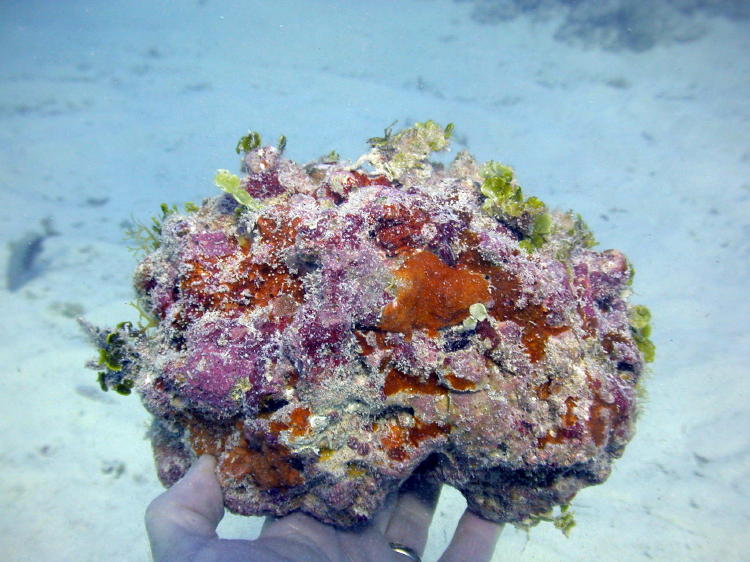
Marco dried rock or Live rock?

Elmareefer

New member
I’ve seen some conflicting things. Seems like Marco dried rock is the Jess expensive option that say live rock shipped overnight,. Just looking for the easiest option to be successful on my setup. Seems like the dried rock are for more seasoned guys as you have to add stuff to get the tank to cycle.

Am I overthinking this?
 
No, you have it correct.
Dead rock often has a name that suggests it is alive but it isnt. Live rock has been in a running system or the ocean and already has the bacteria and sometimes other things living in and on it. It should be handled and shipped like a living thing because it is.
Dead rock will go through several stages of growth of ugly stuff and generally takes 4 to 12 months before it starts to look like something you want in your tank.

You can use some of each and after 2 years they will all look the same.

Marco rock isnt dried. It is mined from ancient reefs and formations that were in the ocean a long time ago. Some dead rock is man made and shaped.
Live rock now was mined as well but then dumped in the ocean for a few years. No more destruction of reefs to get rock.
 
If you go with all Marco rock (as Ned mentioned, this is rock mined out of the ground that used to be ancient reefs) you can use a bottled bacteria product like Fritz Turbo Start to speed up the cycle. I've never used these but, @Dr. Reef has had good success with the Fritz product.
 
I’ve seen some conflicting things. Seems like Marco dried rock is the Jess expensive option that say live rock shipped overnight,. Just looking for the easiest option to be successful on my setup. Seems like the dried rock are for more seasoned guys as you have to add stuff to get the tank to cycle.

Am I overthinking this?
I have always used dry rock starts as good live rock is just out of scope where I am.

I always use Carib Sea Purple Rock as I don’t want to wait for this process. Purple looks mature from the start!

Saltwater, bacteria (a couple different brands) flow, heat, a week, and cycled. Add a fish or two, clowns are great first fish.

Then, each time you add something, it’s bacteria and micro-fauna become part of your system adding diversity which now populates itself, or be consumed by others.

I not had ugly problems provided I was diligent in maintaining my water chemistry.
 
I have added tanks with dead rock onto my running system. It grows ugly stuff because on blank rock whatever grows the fastest wins.
Water chemistry has nothing to do with it. Dead rock bring nothing to control what grows on it to the tank. The brown stuff has free reign for a while.
 
I have added tanks with dead rock onto my running system. It grows ugly stuff because on blank rock whatever grows the fastest wins.
Water chemistry has nothing to do with it. Dead rock bring nothing to control what grows on it to the tank. The brown stuff has free rein for a while.
IME the uglies love unstable water chemistry. The more, the better.

I like to keep a strict water chemistry regime.

If you have access to good ocean rock then sure, but there’s many this is not possible both logistically and financially.

But we CAN, limit the uglies by keeping environments they thrive in.

Or at least, for our group.

This is 100% dry rock.
IMG_1322.jpeg
 
IME the uglies love unstable water chemistry. The more, the better.

I like to keep a strict water chemistry regime.

If you have access to good ocean rock then sure, but there’s many this is not possible both logistically and financially.

But we CAN, limit the uglies by keeping environments they thrive in.

Or at least, for our group.

This is 100% dry rock.
View attachment 32415740
Nice!!
I’m looking to get Tampa rock so from what I read it’s good stuff

Being new is this the chart you follow?
 
Nice!!
I’m looking to get Tampa rock so from what I read it’s good stuff

Being new is this the chart you follow?
I just got some rocks from them and it was round cobblestone looking rock. I was very disappointed. It was my 4th order from them.
 
IME the uglies love unstable water chemistry. The more, the better.

I like to keep a strict water chemistry regime.

If you have access to good ocean rock then sure, but there’s many this is not possible both logistically and financially.

But we CAN, limit the uglies by keeping environments they thrive in.

Or at least, for our group.

This is 100% dry rock.
I have used about 200 pounds of dry rock. It is still a blank slate and the brown algae fills it first.
IMG_1528.JPG

75 pounds of Marco rock
IMG_1835.jpg

120 pounds of Caribsea liferock shapes, 120 pounds TBS rock picked up at the airport
IMG_5298rs.jpg

When I started the 180 I got 150 pounds of used rock in via mail.

IMG_4122.JPG

It all ends up looking the same eventually
 
Nice!!
I’m looking to get Tampa rock so from what I read it’s good stuff

Being new is this the chart you follow?
Not sure what you mean by “the chart you follow”.

The “live rock” I have access to is $10 a pound. It’s nothing but rock that’s allowed to mature in a vat. I can do that to.

It makes sense that “live ocean rock” would always beat dry in terms of speed and diversity, but for me, that’s outside my financial limits especially when with some patience, I can half that investment.

The other option is dry rock with live ocean rock seed. That’s reasonable if you have access to the good stuff, not just a rock, but a rock full of life. That stuff comes directly from the ocean and arrives still wet and full of life.

Unfortunately that is simply not available in my area. It’s either dry or the “pre-wet” stuff called live.

Just like a baker, there’s a thousand ways to make a great cake. Reefing is no different.
 
I like Marco rock because it allows you to take your time building rock structures by cementing pieces together into the shapes you want. I’ve started two tanks with it. On the first one, I moved fast, adding fish and corals as soon as the tank was cycled. Some green hair algae came in on a frag and absolutely took over the tank for 18 months until I finally got it under control. Now, three years in, the rock looks aged and has coralline growing on it. But the hair algae battle was not fun. I think it took over because there was nothing to compete with it for space on the rocks.

I started my second tank last year with Marco rock and also a couple pounds of live rock rubble from KP Aquatics. This time I went way slower. I made my rock structures and then cycled them in a plastic bin for a couple months. When the nitrogen cycle was finished, I dosed phosphate until I got consistent readings telling me the rocks had absorbed enough phosphate to match the water. At that point I added the rocks to the new tank and added the live rock rubble, which came in with coralline algae, sponges, tiny oyster/clams, and a couple baby pencil urchins. I waited another six weeks before adding a clean-up crew from Indo Pacific Sea farms. A week after that I added fish and a few coral frags.

Anyway, that’s probably more than you wanted to know, and probably sounds like an excruciatingly slow process. I would have been too impatient for that approach with my first tank. But I will say that with this second tank I’ve had no ugly stage at all other than a brief cyano outbreak that never really got too bad. I wouldn’t say my corals have exploded with growth yet, but overall things seem to be maturing nicely, and if you looked at the tank now, 10 months in, you wouldn’t be able to tell the live rock from the Marco rock — there are sponges, coralline, and little mollusks growing everywhere.

TL/DR - Dry rock seeded with live rock and taking each stage sloooow can work great.

 
Last edited:
Back
Top