Moving garden eels - this is going to be fun

andrewkw

Active member
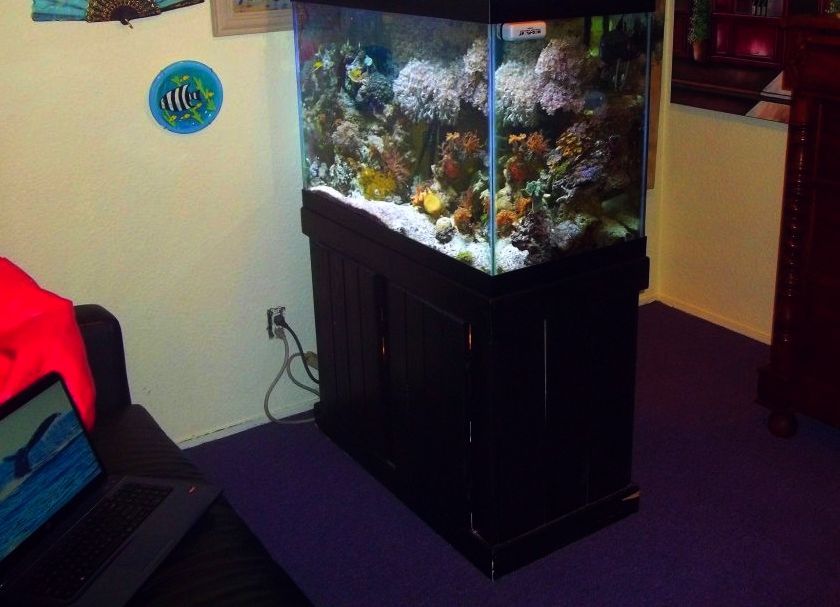
In the not too distant future I will be moving. Moving reef tanks is one thing, I don't think that's too big of a deal but what I am really dreading is moving my garden eels. I think I have a plan, but would like some input.

They are in a 90 gallon with 300+ lbs of sand. The sandbed is about 8" deep and undisturbed for a couple of years. Under that sugar sized sand there is another inch or so of courser stuff that was there for a few years before this. To add to the frustration I have to physically move the tank a couple of months before I move as I will be changing the carpet the tank is sitting on.

I know people always say throw out old sand, but this is a lot of sand to throw out, it's the main means of biological filtration since very little live rock is in the tank. Also even brand new this sand took many hours to rinse and days to clear. Catching the garden eels is another big problem. They are afraid of everything up to and including nothing. There are times when they don't eat because their food scares them. I can't imagine they are going to be happy when I dig them out. Even digging them out is going to be hard. What I'm thinking I'll do is feed them, and then put frag plugs on the sand where each one is. This step alone may take several feedings. I don't believe they can actually get away as I dig them out as they only tunnel up and down not side to side.

Once I catch them all, I will either rinse out some of the sand or perhaps buy some new sand, keep the sand in buckets, and put the buckets in the tank once its moved to have the carpet replaced. This way I can just remove the buckets with the eels when it comes time for the real move. As for the rest of the sand who knows how gross its going to be but I think its a pretty good assumption it will take an entire day of rising to clean it off again. Unfortunately this will of course destroy the bulk of the biological filtration, but I will just have to keep up with water changes until everything settles down again. There are millions of bristleworms, bristle starfish, astrena stars, pods ect which I hate to see go, but it will be difficult to get most of them out. After typing this out I'm dreading this process even further.
 
First thing I would suggest, in the day(s) leading up to the move, would be to capture as many of the beneficial organisms as possible and keep them alive !

On e you maintain some biodiversity it will be easier/more beneficial long term to place in some fresh, very well rinsed new sand ... Along with a few scoops, on the upper layers ONLY, of your current sandbed; as long as it is kept in a viable environment during the move.

Please post some detailed pics of your system/inhabitants, in order to give me an idea of what were working with here, and I will be glad to assist you further ...
 
I don't envy you one bit that's for sure. That is going to be one absolutely putrid smelling sandbed once you dig into it.

If it were me, it wouldn't even be worth the effort to re-use the sand. Hell I'd probably pay MORE than retail for the damn new sand so I didn't have to mess with that crap.

I'd say scoop a good inch or two and put it into buckets. Seed the new sand bed with that and you will greatly increase the speed at which the sand bed matures.
 
I think you can certainly save and reuse the sand bed, but I dont think your going to be able to save it intact with all the colonized bacteria and microfauna. Your going to have to wash it, and clean it, and dry it, and rinse it over and over and over.
 
I think you can certainly save and reuse the sand bed, but I dont think your going to be able to save it intact with all the colonized bacteria and microfauna. Your going to have to wash it, and clean it, and dry it, and rinse it over and over and over.

That's the inherent problem. What are you going to do with all of the Garden Eels while this process goes on?
 
Not overly surprised by these answers, but thank you. There is no miracle solution to this daunting task.

Why would I have to let the sand dry out? Again when this sand was new I had to wash it for the better part of a day and it still clouded over for a few days.

Here are a few pics : It's grosser in some areas then others

IMG_6767-XL.jpg


IMG_6766-XL.jpg


IMG_6769-XL.jpg


A couple of the Eels

eels-XL.jpg

They don't usually stay this close and contrary to what you may read they do move every few months or so. I only have 5 so there are no space issues, after I move I would probably get another 6 or 7 with the assumption 5 would survive. I started with 7 one died shortly after and I lost one more over the past 2 years. All the others have grown and remain healthy but skittish.

IMGP9516.JPG


Don't have a recent fts but here is when it was first setup. The sand has leveled off a bit but is still much deeper on the left then right :

IMGP9520.JPG


Also since there is no much info on these guys, I'd just like to say I do NOT recommend them for a reef tank, however you certainly can make a garden eel reef but the tank has to be made with them in mind not your corals. I would say 7-8" sandbed depth is good. Maybe 6 but I wouldn't go lower then that all the way around. Even when the tank was very slopped one or 2 would venture over to the shallow sandbed side despite the fact there was plenty of room on the deeper side. I haven't added many corals to their tank this way I don't worry much about nitrate and overfeeding issues. I have 3 firefish, some peppermind shirmp and a couple of chromis in with them. The fish are primarily to eat the left over food and add some movement. I only added the fish and shrimp after the eels were all eaten mysis. To accomplish this I started with live brine. Then I mixed frozen with live, then just frozen, then frozen brine with small mysis then small mysis then finally PE mysis. This is basically all I feed them now although they do sometimes get frozen brine or even live as a rare treat if I buy some for a new fish. Because they are so skittish they won't always eat, meaning feeding of more then once a day is usually a good idea. Now they are fine being fed once a day and if I'm gone for a day I don't worry about them but earlier on I would not let them go without food for a day ever. They still spook from their food floating by but they generally all eat every feeding.

Everything frightens them I can't stress this enough. Still they are some of the neatest creatures I've ever owned and love having them and hope to keep them for many more years.
 
When you disturb that sand bed, your going to be releasing a ton of built up toxins and detritus. its gonna start breaking down and basically slamming the tank into another cycle.

If you clean the sand, wash it well, rinse it, it should remove a ton of that detritus. let it dry out and rinse it will remove any other organic materials that may have been hanging on to the sand still.
 
I'd keep some of that sand without cleaning it - a fair sampling containing lots of microfauna - in the hopes that you can use it to seed the new sand bed after moving. I'd not even think of keeping all of it though... It really is going to be a heck of a mess.

In terms of the rinsing and cloudiness, from what you said earlier I'm guessing you added the sand to an already established tank. If you use new sand and put it into the tank before adding water and then add the water slowly the cloudiness will be considerably less, with no rinsing.

Love the pictures of the eels. They're really neat.
 
Okay don't forget I have to move the tank twice.

Tentative plan :

buy 200-300 lbs of new sugar sized sand. Fill some buckets with this sand as well as the top inch of the current sandbed. I'm going to aim for about 6" this will be short term. Once the gross sand is collected I'll bring it outside and wash it. I will invest in a mask and gloves first.

Put the buckets of new sand in the tank after I move it(in the house) Refill with mostly fresh salt water maybe save some of the old water and put the garden eels back in the buckets in the tank.

Wash and dry out the gross sand. When it comes time for the real move again take the top inch of sand off the buckets, catch the eels and then take the buckets outside to wash. Shouldn't be as gross because we will be talking months not years. When I finally move to new home I will have the washed out old sand to use. Plus tons of dry sugar sand for future projects or if I want to increase the sandbed depth further.

On another note I was at the LFS today to get some mysis and they apparently just had 4 splendid garden eels but they sold / died :( I've only seen one for sale ever. The spotted ones are not too hard to come by. I only have one of the orange ones. The guy was even like he would have sold them to me for $10 each since I would actually take care of them. We were both almost certain all the old ones are now dead.
 
I would be very leery of releasing Hydrogen Sulfide into the water as you remove the sand. It will quickly become toxic to your eels. I think what I would do is this - rather than catching them first, carefully use a piece of vinyl tubing to siphon out the sand. It will take quite some time, but if you are careful you will release a minimal amount of toxins into the water. Once you get most of the sand out, the eels should be much easier to capture. I would clean about 95% of the sand for reuse - the other 5% to seed the now clean sandbed.

Any way you do it it will be a major PIA. I wish you all the luck in the world!
 
I don't know your physical location but it might be worth investigating the actual logistics of moving the tank with the sand and a few inches of water covering it.
 
I don't really have any good input....except that I just replaced carpet around my 65 just because I did not want to ruin all my coral moving it. I am sure you have considered it, I just wanted to add that you cannot tell there is old carpet under the tank. Worked great. Just a thought.

You would not know there is old carpet under there.

tumblr_n4q6j7QEdN1rddoc7o1_1280.jpg
 
You may have to start siphoning off the sanbed well in advance of the move. Siphon section at a time and down to a limited depth. It will take repeated siphoning events until it's at a depth you can capture the eels. Don't know much about them. Is it possible to place them in a holding tank with some pvc pipe for them to hide in? Maybe you can put the siphoned sand in another holding tank with circulation, GAC and a skimmer. Siphoning should not disturb the sand much and not cause a cycle in the tank, though it will probably cycle in the holding tank. Unfortunately, most if not all if the in-fauna will die off. Just tossing out some ideas.
 
I really like the siphoning idea.

I'm going to buy about 300lbs of new sand. I will siphon first all the life on the surface of the sandbed, then the top inch around to reuse. I will pour the new sand into buckets. I will then siphon the old sand into more buckets. Move the tank, put the buckets in the tank add new salt water, the rock. I will probably get rid of or relocate the fish I have in with them to minimize the bioload, maybe keep 1-2 fish with them to help with the left over food. Then place the garden eels in the tank. I'm assuming they're not going to care about the buckets. I'll use a couple of 5g ones so they will still have lots of space.

In the days weeks months before actually moving I will rinse out the sand, dry it rinse it again and so forth. When I move for real. I'll reuse the old rewashed sand and then again rinse the newer but in use sand and save that for another project, or just go crazy and have a super deep sand bed. Maybe even upgrade to a 30" tall tank. Once I move the tank will be around until all the garden eels die of old age many many years in the future.
 
An idea, you can save some of the sand by using PVC to essentially take core samples of the sand bed that can be re-inserted once the tank is back up and running.

Either way most of the sand will need to be cleaned for the move. Id suggest setting up a small rubbermaid on wheels with a temporary sand bed for the eels until the tank is moved and setup.
 
I had 7 garden eels in a 65, 2 G. preclara and 5 H hassi, with ~#200-250LS and did an upgrade. My plan was similar to yours-- mark the holes and simply scoop them out- wrong. They easily burrow under the sand without coming to the surface. I searched the area where the hole was and nothing. I had to remove almost every inch of sand, literally down to a 1/4" of nasty brown sand water before I found the last hassi. I suggest wearing gloves as my hands looked like a porcupine from the monster bristle worms I encountered.

Removal was such a pita that I sold all of the eels to a buddy as I didn't want to have to go through catching them again if the need should arise.

I had them for about 2 years and enjoyed them greatly but catching them was horrible.

old pics
8f221141-a72d-420d-be92-284ef7271166_zps7ac1c7db.jpg


garden8.jpg
 
olemiss reb beautiful tank! I can never find G. preclara. I just have one. The rest are H hassi.

I picked up 240lbs of sugar sized sand today. Good times. Now the fun of washing it begins. I was going to get 300 but I think 240 will be enough. I will save the top inch from the current sand bed. Then I will wash out this sand and probably use more when I finally do move.

Once I move that's it the tank will stay up until the garden eels die. I plan on getting a bunch more whenever I find them locally now that I am confident I can keep them for many years.
 
Sweet fancy Moses! Wow, never knew how much goes into caring for Garden Eels.

You truely are the epitome of a 'reefer', even though you don't have a reef. You have all the patience in the world for these guys....nuts.

Anyways, after reading everyone else's input, I think the siphoning of the sand in layers is your best bet. Since they get so scared so easily, I think this should probably be the most logical that it wouldn't scare them out of their current holes...just my opinion.

Wow....these have to be the most difficult animals to have in a tank.

Good luck, and keep us posted!
 
I have to say, with all of this, I consider myself extremely fortunate to have seen a group of hundreds while scuba diving in the Bahamas. At first I thought they were just a patch of eel grass in the sand, and then they came into focus! Great.
 
A buddy of mine has a 125 and did a move with a dsb. He emptied the tank about 2" above the sand bed. We moved the tank by adding casters to his stand and reinforcing it so we could use a jack to raise it and literally roll it out as is. When we got to the new place we just added the water, rock, and corals back and did a drip of prime for a week. 7 garden eels 3 clowns 2 tangs and a Christmas wrasse. My advice from that is reinforce your stand from the start and add wheels to it. It is much better to be able to roll it out or around slowly that breaking your back. He also added wheels to his 400 gallon tanks stand and can move it with 2 people while it is full and running. The key is proper bracing on the stand and a clean smooth as possible surface for the tank. This also helps if you ever get jumpers or something falls behind the tank. I will have him send me some pics.
 

Similar threads

Back
Top