New tank cycling properly?

skysoblue987

New member
I recently started a reef tank and have a few questions.

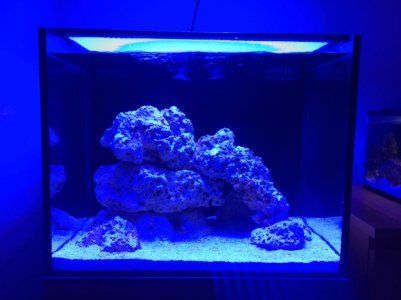
Here is my setup:

IM 40 Gallons
BRS Fiji Dry Rock
Arag-Alive Special Grade Reef

Day 1: RODI water and Instant Ocean Reef Crystals. I added the live sand directly into the water and it was very cloudy. I used the chemical they provided with the live sand and the water cleared up.
Day 2-4: Cranked heater to 90 degrees in attempt to kill ich if there are any.
Day 5: Turned heater off and waited for the water to cool to room temperature and added 1 large bottle of biospira.
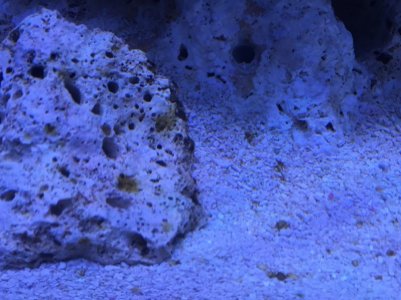
Day 7: Brown spots started to appear in the dry rock and substrate.

Does this sound like a normal cycle? What are the brown spots?
 

Attachments

  • IMG_0536.jpg
    IMG_0536.jpg
    71.4 KB · Views: 3
  • IMG_0534.jpg
    IMG_0534.jpg
    47.6 KB · Views: 3
Looks like diatom algae to me - normal process of cycling....


Sent from my iPhone using Tapatalk
 
There's a few things you should invest in ASAP if you're wanting to be successful in this hobby. How were you able to test your salinity? If you mixed your own SW you need to know exactly what the salinity is. It wont affect your cycle but could kill you tank inhabitants in the future. Buy a refractometer. Its the best way to know. Second. DO you know what you ammonia, nitrite and nitrate levels are. That will be the biggest way to know if your tank is actually cycling. Tje API test kit is a good starter kit to know what you're levels are. It does look like your tank is cycling though, I'd let the diatoms take over and once they seem to stop spreading then add your CUC. Let them do a decent clean up then do a large water change and add some fish. Your aquascape looks pretty good btw.
 
There's a few things you should invest in ASAP if you're wanting to be successful in this hobby. How were you able to test your salinity? If you mixed your own SW you need to know exactly what the salinity is. It wont affect your cycle but could kill you tank inhabitants in the future. Buy a refractometer. Its the best way to know. Second. DO you know what you ammonia, nitrite and nitrate levels are. That will be the biggest way to know if your tank is actually cycling. Tje API test kit is a good starter kit to know what you're levels are. It does look like your tank is cycling though, I'd let the diatoms take over and once they seem to stop spreading then add your CUC. Let them do a decent clean up then do a large water change and add some fish. Your aquascape looks pretty good btw.

I used an API saltwater master test kit. I started using it on day 5. The reading was .5ppm ammonia, 0ppm nitrite, and 20ppm for nitrate.

Two days after I added the Biospira, the nitrite level went from 0 to 5ppm. It went from light blue to a deep purple so I think the bacteria is started to convert the ammonia to nitrite.

I haven't been testing my salinity, only my pH. The reading was ~7.8 and I'm currently using Instant Ocean sea buffer to raise it to 8.3.

Is there other way to test salinity other than a refractometer? It looks expensive.
 
Mine has been cycling for 12 days and still no algae. Could be because today is the first day i turned the lights on lol.
 
Mine has been cycling for 12 days and still no algae. Could be because today is the first day i turned the lights on lol.

The diatom only appear where there are light. The substrate in my cave are spotless. So light does have something to do with it.
 
I used an API saltwater master test kit. I started using it on day 5. The reading was .5ppm ammonia, 0ppm nitrite, and 20ppm for nitrate.

Two days after I added the Biospira, the nitrite level went from 0 to 5ppm. It went from light blue to a deep purple so I think the bacteria is started to convert the ammonia to nitrite.

I haven't been testing my salinity, only my pH. The reading was ~7.8 and I'm currently using Instant Ocean sea buffer to raise it to 8.3.

Is there other way to test salinity other than a refractometer? It looks expensive.

You can get a good refractometer on amazon for around $20. This is a must in this hobby. If you are really pinched for $$ you can pick up a cheap hydrometer at the local fish store for under $10. Not recommended because they are not very accurate, but will work until you can get a refractometer. Also, I would not worry about your PH at this time.
 
Back
Top