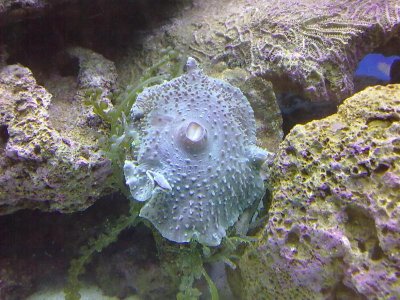
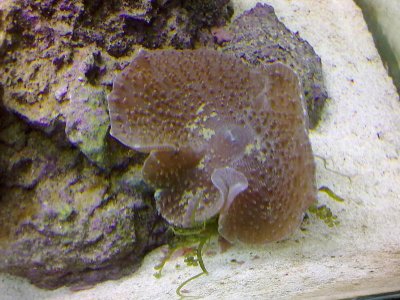
I agree its most likely amplexidiscus, how large is it? Larger specimens have a fairly distinct band around the outer rim of the disk, but it takes a while for the band to form.
Amplexidiscus get very large, and are capable of eating fish especially clowns and perching fish like hawks, gobies, and blennies.
My amplexidiscus, the day I got it, mostly deflated, showing the band I mentioned.
This site uses cookies to help personalise content, tailor your experience and to keep you logged in if you register.
By continuing to use this site, you are consenting to our use of cookies.