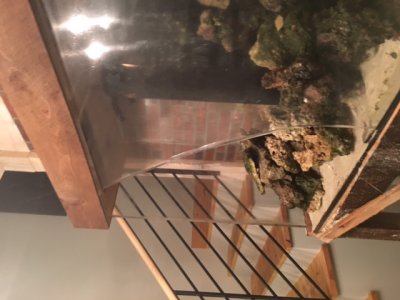
This was specifically due to the build of the tank. This will be lengthy, but I find it's far better to have your brain loaded before you shoot your mouth off, so this will help load up your ammo bags before calling the tank builder.
He's hoping you're naive or ignorant.
I built my own Drop off reef tank, and have been welding acrylic for years as it's just another substrate used in the signage industry.
Number 1 - Material used.
When doing tanks, any supplier of the plastic who is worth their weight will suggest ONLY cast acrylic made in the USA. It's stronger and better than the Chinese counterparts. I'm in Canada, so either is imported for me...however American cast acrylic is more expensive, so many builders quietly choose other sources or use extruded acrylic.
http://www.pmma.dk/acryl_stobt_kontra_ekstruderet.aspx?Lang=en-GB
Number 2 - What is welding acrylic?
Well, they call it "welding" when in reality it's not really a weld. I prefer to call it "melding"
http://wikidiff.com/meld/weld
Melding - To combine two similar objects into one. (cue "when 2 become 1" from Spice Girls lol )
Basically you have different levels of "weldon" it starts with very watery thin, all the way up to 2 part weldon. The type of "Weldon" you use is dependent on the thickness of acrylic used and the stress it's required to hold. Usually you use pins lying on their sides and place the properly sanded smooth acrylic edge directly where you want it, sitting on top of the pins...You then inject the weldon (thin as water) using the provided applicator. This draws the weldon into the seam using capillary action. The pins are there simply to provide a gap between the 2 locations the "Meld" will take place. This is necessary as the weldon creates a chemical reaction with the acrylic and melts it on both places as the capillary action actually holds the weldon only where the join will be. You generally wait 1-2 minutes and then slowly remove the pins and allow the edge to slowly touch down onto the other side after the pins are all pulled out.
The other option is using a thicker Weld-on like 16 or 40 and applying it like a glue, you leave a quarter inch extra on the edge of the panel, lay down the other edge and let the thick Weld-On squeeze out like silicon on the extra quarter inch part...Let it cure and then come back with a router and trim the quarter inch peice w/ the extra squished out weld-on off. This is how the professional builders on TV do it. Once it's polished up it's perfect.
These 2 pieces should be one piece of plastic now. One properly made acrylic tank is technically just one piece of plastic when finished. It does not have seams or "welds"
1" thick acrylic should not crack or explode as shown, it should also be capable of twisting or bending slightly, so as long as the stand isn't obviously out of wack. This assuming the builder used quality acrylic.
What is possible is when he was building it, instead of the tried and true method of routering the edge, razoring it, and sanding/polishing to a fine finish prior to melding the acrylic together, he used a heat source (torch) and this caused crazing during the weldon process. If any crazing occured this would create the ideal conditions to eventually fail with a crack like fracture.
We generally do not have ovens available for annealing edges with acrylic properly, and a quick fix is to use a torch, however any professional plastics company (who I deal with weekly) only uses oxy-propane or oxy-acetylene torchs to polish acrylic edges, as normal torches can actually create crazing, which I've had the luxury of doing to my own projects. lol
This is all just subjective as I have no idea how your builder built the tank.
That being said, when building an acrylic tank there are numerous variables involved:
1- Acrylic material used - extruded is lower quality and more prone to manufacturer defects. You want American made cast acrylic for ANY large aquarium. The problem is the vast majority of customers have no idea about the acrylic, where it comes from, or how it's made so this is a simple way for builders to save on costs. (not saying he did, but it's common place)
2- Was all the acrylic the exact same brand & type? Did he use cast for the bottom and extruded for the sides? Did he use off cuts or farm it from older sheets he had from previous projects? The Weld-On may not work as expected when used with different types together.
3- What type of Weld-On was used? 3,4,16,40? Did he use it properly? Was it the watery thin fast set? Was it the 2 part? Some Weld-On solvents suggest surface annealing prior to bonding to prevent crazing. Below is the link for Weld-on, click on each type and the material data sheet to see the bonding strength.
http://www.eplastics.com/plexiglass_glue
4- Were the joints properly cleaned and smooth prior to the bond? How did he smooth out the edges which were bonded? Was a router used? Scrapers? Torch to save time?
5- Were clamps used to hold it in place? Was the solvent squeezed out? How much contact time with the solvent to soften the acrylic prior to bonding?
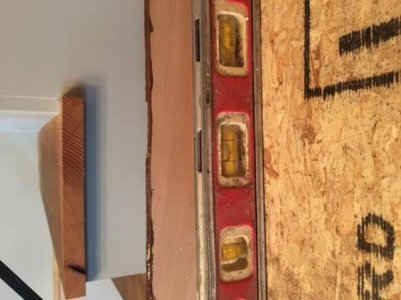
The stand on the other hand is a simple beast. All it does is hold something up. Whether the tank is level is irrelevant with 1" thick acrylic. As long as something isn't rocking the tank back and forth causing undue twisting/stress the stand has nothing to do with it. Acrylic has the ability to withstand bending far better than glass.
If his immediate response is to blame the stand builder, you should be very cautious about that. It means he's ran into this before and immediately jumps to a scapegoat instead of solving the problem for you.
Any professional builder, when running into a situation like this should have your best interests in mind. Let's fix the problem instead of ponder about it and work together accomplishing that. Not spread blame.
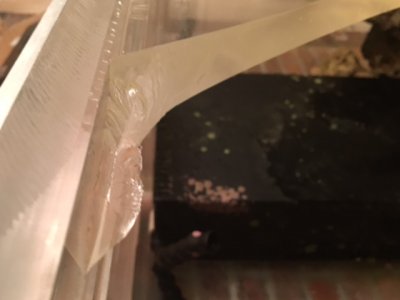
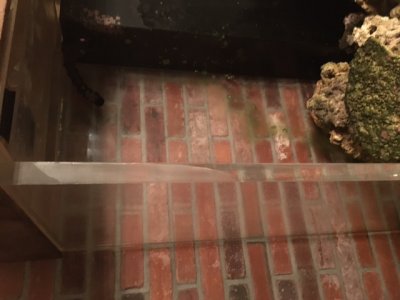
Basically, if the tank was built properly, the break should never have happened where the meld occured. In simple terms - they gave you a faulty tank. Either the meld wasn't done correctly or crazing happened during production.
The second photo shows exactly what happened. This is the top of the tank, where the water line is not touching so a leak will not be visible, however the weight is always present across the whole panel. At the end of the day if their is an improper meld or lack thereof, where the meld is correct is where the break occurred and there is a shard of acrylic still attached.
Meaning there wasn't enough solvent applied, it got squished out during clamping, or they didn't allow enough contact time for the chemical reaction to take place prior to the bond...OR the edges were not smooth/clean enough for bonding.
This would explain why it would hold water and eventually fail.
It's like weighing down 5 feet of a 4' x 8' sheet of plywood, as I walk out eventually it will break and it will break exactly at the first place it's firmly weighted down at.
Stick to your guns, the home run here is a 1" thick acrylic tank for only 250 gallons is overkill, and there is no excuse for it to fail where it's supposed to be chemically "welded" together whether its the meld itself or crazing from the meld, it's his fault.
Write down a check list, call the builder, and go through it, asking very specific questions.
What type of acrylic did you use? Extruded or Cast?
How did you prep the edges prior to bonding?
What type of Weld-On did you use?
Do you clamp the pieces together after the bond or use a jig to hold it in place?
Is it possible during the bonding process the edges were not prepped properly?
What process do you use to smooth the edges prior to bonding? Router? Razor by hand? Torch?
How long do you allow the Weld-On to soften the acrylic prior to bond?
Is it possible not enough solvent was applied?
Is it possible it may have been clamped too hard resulting in the solvent being squished out?
Why is there a clean break where it's supposed to be welded?
Isn't where the acrylic is chemically bonded supposed to be far stronger than the panes?
Hope this helps! Be professional and polite and do it in person if possible. If not, then do it over the phone as email is well.....email.
Oh and when discussing the meld....make sure you call it a "weld" even though that's an incorrect term. It's a chemical reaction joining them into one piece, not something holding them together tightly. I guess the solvent is called "weld-on" so people have learned to call it a weld. Either way, they call it a "weld" in the industry, like they pronounce the football player "Favre" Farv. It's wrong but it's just the way it is. lol