
You are using an out of date browser. It may not display this or other websites correctly.
You should upgrade or use an alternative browser.
You should upgrade or use an alternative browser.
School Project for Reef Biological Filtration
- Thread starter Reef-Explorer
- Start date

Reef-Explorer
New member
Thank you for your advice. I am still in the ongoing process of researching what a AIO isI've run systems with just powerheads and air bubbles so not much is needed. It's sponges and corals that do most of the filtration.
Reef-Explorer
New member
Hello again,
I would love to have a few people to be candidates for an interview for my report. If so then please let me know and i will send questions in messages.
Thanks a lot
I would love to have a few people to be candidates for an interview for my report. If so then please let me know and i will send questions in messages.
Thanks a lot
Last edited:
SantaMonica
Well-known member
Also...
Marine Biology Videos
If you want to get into how the natural freshwater and saltwater bodies operate on a biological level, these college biology videos will show you.
The videos from this biology professor are from 2008 when videos were limited to less than 10 minutes each, and have been slightly re-ordered here to make more sense if you have no previous knowledge:
- Food Chains vs. Food Webs
- Food Webs
- Microbial Food Web
- Nutrients and Primary Production
- Ocean Productivity
- YouTube - Photosynthesis part 1
- YouTube - Chlorophyll
- YouTube - Zooplankton and Primary Production
- YouTube - Bacteria
- YouTube - Trophic Pyramids
Marine Biology Videos
If you want to get into how the natural freshwater and saltwater bodies operate on a biological level, these college biology videos will show you.
The videos from this biology professor are from 2008 when videos were limited to less than 10 minutes each, and have been slightly re-ordered here to make more sense if you have no previous knowledge:
- YouTube - Photosynthesis part 1
- YouTube - Chlorophyll
- YouTube - Zooplankton and Primary Production
- YouTube - Bacteria
- YouTube - Trophic Pyramids
Reef-Explorer
New member
Is the following plan feasible to achieve:
A small tank with plenum, sand and small piece of rock with a small slow growing hardy coral, some seagrass or macro algae, some CUC , 1 or 2 smallish fish and a normal light. A power head for plenum a water heater and lights.
No other sophisticated equipment...just to achieve the bare minimum for a reef ecosystem that can help me demonstrate the refugium/jaubert.
Is this possible at all? What are the thoughts and what else do I need? Can the tank be sustainable if I keep the setup extremely simple?
I need to maintain it for at least 6 months. And may have to transport to school and back home on the day of display.
Possible tank size 2ft x 1ft x 1ft
A small tank with plenum, sand and small piece of rock with a small slow growing hardy coral, some seagrass or macro algae, some CUC , 1 or 2 smallish fish and a normal light. A power head for plenum a water heater and lights.
No other sophisticated equipment...just to achieve the bare minimum for a reef ecosystem that can help me demonstrate the refugium/jaubert.
Is this possible at all? What are the thoughts and what else do I need? Can the tank be sustainable if I keep the setup extremely simple?
I need to maintain it for at least 6 months. And may have to transport to school and back home on the day of display.
Possible tank size 2ft x 1ft x 1ft

Can you elaborate on, “a powerhead for plenum?” A plenum is supposed to be a stagnant area little to no water movement. I had a plenum system years ago in a 200 gallon tank so, I have a bit of experience with them.
Other than that question, your plan sounds easily doable to me.
Other than that question, your plan sounds easily doable to me.

It’s absolutely sustainable. For saltwater, the vast majority of biological filtration occurs in the rock so you may need more than one small rock but it’s definitely doable.
One thing is seagrass is very hard to obtain/maintain. You may want to consider a macroalgae instead of seagrass.
One thing is seagrass is very hard to obtain/maintain. You may want to consider a macroalgae instead of seagrass.
Reef-Explorer
New member
so the Plenum is i think reverse undergravel filter and for that i would need a small power head, right?
and yes i can do macro algae too.
and yes i can do macro algae too.
Nopeso the Plenum is i think reverse undergravel filter and for that i would need a small power head, right?
and yes i can do macro algae too.
 . A plenum is a still water space under the sand.
When I set my plenum up, I used 1.5” pvc pipe with eggcrate light diffuser on top (covering the entire footprint of the tank) and then window screen on top. I spread Caribsea Special Grade Reef Sand over the top for a total sale depth of 2-3”. No pumps, powerheads or anything else to move the water in the plenum. It becomes an anoxic space where denitrification takes place. So, you don’t want to disturb a plenum.
If you’re running reverse under gravel filter, that’s just what it is…a reverse under gravel filter.
Grin Reefer
Member
Reef-Explorer, FYI, Black Friday sale, Micro Reef Ready Tank (0.3 Gallon) Standard (BLACK) - PNW Customs
Reef-Explorer
New member
Ok understood, then we wont need a powerhead as well. If we have a coral then probably we will add powerhead to create some flow.Nope
When I set my plenum up, I used 1.5” pvc pipe with eggcrate light diffuser on top (covering the entire footprint of the tank) and then window screen on top. I spread Caribsea Special Grade Reef Sand over the top for a total sale depth of 2-3”. No pumps, powerheads or anything else to move the water in the plenum. It becomes an anoxic space where denitrification takes place. So, you don’t want to disturb a plenum.
If you’re running reverse under gravel filter, that’s just what it is…a reverse under gravel filter.
Reef-Explorer
New member
so as a bare minimum to colonise bacteria from all walks of marine life...what shall i get? I have to demonstrate results of genetical diversity of microbes by mid March 2026. I do not have to create an aesthetically pleasing aquarium for a display. The sole purpose here is to demonstrate the function of marine microbes. I shall be able to scoop out the microbes and display them with the use of microscopes.
But this tank has to have some form of ecosystem to display...so may be a coral, a fish, some CUC etc etc...I have time to introduce them slowly.
So please help me out with the selection here along with what shall be the sand thickness etc...
But this tank has to have some form of ecosystem to display...so may be a coral, a fish, some CUC etc etc...I have time to introduce them slowly.
So please help me out with the selection here along with what shall be the sand thickness etc...

wvned
Well-known member
You haven't listed your assets. Do you have a local reef society? Do you live near the sea? Do you have a good local fish store that sells reef animals.
The easiest way is to do a transplant from a healthy running system. Have any friends that are reefers.
The second way would be to buy a selection from someone that has things like
live-plants.com and
Gulf Live Rock.com
Tampa Bay Saltwater comes to mind as well Ultra Live Sand
Those are just examples. I have not purchased from them or did a long time ago now.
It used to be easy to buy reef gook for new tanks but I am not sure that is a thing anymore.
The easiest way is to do a transplant from a healthy running system. Have any friends that are reefers.
The second way would be to buy a selection from someone that has things like
live-plants.com and
Gulf Live Rock.com
Tampa Bay Saltwater comes to mind as well Ultra Live Sand
Those are just examples. I have not purchased from them or did a long time ago now.
It used to be easy to buy reef gook for new tanks but I am not sure that is a thing anymore.
Reef-Explorer
New member
I'm not near a sea or don't have a local reef society. I do have a fish store in my area so it would be easy for me to get the fish etc from there. But I need to know what fish and corals would easy to maintain as a school project. I have an AIO tank so I'm not quite sure what livestock I can keep.
wvned
Well-known member
The dimensions you listed would result in a 15 gallon AIO.
6 Snails, 3 hermits perhaps a shrimp and one small fish.
Nano Fish | Marine Fish
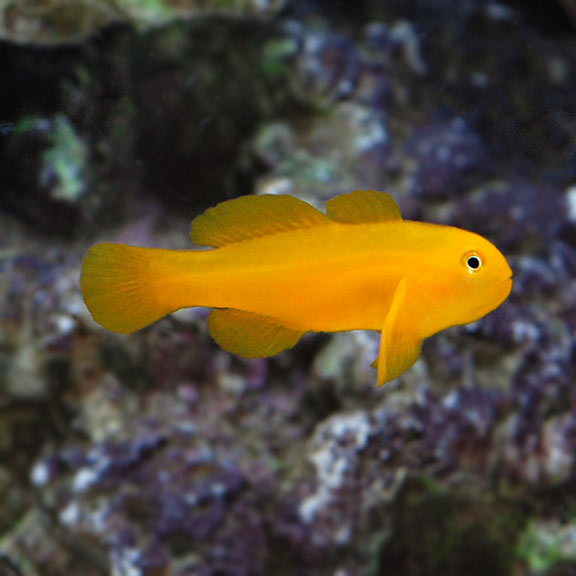 One of my favorites.
Look at soft corals especially mushrooms.
6 Snails, 3 hermits perhaps a shrimp and one small fish.
Nano Fish | Marine Fish
Look at soft corals especially mushrooms.
wvned
Well-known member
There are things like feather dusters you could add that would give the tank visual interest. Those are filter feeding tube worms.
Avoid starfish. They can not get enough to eat in a small tank and will disintegrate.
If you have a local shop I would chat that guy up and see if there is any interest in what you are doing. You never know.
Avoid starfish. They can not get enough to eat in a small tank and will disintegrate.
If you have a local shop I would chat that guy up and see if there is any interest in what you are doing. You never know.
wvned
Well-known member
Next terminology we use. A wave maker moves the water in the display area. A return pump moves water from the end of your filtration and usually pumps it back into (returns it) to the tank. Quite often in an AIO it does both things.
This is a commercial AIO tank.

There are 3 chambers on the back of this tank. The intakes go into the first chamber. It may have filter floss in it. The middle chamber holds whatever media you want and water enters the last where the pump is that sends it back to the tank.
As water evaporates from the tank you have a fill mark you use and add distilled or RODI water to so the system keeps a fixed water level.
That makes sure your salinity always stays the same. The salt stays in the tank and you keep it diluted with a fixed amount of water. Usually added daily at least to replace evaporation.
another variation

You get the idea.
the sponge under the pump is so it isnt noisy and has nothing to do with filtration.
This is a commercial AIO tank.
There are 3 chambers on the back of this tank. The intakes go into the first chamber. It may have filter floss in it. The middle chamber holds whatever media you want and water enters the last where the pump is that sends it back to the tank.
As water evaporates from the tank you have a fill mark you use and add distilled or RODI water to so the system keeps a fixed water level.
That makes sure your salinity always stays the same. The salt stays in the tank and you keep it diluted with a fixed amount of water. Usually added daily at least to replace evaporation.
another variation
You get the idea.
the sponge under the pump is so it isnt noisy and has nothing to do with filtration.
Similar threads
- Replies
- 0
- Views
- 884

- Replies
- 39
- Views
- 752


- Replies
- 0
- Views
- 1K
- Replies
- 8
- Views
- 346