TampaSnooker
Active member
The catch is that I need to use a LOT of it in a tank full of livestock.
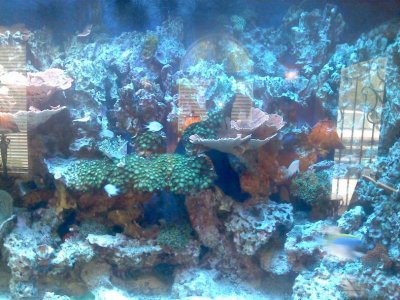
I have an 800 gal reef in my care that has had some rockwork shift about 2/3 of the way down. Tank dimensions are 8' x 2' x 4'H. The way I see it, I have 2 options for repair: 1. Find a nontoxic material with the consistency of wet cement or cyanoacryllate gel and just slather it in all the gaps I can to harden - or 2. Drain the tank 2/3 of the way to the area in trouble and try to re-stack and re-cement.
Given that there is a good amount of fish and coral growth in this tank, I need something that is nontoxic when curing and something that doesn't require as much flushing as cement. Anything that requires more than a few hours of curing time or flushing will require the dismantling of the tank to remove fish and corals, which I'm trying hard to avoid. Also, it is located in a busy Dr's office so we're trying to keep downtime and disruption to a minimum.
I have an 800 gal reef in my care that has had some rockwork shift about 2/3 of the way down. Tank dimensions are 8' x 2' x 4'H. The way I see it, I have 2 options for repair: 1. Find a nontoxic material with the consistency of wet cement or cyanoacryllate gel and just slather it in all the gaps I can to harden - or 2. Drain the tank 2/3 of the way to the area in trouble and try to re-stack and re-cement.
Given that there is a good amount of fish and coral growth in this tank, I need something that is nontoxic when curing and something that doesn't require as much flushing as cement. Anything that requires more than a few hours of curing time or flushing will require the dismantling of the tank to remove fish and corals, which I'm trying hard to avoid. Also, it is located in a busy Dr's office so we're trying to keep downtime and disruption to a minimum.