A. allardi or Fiji A chrysopterus

ThRoewer

New member
Anybody having these?

I'm contemplating getting a pair of either allardi or Fiji chrysopterus some time in the future (likely from Blue Zoo as they are the only ones to have them regularly).

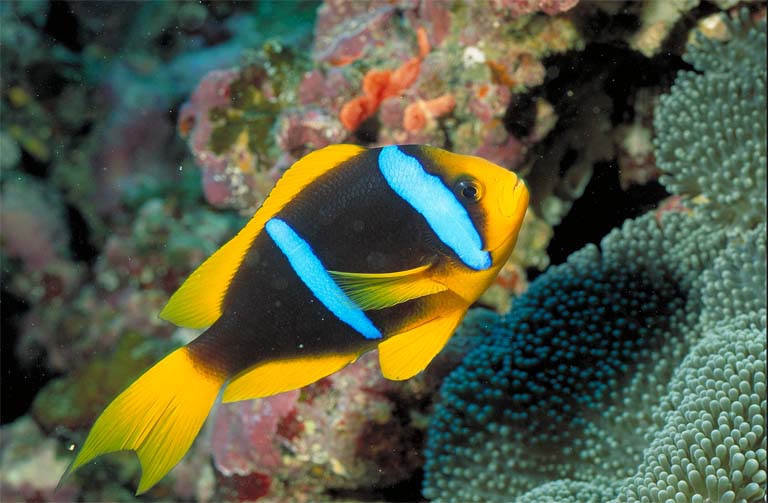
The question now is which of these is more likely to have the yellow fins and look like this:

800px-Allard%27s_clownfish%2C_Amphiprion_allardi.jpg

(A. allardi)

or this

120309.jpg

(A. allardi)

or this

Amphiprion%20chrysopterus.jpg

(A. chrysopterus, Fiji)
 
That's a super nice clarkii - unfortunately just one :(
Which store is it? The wife wants to go down to SoCal (LA and SD) between Xmas and New Years and I hope I can at least check out a few stores along the trail ... ;)

Aquatic Warehouse in SD is definitely on my list.
 
That was at Seaside Tropical Fish in Huntington Beach, CA. The store had multiple Clarkiis like that in seperate cubes. Some were small enough to pair with the larger ones.
 
What other stores are down there in LA and OC?

Lots of stores. SoCal is very saturated with fish stores. Depends on what you are looking for.

SPS Coral Store (best store for Dry goods, anything from Apex to Ecotech)
Iconic Reef Company (gets blue haddonis and blue gigs sometimes)
Amazing Aquariums and Reefs (everything from gigs to colorful corals)
The Aquarium Co in Culver City (nice prices on frags)
Pacific Reef (carries more wrasses than most stores)
Reef Lounge USA
 
Thanks.

...Depends on what you are looking for.
...

Primarily clownfish (Solomon or PNG percs and other wild rarities), pipe fish (D. excisus, D. janssi, D. japonicas,... all the Doryrhamphus species), anemones, ...

Which store usually gets the nice Solomon percula?
 
Amazing aquariums and reefs has the onyx pairs $200 per pair. The Aquarium in Culver City has 3 small true perculas from SI @ $25 each. One of them is nice and black. The other two are mostly orange.
 
ThRoewer your second photo is actually chrysopterus just a Marshall Islands or surrounding areas like Micronesia or Palau variant. Allardis tend to really darken over time but still remain quite attractive. Out of all the chrysopterus variants that are available I'd only consider the Fiji ones. These have yellow tails and keep their color long term. I've kept both Solomon Island and Marshall Island chrysopterus on multiple occasions and although all of them were brilliantly colored when they first arrived, they all faded to brown over time. I still keep a pair of Fiji ones that look almost exactly the same as the day I got them. The only change I've noticed with the Fiji ones is they will develope a black edge on the pelvic fins in captivity. Here's a fairly recent video of my Fiji pair for reference.
https://m.youtube.com/watch?v=S41JbY_XD-c
 
ThRoewer your second photo is actually chrysopterus just a Marshall Islands or surrounding areas like Micronesia or Palau variant.

How do you tell? The narrower head band? The site I found the picture at had it listed as A. allardi.
A. allardi and the Palau A. chrysopterus (or whatever species they actually are) look almost identical.

Allardis tend to really darken over time but still remain quite attractive.
All the allardis I've seen in the past were rather brown and not as pretty as they normally look in UW pictures so I didn't take them. And chrysopterus were pretty much impossible to get back then in Germany.

Out of all the chrysopterus variants that are available I'd only consider the Fiji ones. These have yellow tails and keep their color long term. I've kept both Solomon Island and Marshall Island chrysopterus on multiple occasions and although all of them were brilliantly colored when they first arrived, they all faded to brown over time. I still keep a pair of Fiji ones that look almost exactly the same as the day I got them. The only change I've noticed with the Fiji ones is they will develope a black edge on the pelvic fins in captivity. Here's a fairly recent video of my Fiji pair for reference.
https://m.youtube.com/watch?v=S41JbY_XD-c

Sorry, that video was when I first got them. Here is the more recent video.
https://m.youtube.com/watch?v=YmXbCjo2RB0

Those are nice! Where did you get them from?

How is the flow in the tank you keep them in? I found with my clarkii that they get the tail fin extensions when they have to swim against high flow. When I later moved them to a more mellow tank they lost the fin extensions again.
 
The differences on allardi and chrysopterus are very subtle but they are consistent. The narrowing of the first band towards the top point to chrysopterus. Also allardi will have a pail patch on their nose, where as chrysopterus will always have a solid yellow nose.

There does seem to be some variation with allardi as well. I've seen adult pairs with both solid black pelvic fins, ones with solid yellow and some in between. Unfortunately, at least to my knowledge, there isn't as much geographical information out there on them. The good news is, I've never seen an ugly allardi and juveniles are especially cute because they seem to exhibit over sized pelvic fins and have a distinct up and down swimming motion.
 
That's very interesting what you said about flow. Mine came in with short fins but I've had specimens with extremely long extensions. The tank they are in has rather low flow, but maybe I'll add some power heads to it and test out that theory.
 
That's very interesting what you said about flow. Mine came in with short fins but I've had specimens with extremely long extensions. The tank they are in has rather low flow, but maybe I'll add some power heads to it and test out that theory.

I feel the fin extensions have the same function as the winglets on modern planes: reduce drag.
 
The differences on allardi and chrysopterus are very subtle but they are consistent. The narrowing of the first band towards the top point to chrysopterus. Also allardi will have a pail patch on their nose, where as chrysopterus will always have a solid yellow nose.

There does seem to be some variation with allardi as well. I've seen adult pairs with both solid black pelvic fins, ones with solid yellow and some in between. Unfortunately, at least to my knowledge, there isn't as much geographical information out there on them. The good news is, I've never seen an ugly allardi and juveniles are especially cute because they seem to exhibit over sized pelvic fins and have a distinct up and down swimming motion.

Allardi has a wide range along the East African coastline from Somalia all the way down to Durban in South Africa. Though I assume most, if not all, we find in stores come from Kenya.

Allardi was one I wanted ever since I got a copy of Allen's first Anemonefish book.
I feel there are melanistic forms of allardi, possibly depending on the anemone they live with. At least that was what I experienced with my clarkii.

Right now I'm torn between allardi, chrysopterus, latifasciatus and latezonatus. In the old days, back in Germany when I had 30+ tanks, I would just have gotten all, but these days my space is limited (I actually already more tanks than I probably should have :D) and I need to pick one :(.
 
winwood - i could watch those two videos all day.
:beer:
What size is your tank? I saw A. chrysopterus while diving in Tahiti and those fish get HUGE!
75, it's not really a show tank, just a tank I QT corals in and keep a few pets.
Allardi has a wide range along the East African coastline from Somalia all the way down to Durban in South Africa. Though I assume most, if not all, we find in stores come from Kenya.
Most likely, although there are a lot of chrysogaster/allardi mix up so they could be coming in from other areas on rare occasions.
Allardi was one I wanted ever since I got a copy of Allen's first Anemonefish book. I feel there are melanistic forms of allardi, possibly depending on the anemone they live with. At least that was what I experienced with my clarkii.

Right now I'm torn between allardi, chrysopterus, latifasciatus and latezonatus. In the old days, back in Germany when I had 30+ tanks, I would just have gotten all, but these days my space is limited (I actually already more tanks than I probably should have :D) and I need to pick one :(.
Perhaps, I feel like the melanistic argument has changed a bit since originally proposed. For instance it was originally cited that chrysopterus was one of the species that linked melanism to anemone host. It seems now that it more of a locale variant such as the Solomon Island and PNG variants. Clarkii and tricinctus definitely exhibit melanism in certain host anemones though.

Hard to go wrong with any of those species once healthy. I think you are aware of the challenges of both chrys and latz.
 
Back
Top