
A while back, I was given a TopFathom TF100A skimmer, and after making extensive mods to it (http://www.sdreefs.com/forums/showthread.php?t=32636), have been using it with adequate success for many months. But, I decided to go down the full DIY path, and embarked on the process of designing and building a new skimmer for my 160g (120g DT) system.
I did a bunch of research, and studied countless photos of production and DIY skimmers. I set several goals...
- Build cost and operating cost must be kept low
- Whatever I devised had to be somewhat unique
- Whatever I built had to have elements of the recent breed of conical skimmer
- It had to be somewhat modular to allow for easy modifications/improvements/fixes
- Skimmer height had to be <30" (my tank stand has 31.5" inside height)
Several months ago I had picked up several 8" diameter / 11" tall 1/4" cast acrylic cylinder segments from a local surplus/liquidation place for only a few bucks each, and wanted to use them if I possibly could to help keep the materials cost low. I also had accumulated a good supply of scraps and cutoffs from a local plastics shop in 1/8", 1/4", 3/8", and 1/2" thicknesses, mostly of cast acrylic. I'd also decided to utilize a mesh-modded Sicce PSK-2500 for recirculation and (at least for starters) a MJ1200 as the feed pump.
I created quite a few partial designs in AutoCAD, and after getting the concept down and rough dimensions hammered out, I ended up with a semi-cone skimmer design - traditional cylindrical shape for the lower half of the reaction chamber, and a cone forming the upper half.
I tried to make the cone first, since I knew that was going to be the most challenging considering at my modest experience and skill level as a hobbyist in working with acrylic, and considering what tools/equipment I had available (mainly homeowner-grade woodworking tools... table saw, table-top drill press, routers, etc.)
After several horrible failures in attempting to fabricate the cone in the traditional round shape, I tried a different tactic... making a conical shape from pieces of flat stock. I modeled the shape in Cone with eight sides, making an octagonal cone; I then tweaked it a bit in AutoCAD.
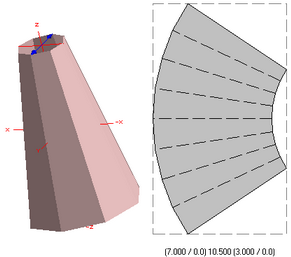
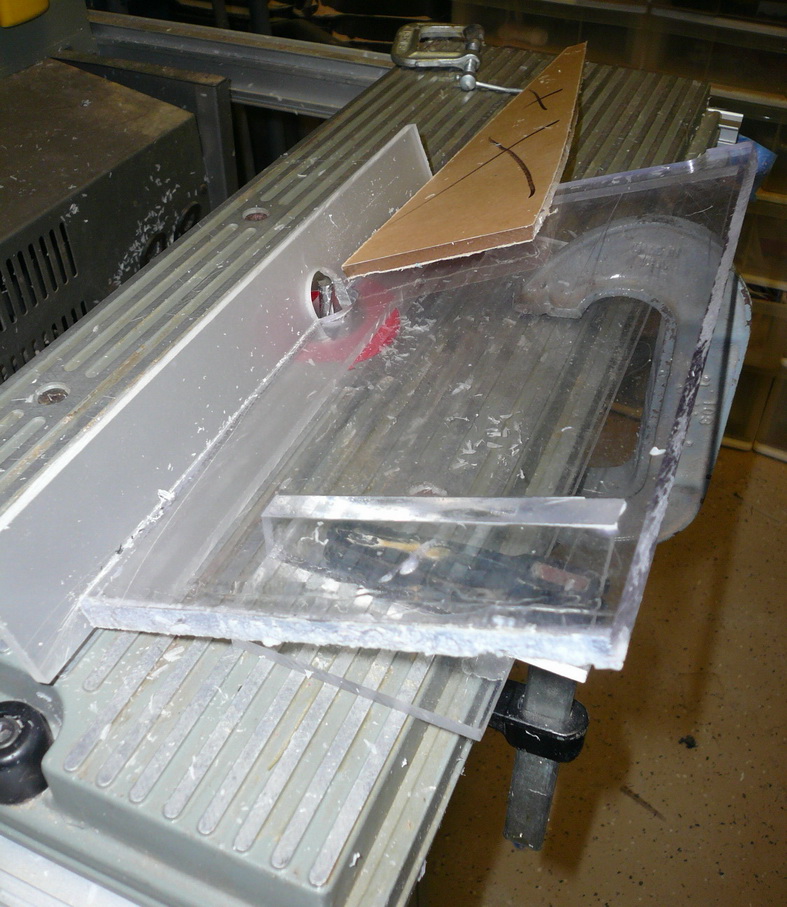
I made an angled fence jig for my table saw, set it at the right angle and started cutting some 1/4" acrylic. Next step... make a jig to route the proper angles on the long edges of the panels, which needed to be beveled for the 8 panels to fit together properly. Now let's see who's paying attention... what's wrong in this picture?
Next step... gluing the panels together. This too was a dismal failure - it was my first experience using Weld-On #40 - I made a real mess - there was cement all over the place! Obviously, my technique needed improvement. Back to the table saw, and cut another batch of panels. This time, I tried a different method, and the first 2 joints came out OK, but not good enough for me. Cut a few replacement panels, and tried again. This time, I was satisfied with the result... some small bubbles in the Weld-on, and a bit of excess cement, but what the heck... I'm not a pro!
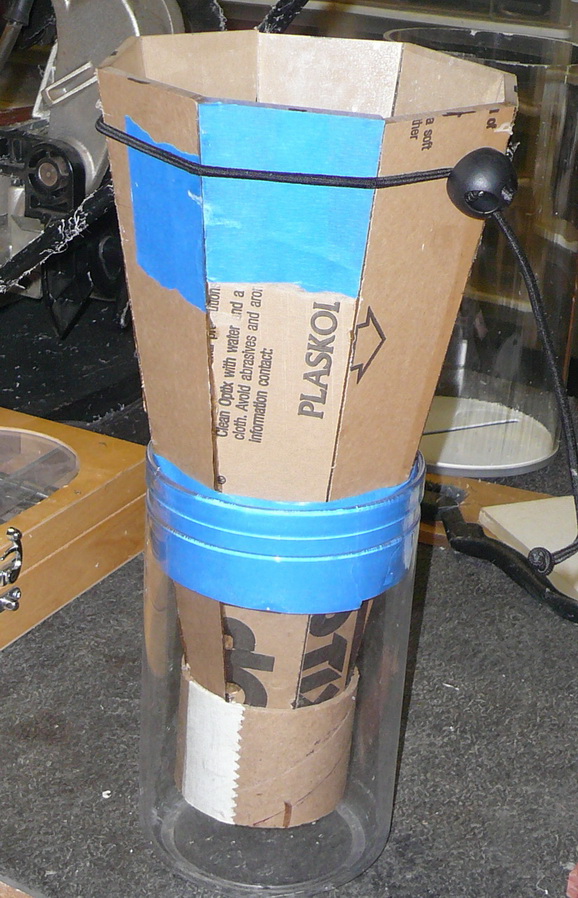
Test fitting the cone panels:
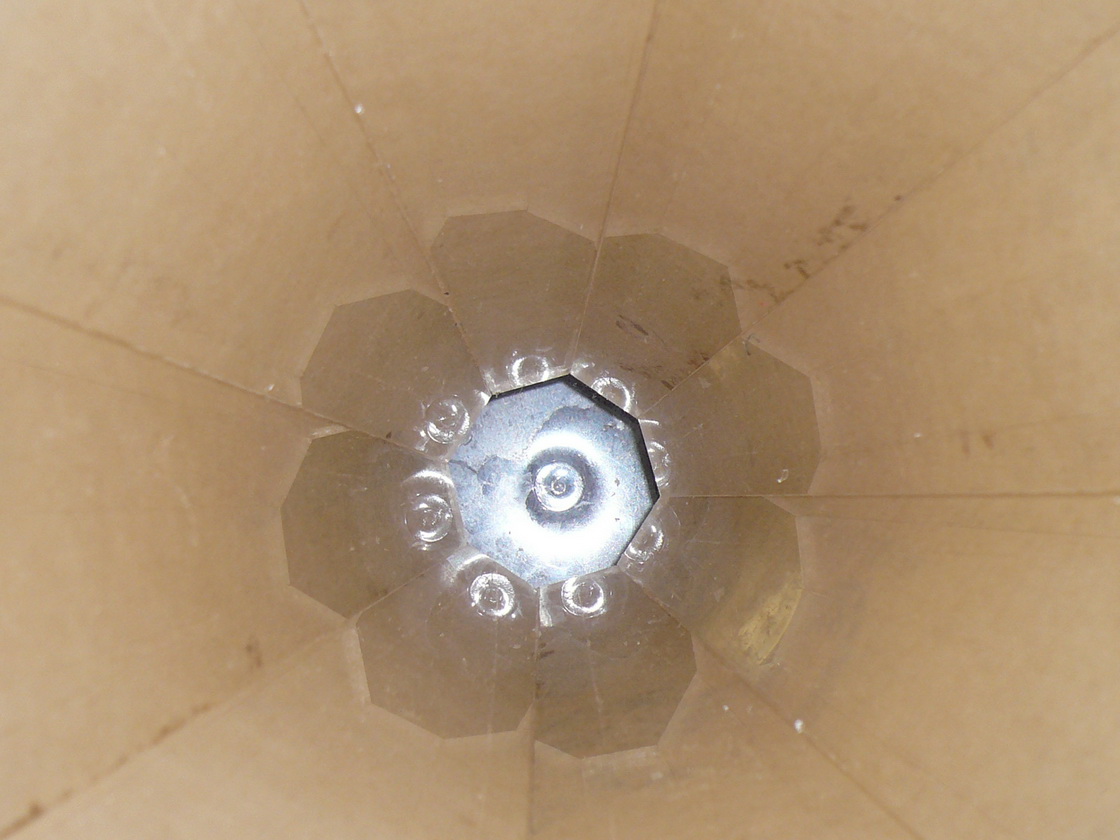
I glued two joints at a time, let them set up for a few hours, then did the next pair of joints. After removing the masking tape I’d put on to help keep myself from making a bloody mess again, here is a shot into the cone:
I did a bunch of research, and studied countless photos of production and DIY skimmers. I set several goals...
- Build cost and operating cost must be kept low
- Whatever I devised had to be somewhat unique
- Whatever I built had to have elements of the recent breed of conical skimmer
- It had to be somewhat modular to allow for easy modifications/improvements/fixes
- Skimmer height had to be <30" (my tank stand has 31.5" inside height)
Several months ago I had picked up several 8" diameter / 11" tall 1/4" cast acrylic cylinder segments from a local surplus/liquidation place for only a few bucks each, and wanted to use them if I possibly could to help keep the materials cost low. I also had accumulated a good supply of scraps and cutoffs from a local plastics shop in 1/8", 1/4", 3/8", and 1/2" thicknesses, mostly of cast acrylic. I'd also decided to utilize a mesh-modded Sicce PSK-2500 for recirculation and (at least for starters) a MJ1200 as the feed pump.
I created quite a few partial designs in AutoCAD, and after getting the concept down and rough dimensions hammered out, I ended up with a semi-cone skimmer design - traditional cylindrical shape for the lower half of the reaction chamber, and a cone forming the upper half.
I tried to make the cone first, since I knew that was going to be the most challenging considering at my modest experience and skill level as a hobbyist in working with acrylic, and considering what tools/equipment I had available (mainly homeowner-grade woodworking tools... table saw, table-top drill press, routers, etc.)
After several horrible failures in attempting to fabricate the cone in the traditional round shape, I tried a different tactic... making a conical shape from pieces of flat stock. I modeled the shape in Cone with eight sides, making an octagonal cone; I then tweaked it a bit in AutoCAD.
I made an angled fence jig for my table saw, set it at the right angle and started cutting some 1/4" acrylic. Next step... make a jig to route the proper angles on the long edges of the panels, which needed to be beveled for the 8 panels to fit together properly. Now let's see who's paying attention... what's wrong in this picture?
Next step... gluing the panels together. This too was a dismal failure - it was my first experience using Weld-On #40 - I made a real mess - there was cement all over the place! Obviously, my technique needed improvement. Back to the table saw, and cut another batch of panels. This time, I tried a different method, and the first 2 joints came out OK, but not good enough for me. Cut a few replacement panels, and tried again. This time, I was satisfied with the result... some small bubbles in the Weld-on, and a bit of excess cement, but what the heck... I'm not a pro!
Test fitting the cone panels:
I glued two joints at a time, let them set up for a few hours, then did the next pair of joints. After removing the masking tape I’d put on to help keep myself from making a bloody mess again, here is a shot into the cone:
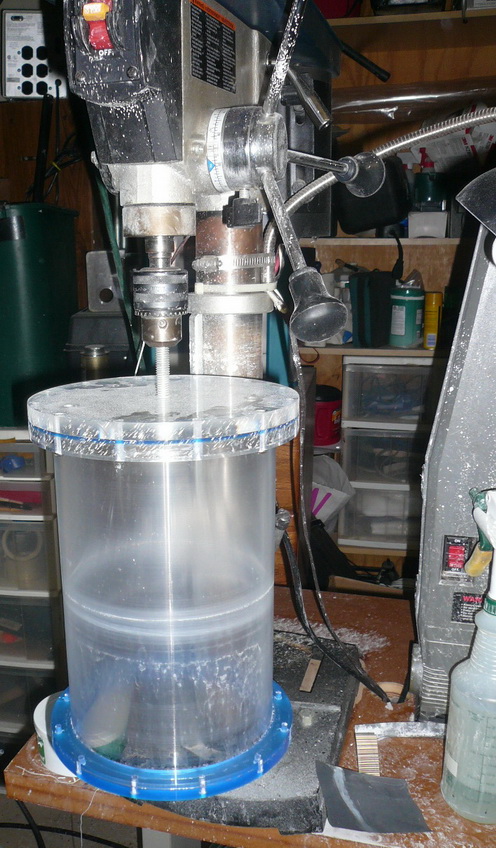
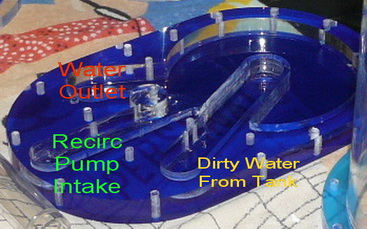
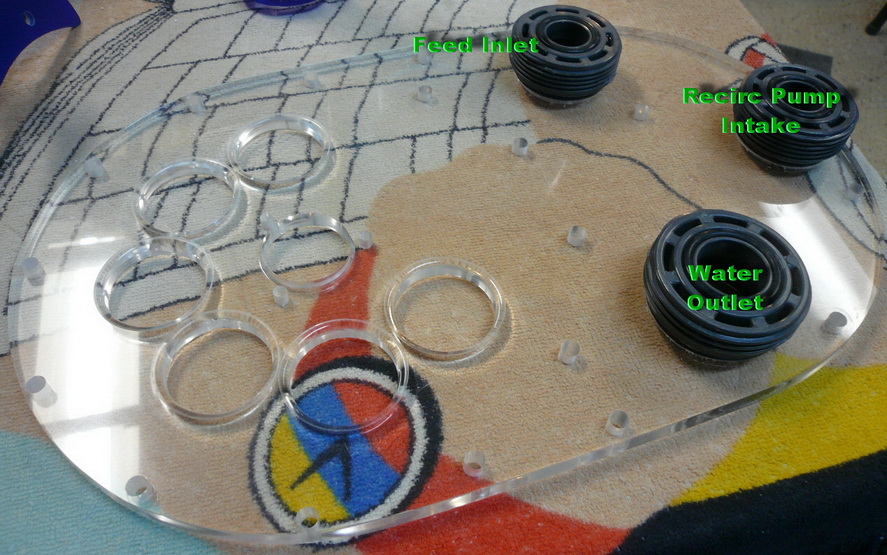
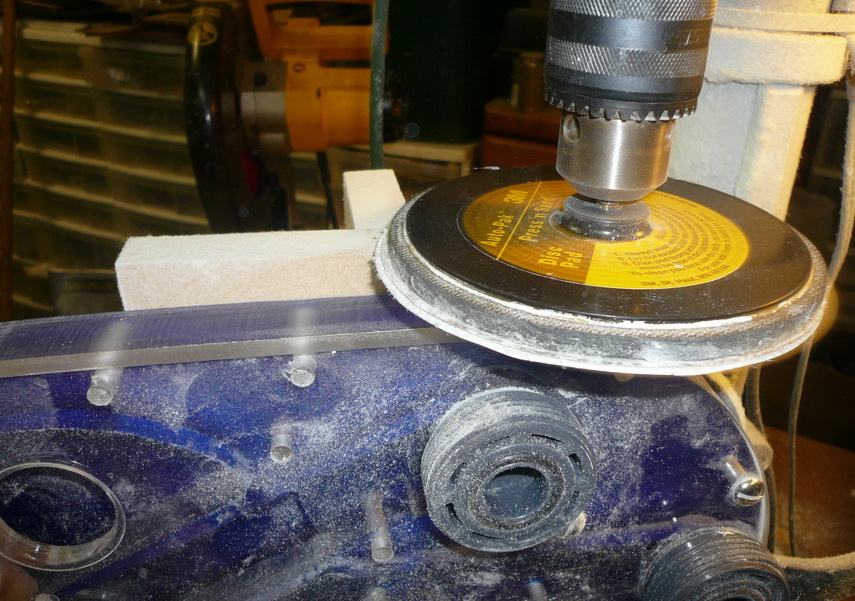
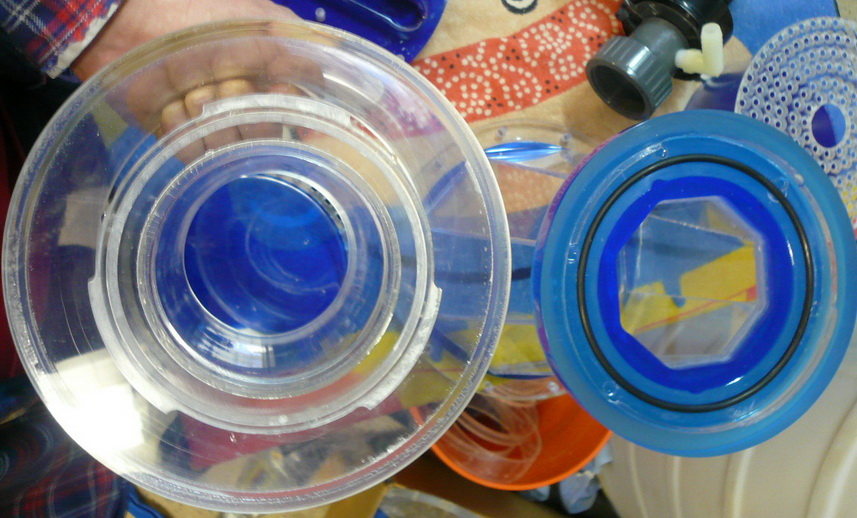
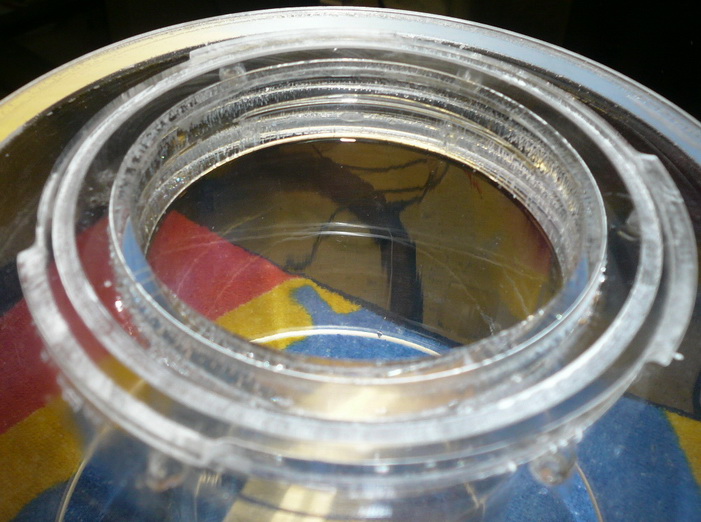
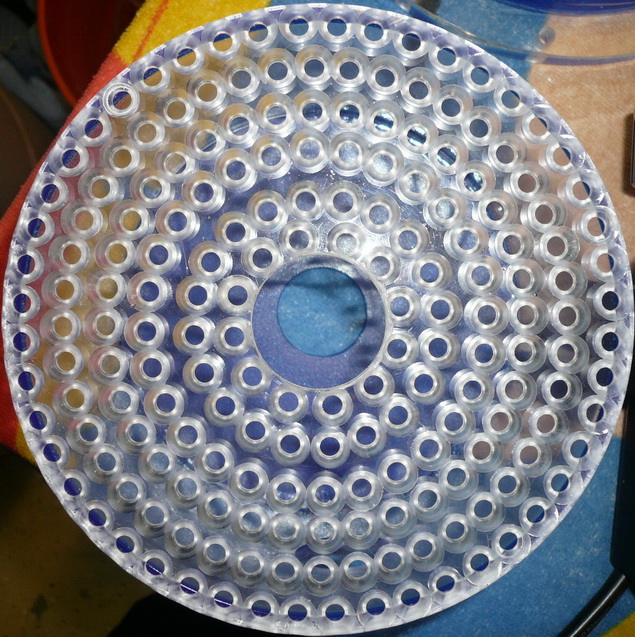
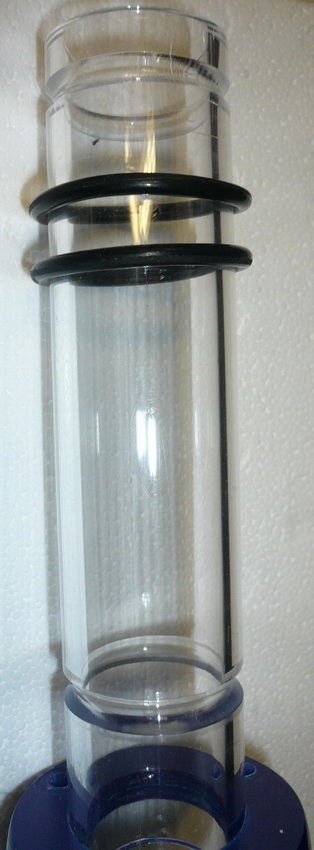
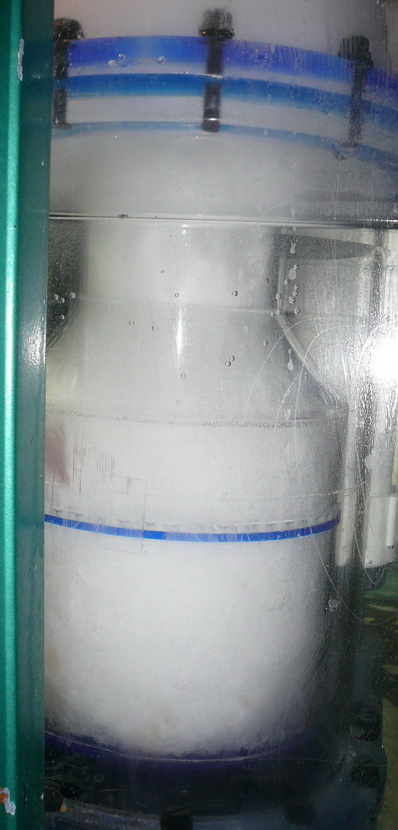


 , and just slathered both mating surfaces with a thin layer of silicone grease - for the time being. It does the trick. I'll make it right eventually.


