I am by no means a "bacteria guru", but I still think I can say that the answer is not that it is good to add bacteria, or that it is bad to add bacteria, but that adding bacteria MAY be positive depending upon what organisms are already in your tank (both micro- and macro-organisms), what concentrations theyGee - I just sold my electron microscope....HOW am I going to know WHAT and HOW MANY I have?:rollface: are in (especially microbial population sizes) and your tank parameters (pH, salinity, etc).
If your tank already contains a healthy ecosystem How can one answer whether or not the eco-system is "healthy" in a closed envirement deprived of a natural source of self-renewal/replacement?of different bacterial species that are able to maintain a stable chemical environment for your lifestock,But I think we are talking about a much "bigger picture" than just the basic chemical perameters that most here can measure or should be able to if you only gave them the chance, then adding additional additional bacteria will not do any good, and might actually be harmful to your tank. If, for some reason, this is not the case, then adding bacterial cultures, preferably from a reef environment,But the "reef envirement depends on the turtle grass, and mud flats, and mangroves as well as the "deep sinks" of our oceans for a balance of nutrient up-take/export, conversion, etc. may help to restore the ecosystem.
The point is that determining the health of your micro-ecosystem is very difficult, Agreed!and problems with tank parameters may camouflage as problems with your microorganisms. In most cases with enough time or just more careful tank-keeping, the ideal Again..."ideal"...I am not sure I can clearly identify this as defineablebacterial ecosystem will form again (it's just a matter of adjusting different bacterial population sizes, and this usually happens on it's own in a system that is stablestable - but continuing to accumulate Nitrate and Phosphate - or accumulate nuetral? Because the current popular systems approach requires much more to truly create LONG TERM stability).
So selling mud with bacteria would probably be a viable business idea because people tend to love miracle cures and tank-keepers tend to have money to spend on anything they believe would help them, but I doubt it would be a real benefit to many of their tanksWell...I am trying to keep an open mind about that. I believe in free enterprize, and that an open mind learns while a closed one cannot!:fun4: (unless the tank has some serious problem with it's microorganisms). And personally I would go for bacterial cultures from actual reefs (to get the right combination of bacterial species) and not from somewhere else.But, if you have a "stable" system - assuming you have a reef biotope tank - would this not be redundant? I think the other species from biotopes that influence and assist the reef is what we may be missing The bacteria you find elsewhere not only contains those species in other concentrations but also contains a different set of species. What you would want is bacteria that has evolved to live on reefs.

You are using an out of date browser. It may not display this or other websites correctly.
You should upgrade or use an alternative browser.
You should upgrade or use an alternative browser.
Bacterial Diversity Methods
- Thread starter mhaith
- Start date

Paul B
Premium Member
So selling mud with bacteria would probably be a viable business idea
It is not a business I was thinking of entering.
What you would want is bacteria that has evolved to live on reefs.
So you don't think my East River bacteria are that great?
You are probably correct, but what do I know?
The next time I go to Tahiti I will have to fill my underwater camera with some sand.
Actually temperate bacteria "may" be better at converting wastes than tropical bacteria.
This is only a far out theory that has absolutely no scientific bearing but bacteria from say, New York should be real good at converting waste. We have a lot of waste and our local waters undoutably have more waste than say, Bora Bora.
I know if I put a local crab or fish in my tropical tank, it would, for some reason, kick the you know what out of tropical animals. (I do it often just because I can)
Yes, I know bacteria are not fish or crabs.
I don't know if bacteria from waters with harsher conditions could even thrive in a tropical tank but I do know that the water near my home goes from about 35 degrees to about 73 or almost 90 in tide pools.
How much different is tropical bacteria from temperate bacteria? Does anyone know?
Will the temperature or waste content affect the viability of bacteria?
Being that I use local water would that affect what types of bacteria my tank harbors?
I know, too many variables, sorry, I spend a lot of time thinking about these things.
Last edited:
Paul B
Premium Member
You want bacteria? Pull up your anchor here in the East River and I will show you bacteria.
Actually the bottom of the East River (which is not really a river but a salt water estuary that goes around the east side of manhattan)
Is nothing but hydrogen sulfide due to the very fine mud and much disolved organics.
The East River starts (or ends, depending on the tide) in the Long Island Sound. The farther you get from there, the cleaner the water, and substrait becomes. When you get about 100 miles from there, the water is clear and the bottom is clean sand.
Teesquare, I am shipping this barge of mud to you for your tank

Here about 80 miles from the East River the water is extreamly clean and so is the sand. There is no mud here and this is where I like to collect water.

Actually the bottom of the East River (which is not really a river but a salt water estuary that goes around the east side of manhattan)
Is nothing but hydrogen sulfide due to the very fine mud and much disolved organics.
The East River starts (or ends, depending on the tide) in the Long Island Sound. The farther you get from there, the cleaner the water, and substrait becomes. When you get about 100 miles from there, the water is clear and the bottom is clean sand.
Teesquare, I am shipping this barge of mud to you for your tank
Here about 80 miles from the East River the water is extreamly clean and so is the sand. There is no mud here and this is where I like to collect water.
Last edited:
So you don't think my East River bacteria are that great?
They are great if and only if there is a need for these bacteria in your tank, and my guess is that usually this would not be the case.
Actually temperate bacteria "may" be better at converting wastes than tropical bacteria.
Yes, the may, but probably not at reef temperature, and with reef biochemistry, with reef ecological niches, and in companionship with other reef organisms. Under these highly specific conditions, natural reef bacteria are the ones that have evolved to do the job.
But I do agree with the sentiment that our tanks are NOT equal to natural reefs, and hence perhaps a non-reef indigenous organism may actually perform better.
But adding thousands of unidentified bacteria from a random environment to battle a problem that may not exist or may be caused by something entirely different, sounds to me as an approach that only rarely will succeed and which in worst case may be harmful.

Spracklcat
Disaster Expert
Not to mention that human pathogens may be in those waters and will do very well in a tank. I'm not arguing against using NSW, I'm just saying we should remember when we're mouth siphoning.
Paul B
Premium Member
and hence perhaps a non-reef indigenous organism may actually perform better.
Could be. Years ago I had an urchin collection business where I would collect local NY urchins to eat algae in reef tanks. The NY urchins made short work of algae at tropical temperatures because they evolved to live in much cooler water. They lived up to 82 degrees. They would move much faster than tropical urchins and eat vast amounts of algae.
adding thousands of unidentified bacteria from a random environment to battle a problem that may not exist
This is probably true but I don't add bacteria to battle a problem but to enhance the biodiversity in the hope that it is doing some good.
So far the jury seems to still be out on that. But at least the age of the tank proves that it "probably" does not hurt. I did say "probably"
Maybe I should have said "hopefully"
I'm just saying we should remember when we're mouth siphoning.
Spracklcat in all the years I have been diving and swimming in the Sound, it is probably much too late for me to worry about siphining :lol:
I have spent most of the last 35 years floating behind my boat in that water. I don't have much hair left, maybe thats why
Years ago I had an urchin collection business where I would collect local NY urchins to eat algae in reef tanks. The NY urchins made short work of algae at tropical temperatures because they evolved to live in much cooler water. They lived up to 82 degrees. They would move much faster than tropical urchins and eat vast amounts of algae.
Another good example of why one should try to avoid inoculating natural ecosystems with foreign species. (Btw, I doubt your urchins really evolved, unless they actually bred in your system and went through many generations).
This is probably true but I don't add bacteria to battle a problem but to enhance the biodiversity in the hope that it is doing some good.
So far the jury seems to still be out on that. But at least the age of the tank proves that it "probably" does not hurt. I did say "probably"
Maybe I should have said "hopefully"
I think the age of your tank suggests that it doesn't harm your tank.
Paul B
Premium Member
Agathos, I did not mean that those urchins evolved to live in a tropical tank, on the contrary, they lived their life much faster than they were designed to. They only lived a year or two at that temperature.
As for breeding, once 24 of them all spawned in my tank at the same time. My skimmer which has a five gallon effluent bucket overflowed about 8 gallons of water on the floor.
It was a real mess.
Of course out of the billions of eggs, none of them survived and the tank looked like half and half. The bacteria had a feast and the tank did not crash. In a day, all was well.
As for breeding, once 24 of them all spawned in my tank at the same time. My skimmer which has a five gallon effluent bucket overflowed about 8 gallons of water on the floor.
It was a real mess.
Of course out of the billions of eggs, none of them survived and the tank looked like half and half. The bacteria had a feast and the tank did not crash. In a day, all was well.
Agathos, I did not mean that those urchins evolved to live in a tropical tank, on the contrary, they lived their life much faster than they were designed to.
It's just me nitpicking
 . Nevermind me.
Bacteria Bacteria........A couple of years ago when my 600 gal reef as up I wanted to try Mangroves in the filter room attached to the tank. I had everything ready and ordered 3-4 foor mangroves from a grower in Florida. The roots were 2 feet long and covered with some mud. I rinsed off the mud an put the plants in the modified refugium. Two days later my fish looked like someone was trying to peel their skin off. I lost about six nice tangs and the other fish, even though sick, came through the break-out. It was not ick but I think I introduced a bacteria or parasite from the mangroves. As well as my tank was established it took just a short time for new bacteria to almost destroy the fish population. I now just introduce know reef culture rock or animals and not tidepool or mud flat animals. Hurlock
ctenophors rule
New member
I did not read every post in this, but believe i have the gist from skimming.
I did not see a response that addresses the problem with aged becteria. Bacteria populations can live for very long periods of time (at harbor branch they feed their bacteria about once every five years!). now im not certain of the life span of the nitrosomanos and nitrosphyrus bacteria in our aquariums, but it will only change my arguement if it is less than a few days( I find unlikely) anyway, bacteria becomes less efficient as it ages, in some species the change is significant, upwards of 85%! my point is that a die off of a bacteria strain isn't neccesarily a bad thing. It may effect water quality for a very brief period of time, but would likely rebound when the other bacteria rapidly reproduce and create highly efficient offspring.
remember if the bacteria are 50% more efficient you only need half as many as before...i think..i suck at math. lol
oh and, while it makes perfect sense that through natural selection our tanks will tend to become less diverse, has their been a study to support this claim?
If so at what rate did the change occur? how diverse are our tanks to begin with?
I did not see a response that addresses the problem with aged becteria. Bacteria populations can live for very long periods of time (at harbor branch they feed their bacteria about once every five years!). now im not certain of the life span of the nitrosomanos and nitrosphyrus bacteria in our aquariums, but it will only change my arguement if it is less than a few days( I find unlikely) anyway, bacteria becomes less efficient as it ages, in some species the change is significant, upwards of 85%! my point is that a die off of a bacteria strain isn't neccesarily a bad thing. It may effect water quality for a very brief period of time, but would likely rebound when the other bacteria rapidly reproduce and create highly efficient offspring.
remember if the bacteria are 50% more efficient you only need half as many as before...i think..i suck at math. lol
oh and, while it makes perfect sense that through natural selection our tanks will tend to become less diverse, has their been a study to support this claim?
If so at what rate did the change occur? how diverse are our tanks to begin with?
Last edited:
anyway, bacteria becomes less efficient as it ages, in some species the change is significant, upwards of 85%!
Are you talking about aging of individual bacteria or aging of bacterial populations? Anyway, I don't agree. I see no reason why they should become less efficient with years. In fermentation of monocultures we some times see less efficiency of whatever bioproduct formation or catabolic activity we are interested in, probably because they live in monocultures, but in our tank ecosystems with a complex mix of interspecies interaction I don't see why this should happen.
my point is that a die off of a bacteria strain isn't neccesarily a bad thing. It may effect water quality for a very brief period of time, but would likely rebound when the other bacteria rapidly reproduce and create highly efficient offspring.
I don't understand why the offspring would be more "efficient" than their mother cells.
steverochford
New member
very interesting thread although i dont fully understand what is being said with that said i would like to pose a question
i have recently reset up my system 2500 liters and am using prodibio products ,i am very happy with the effect it is having during the initial running in period, cyano has all but gone and no3 and po4 are 0.00 and 0.008
my question is ; now that i have dosed the biodigest(bacteria) for six weeks now, is there any value in adding more if what you guys are sayng that these bacterias multiply by themselves. I know that skimming takes some of these bacterias out but you are saying that these bacterias are not water bound but surface bound?
I have a 250 liter vat darkened full of live rock i add the biodigest to this area of the system
thanks
steve
i have recently reset up my system 2500 liters and am using prodibio products ,i am very happy with the effect it is having during the initial running in period, cyano has all but gone and no3 and po4 are 0.00 and 0.008
my question is ; now that i have dosed the biodigest(bacteria) for six weeks now, is there any value in adding more if what you guys are sayng that these bacterias multiply by themselves. I know that skimming takes some of these bacterias out but you are saying that these bacterias are not water bound but surface bound?
I have a 250 liter vat darkened full of live rock i add the biodigest to this area of the system
thanks
steve
Attachments
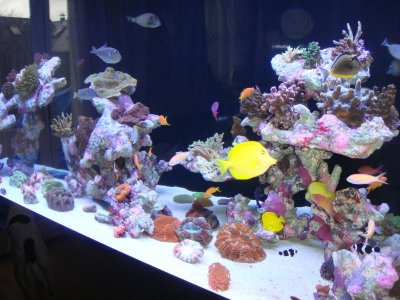
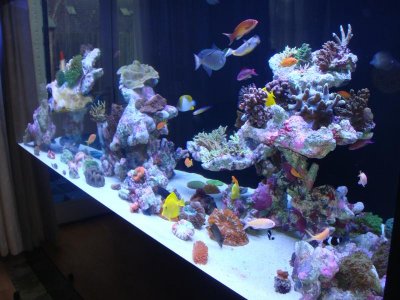
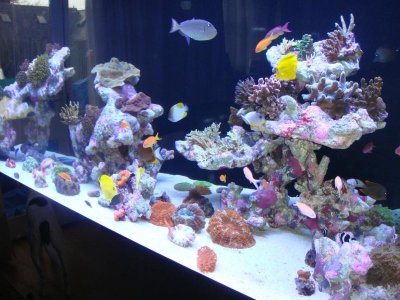
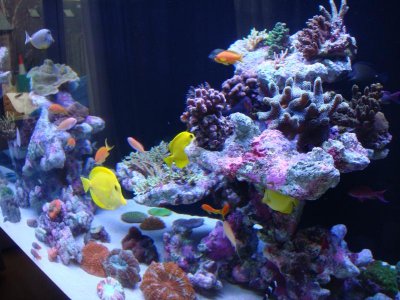
ctenophors rule
New member
Are you talking about aging of individual bacteria or aging of bacterial populations? Anyway, I don't agree. I see no reason why they should become less efficient with years.
maybe I am wrong, but that is what i have heard. why would you say that the bacteria would become less efficient in a monoculture? what role doesn't an absence of competition play?
I don't understand why the offspring would be more "efficient" than their mother cells.
from what i have been told, or read, 1 young bacteria will process more than an old one.
let me do some research
i have recently reset up my system 2500 liters and am using prodibio products ,i am very happy with the effect it is having during the initial running in period, cyano has all but gone and no3 and po4 are 0.00 and 0.008
How do you know the Prodibio product has any effect?
my question is ; now that i have dosed the biodigest(bacteria) for six weeks now, is there any value in adding more if what you guys are sayng that these bacterias multiply by themselves.
All bacteria multiply by themselves, the question is whether the particular bacteria in that specific product will multiply themselves in your tank. For them to do so, they must enjoy the specific water chemistry of your tank, and not be out-competed by the bacteria that is already present in your tank. So, it is impossible to answer your question.
I believe that there is no point in adding more. I don't see any point in adding anything to your system if the water parameters are fine. It if ain't broken...
I know that skimming takes some of these bacterias out but you are saying that these bacterias are not water bound but surface bound?
It depends on exactly which bacterial species are in the product you are adding to your tank.

Agu
Premium Member
I'm with Paul,
I collect various items from the Gulf and backwaters (snails , hermit crabs , macro algae, interesting pieces of rock) and add them to my tanks. Do this BTW with correct collecting licenses for a Florida resident.
I find my tanks are easier to maintain than when I was from land locked Minnesota and everything was imported. Possibly it's just a coincidence. However I've had no problems because I've introduced random flora and fauna from the Gulf.
I collect various items from the Gulf and backwaters (snails , hermit crabs , macro algae, interesting pieces of rock) and add them to my tanks. Do this BTW with correct collecting licenses for a Florida resident.
I find my tanks are easier to maintain than when I was from land locked Minnesota and everything was imported. Possibly it's just a coincidence. However I've had no problems because I've introduced random flora and fauna from the Gulf.
Agathos-
You mention that bacterial populations recover 'quickly'. What does that mean and what are the time frames? I have noticed a healthier tank when I change water every other week vs every week.
Are you of the opinion that bacterial treatments like Prodibio are ineffective?
You mention that bacterial populations recover 'quickly'. What does that mean and what are the time frames? I have noticed a healthier tank when I change water every other week vs every week.
Are you of the opinion that bacterial treatments like Prodibio are ineffective?
You mention that bacterial populations recover 'quickly'. What does that mean and what are the time frames?
That varies tremendously between different bacterial species. With optimal conditions the bacterium with the quickest growth rate, Vibrio natriegens, divides every 11 minutes (!). Other bacteria grow very slowly, with cell division only taking place after days, weeks, months or even years (bacteria found deep in the Earth crust is hypothesized to grow and divide extremely slowly, but then the nutrient accessibility is rather low).
It's hard to give an average growth rate since it varies so much between species and we don't really know which bacteria colonize our tanks (or do we?). But a few hours, given perfect conditions, sounds plausible for marine free-living bacteria. And the conditions in our tanks are pretty good: high temperatures and usually LOTS of available nutrients.
What does this mean? A few hours in growth rate may not seem that much, but it actually means that the number of bacterial cells double every few hours. So if you exchange 50 % of your tank's water with new "sterile" water, it would take the tank bacteria only a few hours to completely populate the new water.
What keeps them in check then? Why don't they take over and start oozing out of your tanks? Because they conditions are never that perfect, sooner or later they deplete some nutrient they need for continued growth, and they reach a population plateau.
Are you of the opinion that bacterial treatments like Prodibio are ineffective?
I am not familiar with this product, but if it is used at start-up I think it would help to give a boost to the bacterial colonization of the tank. Adding extra bacteria (through Prodibio), and not only rely on the bacteria that is added to the tank via rocks, sand, fish, etc, probably reduces the cycling time of the tank. The bacterial population reaches its maximum more quickly and therefore nitrates, nitrites and ammonium are more quickly removed. I say probably, because if you add lots of live rock and sand of good quality, the amount of bacteria added with Prodibio might be negligible. I am also not convinced that the bacterial strains chosen for the Prodibio product are ideal for reef tanks.
Last edited:
Similar threads

- Replies
- 12
- Views
- 226


- Replies
- 3
- Views
- 122

- Replies
- 0
- Views
- 108