
You are using an out of date browser. It may not display this or other websites correctly.
You should upgrade or use an alternative browser.
You should upgrade or use an alternative browser.
Best option to keep Calcium Up?
- Thread starter Dustin1300
- Start date

Dustin1300
Reefaholic
I could go that route as it would go through the 5 gallon bucket too quickly. I've got the space too so it would not be a problem. I'll plan on dropping by Lowes to see what choices I have as it would be a much better option. With the size of my tank I would think that the 44G Brute would last nearly a month. The whole point of this is to make it automated...Why not go with a bigger storage container Thanks for the input as it has been very helpful. Should I need to dose tank with two part later I could pick up two more remote pumps for the LiterMeter III!
I guess that is another thing to check off the list. Other piece of equipment I need to look for is a PH monitor!
Thanks for the input as it has been very helpful. Should I need to dose tank with two part later I could pick up two more remote pumps for the LiterMeter III! I guess that is another thing to check off the list. Other piece of equipment I need to look for is a PH monitor!
Dustin1300
Reefaholic
Scott,
Since you've got a 44 Gallon Brute set up how do you have yours set up? I was just thinking of running a pump in the bottom to stir it up for a little bit once I first add the kalk. Then once it is stirred will let it settle until the next time I need to get a batch going. I see many DIY reactors that just seem a bit of overkill.
Thanks again
Since you've got a 44 Gallon Brute set up how do you have yours set up? I was just thinking of running a pump in the bottom to stir it up for a little bit once I first add the kalk. Then once it is stirred will let it settle until the next time I need to get a batch going. I see many DIY reactors that just seem a bit of overkill.
Thanks again

My sump sits on a bench with the 44G Brute next to it. From the bottom or the Brute to the top of the sump is ~ 5'. I use a Reef Fanatic dual float switch for the topoff controller and 2 Aqualifters back to back for the topoff pump. I need to use 2 because one wont pump 5'. The Reef Fanatic is plugged into my ACIII controller as an extra fail safe. If the pH goes above 8.35, it shuts off the topoff and sends me an email. When I mix up a batch of Kalk, I just give it a good stir with a length of PVC.
For you, you could use the smaller 30G Brute if you want. The LMIII could go either in the basement or in the stand, whatever works out better,
For you, you could use the smaller 30G Brute if you want. The LMIII could go either in the basement or in the stand, whatever works out better,
Dustin1300
Reefaholic
I'm thinking just go ahead and get the 44 gallon brute so I have the extra volume as I plan on upgrading to a larger tank once I buy my next house next spring/summer. The LMIII will work best upstairs just in case I end up using two part in addition to the kalk. That way the external pumps can easily be linked without modifications. Would like to get an ACIII down the road to or the junior so I have something that e-mails me on the phone I'm an electronics freak (Engineer for VoIP telephony) so I'd love to have the data to evaluate my system over a long period of time. Would be something like evaluation a PerfMon from a server
I'm an electronics freak (Engineer for VoIP telephony) so I'd love to have the data to evaluate my system over a long period of time. Would be something like evaluation a PerfMon from a server
Dustin1300
Reefaholic

jdieck
New member
On supplementation I would say that at the end it almost becomes a matter of personal preference and convenience. Cost wise there seems to be what looks like a significant gap between using aquarium commercial products and using non-aquarium products.
A) Two part supplements:
If you are into saving as much as you can, nothing will beat using non-aquarium products like Ms Wages Kalk or DIY two (three) part solution using Magflake, Dow Flake and Baking Soda. Just note that although cost is a pro, there is a con in the form of increased risk and less convenience.
So far these product have proven reliable but not a single manufacturer is or will be willing to assure any quality control in those products and given the manufacturing process there is always a good chance of getting Ammonia in the flake products. Ms Wages has in occasion leaves some unidentified brownish residue.
Also; and this is true for all two parts, there seems to be, judging by the posts in the chemistry forum for a higher difficulty in maintaining stable levels and higher chance of over or under dosing.
Commercial aquarium two part supplements will reduce the risk of contamination but will increase the cost.
Finally two part supplements may affect the ionic balance between sodium, chloride and sulfate if used for a long time without proper water changes.
B) Kalk dripping:
This can be one of the cheapest ways of supplementing if using a simple drip jug using a food Kalk like Ms Wages.
Addition of a reactor, dose pump and top off plus timers will increase the initial investment.
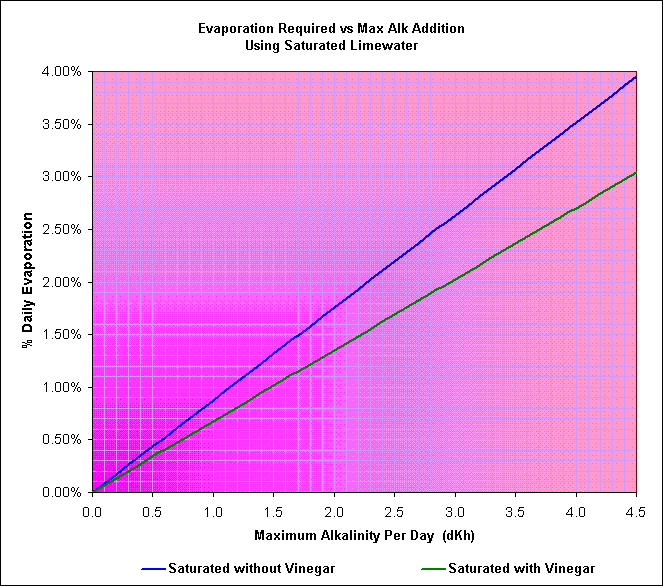
Unfortunately Kalk addition has a limitation. As it replaces the evaporation, the maximum amount of calcium and alkalinity to be added is limited by the amount of daily evaporation in the tank (see chart below). In my experience, although Kalk can cope with the consumption of a lightly loaded or softies tank, I yet have not seen an sps loaded tank that do not require a second form of supplementation.
C) Calcium Reactor:
A properly set up reactor is by far the most convenient of the supplementation methods and the one that might have the highest capacity for addition.
Although on a per unit of alkalinity the reactor media is the cheapest of the supplements, the initial cost of the reactor and peripherals makes the overall system more expensive for small to medium size systems.
In addition to the initial cost, a calcium reactor usually will require more experience to achieve the proper set up and trouble free operation.
Which one to use??
There are basically two factors that affect the decision, convenience and cost.
convenience wise if addition every two or three days is not an issue and the system is relatively small (a nano) a two part commercial or DIY additive will be convenient (if not basically the only alternative), as the tank gets larger and consumption increase, preparing the supplements and having to dose daily can turn into an undesirable chore so automation starts to get into the picture which now starts increasing the cost of two part or kalk addition but increasing the convenience for the aquarist.
Cost wise there are two factors that define the overall operational cost, the size of the system and the daily consumption
Although precise definition of costs is extremely difficult given the different products, sources equipment and peripherals designs and their costs below there is a chart that shows the approximate average annual cost for different supplementation methods for a 55 gallon system. Again the break even points between the methods can swing significantly depending on specific media and equipment sources and the "fanciness" of the set ups.
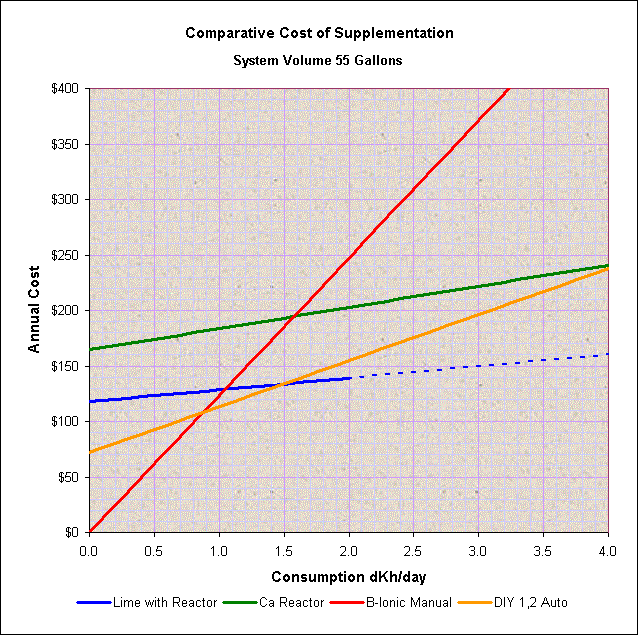
Note that the least costly option will be to get some Ms Wages Kalk and drip a kalk mix using a basically zero cost plastic jug and an air hose (Green line). At about a consumption of 2 dKh per day the required evaporation (around 1.75% of tank volume) may start limiting the amount of supplementation that can be added. So in that case changing to the next less costly alternative, the manual addition of a DIY supplement, will be required (blue line).
Automating the addition of two part (Orange line) will increase it cost but not as high as what the cost would be by automating the lime addition using a Kalk reactor (Purple line). Note that Kalk could be automated without the use of a reactor (line not shown), the cost of this automation will be very similar if not cheaper than the automation of a two part dosing system so if not using a Kalk reactor, automating Kalk addition will be cheaper than automating two part addition.
In either of the Kalk cases at about 2 dKh of consumption another supplementation method shall be considered, in this case the automation of the two part addition.
Finally in this case cost wise a calcium reactor will be the most expensive alternative and if elected might be for the added convenience and why not a bit for the love of aquarium toys
So for a 55 gal system potentially dripping Kalk, manual addition or automating a DIY are good alternatives
Now if we increase the size of the system to say 120 gallons the comparison may look a bit different.
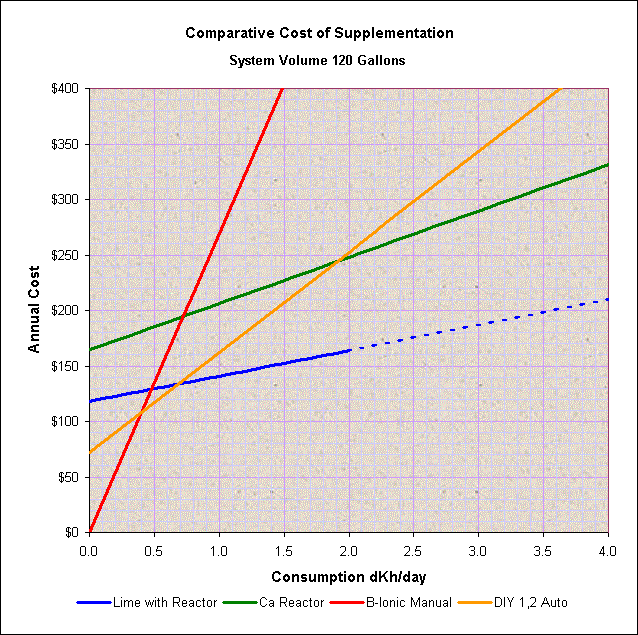
For a system this size automation is almost granted so no comparison is made with dripping Kalk or manual DIY additions but rather comparing automated Kalk reservoir, automated DIY two part, automated Kalk reactor and automated calcium reactor.
First thing to notice that a Randy style Kalk reservoir with a doser pump and top off will be the lowest cost alternative up to the level were evaporation does not allow for higher addition.
If there is no room for a Kalk reservoir the automating two part solution is the alternative but note that it become more expensive than a Kalk reactor at a consumption of only 0.9 dKh which is an unusually low consumption so in this case a Kalk reactor seems to be the logical alternative.
Finally if this is a heavy loaded system and the consumption exceeds 2 dKh per day the alternative will be the calcium reactor.
So for a system this size with light to medium consumption automation of a Kalk reservoir or a Kalk reactor will be the alternative and for a heavy loaded system a properly sized calcium reactor is granted and will not be a luxury.
A) Two part supplements:
If you are into saving as much as you can, nothing will beat using non-aquarium products like Ms Wages Kalk or DIY two (three) part solution using Magflake, Dow Flake and Baking Soda. Just note that although cost is a pro, there is a con in the form of increased risk and less convenience.
So far these product have proven reliable but not a single manufacturer is or will be willing to assure any quality control in those products and given the manufacturing process there is always a good chance of getting Ammonia in the flake products. Ms Wages has in occasion leaves some unidentified brownish residue.
Also; and this is true for all two parts, there seems to be, judging by the posts in the chemistry forum for a higher difficulty in maintaining stable levels and higher chance of over or under dosing.
Commercial aquarium two part supplements will reduce the risk of contamination but will increase the cost.
Finally two part supplements may affect the ionic balance between sodium, chloride and sulfate if used for a long time without proper water changes.
B) Kalk dripping:
This can be one of the cheapest ways of supplementing if using a simple drip jug using a food Kalk like Ms Wages.
Addition of a reactor, dose pump and top off plus timers will increase the initial investment.
Unfortunately Kalk addition has a limitation. As it replaces the evaporation, the maximum amount of calcium and alkalinity to be added is limited by the amount of daily evaporation in the tank (see chart below). In my experience, although Kalk can cope with the consumption of a lightly loaded or softies tank, I yet have not seen an sps loaded tank that do not require a second form of supplementation.
C) Calcium Reactor:
A properly set up reactor is by far the most convenient of the supplementation methods and the one that might have the highest capacity for addition.
Although on a per unit of alkalinity the reactor media is the cheapest of the supplements, the initial cost of the reactor and peripherals makes the overall system more expensive for small to medium size systems.
In addition to the initial cost, a calcium reactor usually will require more experience to achieve the proper set up and trouble free operation.
Which one to use??
There are basically two factors that affect the decision, convenience and cost.
convenience wise if addition every two or three days is not an issue and the system is relatively small (a nano) a two part commercial or DIY additive will be convenient (if not basically the only alternative), as the tank gets larger and consumption increase, preparing the supplements and having to dose daily can turn into an undesirable chore so automation starts to get into the picture which now starts increasing the cost of two part or kalk addition but increasing the convenience for the aquarist.
Cost wise there are two factors that define the overall operational cost, the size of the system and the daily consumption
Although precise definition of costs is extremely difficult given the different products, sources equipment and peripherals designs and their costs below there is a chart that shows the approximate average annual cost for different supplementation methods for a 55 gallon system. Again the break even points between the methods can swing significantly depending on specific media and equipment sources and the "fanciness" of the set ups.
Note that the least costly option will be to get some Ms Wages Kalk and drip a kalk mix using a basically zero cost plastic jug and an air hose (Green line). At about a consumption of 2 dKh per day the required evaporation (around 1.75% of tank volume) may start limiting the amount of supplementation that can be added. So in that case changing to the next less costly alternative, the manual addition of a DIY supplement, will be required (blue line).
Automating the addition of two part (Orange line) will increase it cost but not as high as what the cost would be by automating the lime addition using a Kalk reactor (Purple line). Note that Kalk could be automated without the use of a reactor (line not shown), the cost of this automation will be very similar if not cheaper than the automation of a two part dosing system so if not using a Kalk reactor, automating Kalk addition will be cheaper than automating two part addition.
In either of the Kalk cases at about 2 dKh of consumption another supplementation method shall be considered, in this case the automation of the two part addition.
Finally in this case cost wise a calcium reactor will be the most expensive alternative and if elected might be for the added convenience and why not a bit for the love of aquarium toys
So for a 55 gal system potentially dripping Kalk, manual addition or automating a DIY are good alternatives
Now if we increase the size of the system to say 120 gallons the comparison may look a bit different.
For a system this size automation is almost granted so no comparison is made with dripping Kalk or manual DIY additions but rather comparing automated Kalk reservoir, automated DIY two part, automated Kalk reactor and automated calcium reactor.
First thing to notice that a Randy style Kalk reservoir with a doser pump and top off will be the lowest cost alternative up to the level were evaporation does not allow for higher addition.
If there is no room for a Kalk reservoir the automating two part solution is the alternative but note that it become more expensive than a Kalk reactor at a consumption of only 0.9 dKh which is an unusually low consumption so in this case a Kalk reactor seems to be the logical alternative.
Finally if this is a heavy loaded system and the consumption exceeds 2 dKh per day the alternative will be the calcium reactor.
So for a system this size with light to medium consumption automation of a Kalk reservoir or a Kalk reactor will be the alternative and for a heavy loaded system a properly sized calcium reactor is granted and will not be a luxury.
Last edited:

James77
Team RC
jdieck,
In the 2nd cost example- the 120 gallon- do you know what the cost it figures the DIY 2-part at? It seems rather high. A couple 5 gallon buckets from BRS of soda ash and calcium would cost half of the $350 annual cost the chart is quoting at 3 dkh/day- and it would leave you with plenty extra leftover. Thats of course assuming my quick math had no flaws.
In the 2nd cost example- the 120 gallon- do you know what the cost it figures the DIY 2-part at? It seems rather high. A couple 5 gallon buckets from BRS of soda ash and calcium would cost half of the $350 annual cost the chart is quoting at 3 dkh/day- and it would leave you with plenty extra leftover. Thats of course assuming my quick math had no flaws
.
jdieck
New member
jdieck,
In the 2nd cost example- the 120 gallon- do you know what the cost it figures the DIY 2-part at? It seems rather high. A couple 5 gallon buckets from BRS of soda ash and calcium would cost half of the $350 annual cost the chart is quoting at 3 dkh/day- and it would leave you with plenty extra leftover. Thats of course assuming my quick math had no flaws
At the time I made the calculation:
Cost of DIY CaCl enough for 1 gal supplement = $4.16 (Now it is around $3.50)
Cost of DIY Sodium Carbonate for 1 gal supplement = $4.16 (Now it is around $3.50)
Shipping and handling = $2.61
Total supplement (DIY 1) per gallon of two part = $10.93
Consumption = 71.40 ml to increase 1 dKh in 1 gal
Cost per dKh per gallon = 0.2062 cents
Cost per dKh in 120 gallons = 24.75 cents
Cost per year per dKh in 120 gallons = $90.32 USD
The calculation also assumes that the system is automated with dual dosing pump at an initial cost of $360.00 amortized over 5 years for a per year equipment cost of $72.00
So the total assumption for 3 dKh per day of consumption comes to 72+90.32x3= $392.46
In any case and as I mention in the previous post, the precise definition of costs is extremely difficult given the different products, sources equipment, price changes over time, volume purchase vs retail and peripherals designs and their costs so do not take the precise cost calculation at heart and use the charts more for reference in learning the variables involved in comparing one method to the other because the intersection points will move to the left or right depending in your particular circumstances.
Once familiar with the differences you will be in a better position to make your own cost/benfit comparison in more detail.
Enjoy!
Jose
Dustin1300
Reefaholic
jdiek,
Thanks for the pros/cons and breakdown of pricing. At this point I think I'm still going to stick with the kalk and see how happy I am with it. (As well as my coral) I have no SPS at the moment and it would still be a relatively new adventure for me so my tank does not demand a ton of calcium. In the future I could see that a calcium reactor would be the best bet but right now I don't really have the space under the stand.
Thanks for the pros/cons and breakdown of pricing. At this point I think I'm still going to stick with the kalk and see how happy I am with it. (As well as my coral) I have no SPS at the moment and it would still be a relatively new adventure for me so my tank does not demand a ton of calcium. In the future I could see that a calcium reactor would be the best bet but right now I don't really have the space under the stand.
Dustin1300
Reefaholic
Sounds like a good plan. The ACjr doesn't have an Ethernet port/web server. You need the ACIII or the new Apex.
I've not yet done a lot of research on the controllers but I've just recently started putting the investments needed to be serious about the hobby. :lolspin:
Buying the controller would most likely not come until the end of the summer but for now I can get the kalk/LiterMeter III/Brute. Once I get them in place I'll start picking up a good amount of SPS frags. I've got a local reefer that has a good selection of SPS frags for a very good price
They also look ten times better than any LFS has around here! Closest place to me now with good coral is Premium Aquatics! Anyways, I believe I've gotten all the information I need at this point and have a good plan of how I will supplement the coral with the alk/calcium they need. In the past I just would manually add the supplements but the new plans will help to keep them more stable and AUTOMATED.
Thanks everyone for your input as it has been greatly appreciated.
Similar threads
- Replies
- 7
- Views
- 145


