
BTA's bioload

BeachVacationer

New member
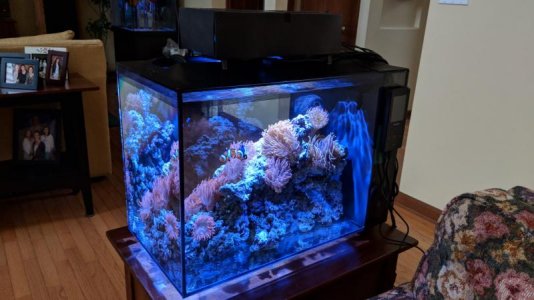
I'm setting up a nano BTA with a pair of clownfish 16 gallon tank. It's a modified Fluval spec 16 tank with 2 Kessil A80s over it, the Fluval skimmer in the back chamber and upgraded return pump. My question is about bioload. Does BTA contribute to bioload? Does it depend on how much I feed the BTAs? I'd like to put as many BTAs in the tank as it can handle. Here's a pic of what I have now. Ive never fed my BTAs but will start feeding the now.

attachment.php
 

Attachments

  • IMG_20181019_160414-01.jpg
    IMG_20181019_160414-01.jpg
    54.7 KB · Views: 5
I wouldn’t worry too much about the bioload until they get very large or if you have a bunch. I also wouldn’t start target feeding them. The more you feed them the more waste they will produce. I’d just let them catch whatever they manage to on their own when you feed the fish.
 
The bioload of a BTA is actually very low. What is high is when people start feeding them - especially if they overfeed them with chunks of solid food.

A BTA can grow from the size of a pencil eraser to 8" with nothing but a good tank environment and bright light.
 
BTAs can easily grow to 14”, so I would not put very many in a 12 gallon tank. They can also take nitrates directly from the water column, which is probably one of the reasons why they typically do not do well in new tanks.
 
BTAs can easily grow to 14", so I would not put very many in a 12 gallon tank. They can also take nitrates directly from the water column, which is probably one of the reasons why they typically do not do well in new tanks.

The presence of nitrates is not a prerequisite for BTA health. The reef environments where they are typically found are nutrient poor.

I personally think "new tank syndrome" has more to do with environmental instability - particularly when it comes to pH swings, which anemones are particularly sensitive to... though of course with new tanks it can be any number of reasons. The beauty of new tanks is that they are all bad in their own unique ways. The common feature of established tanks is stability.
 
Love the tank set up. If they are like my nems in a couple of months they will be on top of each other. That size tank will probably not sustain that many. They just grow too big to have that many in that size tank. JMO
 
The presence of nitrates is not a prerequisite for BTA health. The reef environments where they are typically found are nutrient poor.

I personally think "new tank syndrome" has more to do with environmental instability - particularly when it comes to pH swings, which anemones are particularly sensitive to... though of course with new tanks it can be any number of reasons. The beauty of new tanks is that they are all bad in their own unique ways. The common feature of established tanks is stability.
I did not say nitrates are a prerequisite, just that they can use them as a food source. I agree that new tank syndrome overall is the biggest factor. Personally I will not sell an anomone for a tank less than 6 months old.
 
Back
Top