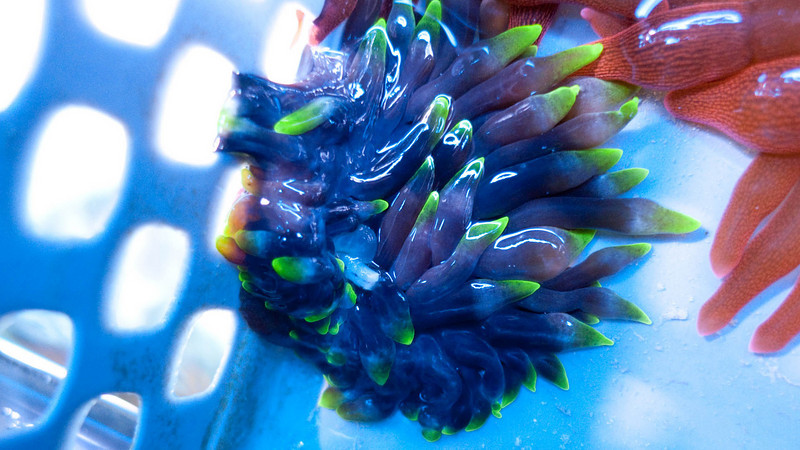
Butchering 'nems...

I probably won't post any more update photos, because now they look whole again and aren't that interesting.

LOL :) BTA's don't heal in 5 days :) Show us some photos of healed mouths in 3 - 6 weeks and I'll get excited.

Any anemone you cut in half will look like this for several days afterwards - even S. gigantea. The challenge is getting it to heal. Generally speaking when you have a completely healed mouth with no visible open wound you are out of the woods. Just because an anemone curls in on itself and hides the wound does not mean it is healed.

Your best bet for manually dividing anemones are BTA's - but even with BTA's the success rate is not 100%.

(Some photos of a discussion thread on this subject from 7 years ago) :)

precutsmall.jpg


postcutsmall.jpg
 
Sorry, should have been clearer. You're right, they are not 100% recovered yet because the mouths aren't fully formed. What I was trying to convey was that the wounds have closed up and that from a casual photo perspective, the anemones look pretty much identical to what they did prior to cutting. No more guts are spilling out, the anemones fully inflate, etc.
 
LOL :) BTA's don't heal in 5 days :) Show us some photos of healed mouths in 3 - 6 weeks and I'll get excited.

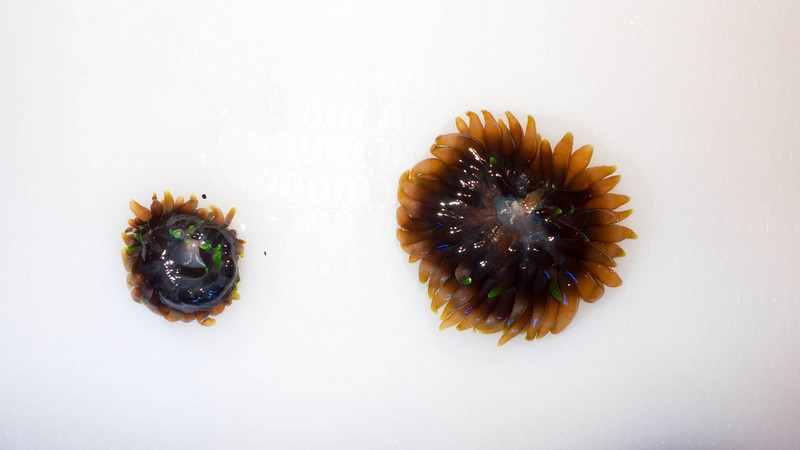
Ok, well I was curious about your comment, because I am of the belief that the BTAs take days and not weeks to heal... so I decided to take photos of the two halves of the green tip anemone out of water.

Exactly seven days post cutting. Here's a top view of both halves. I will admit that the mouths aren't fully healed, but they are close.

771142537_oeWuG-L.jpg


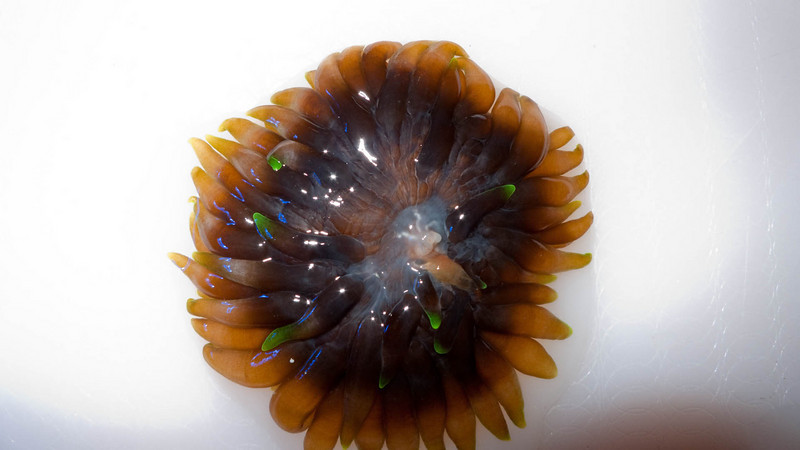
Here's a zoom in on the larger (better healed) half. You can see scar tissue in the lower right where the anemone has closed up.

771142540_6HAno-L.jpg


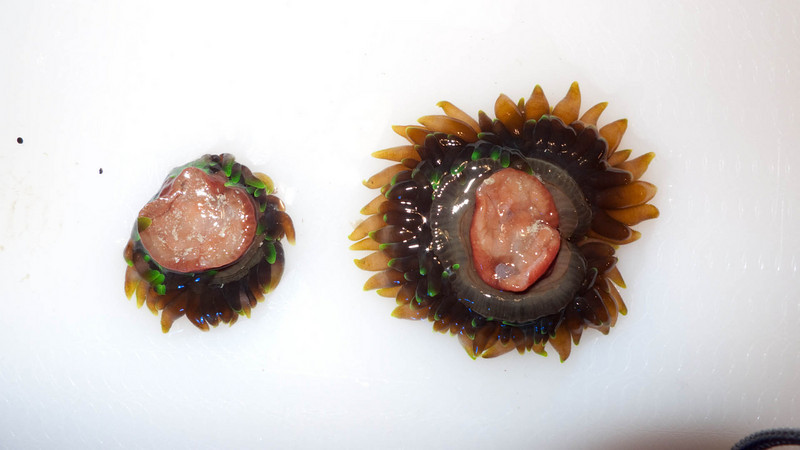
For kicks, here are photos of the feet. On the larger anemone, you can see where the cut was made and where it has folded over and healed.

771142545_fmoBP-L.jpg


I just put the anemones back in their baskets, but once they open back up I am going to try feeding some mysis and test to see if the mouths are actually functional or not.

IMHO, these anemones are clearly over their 'risk period' and 'pretty much' healed. They may not have 100% functioning mouths (to be tested in a few hours), but they clearly don't have any more open wounds. I have no doubt that if they don't eat tonight, they will likely eat in another week which would make the total healing time 2 weeks.
 
Last edited:
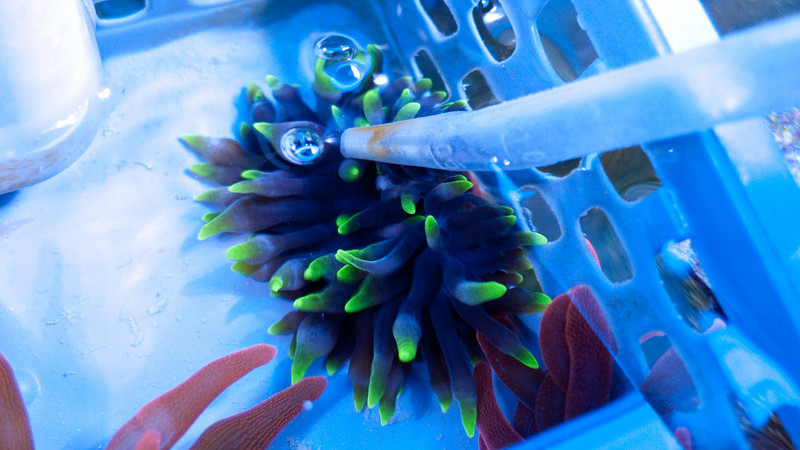
Ok, the anemone definitely ate a mysis shrimp. Here are some photos:

In this shot, you can see the mysis shrimp heading down into the mouth. The shrimp is the white little strip right below the brown spot on my pipette. (You can tell it's a shrimp and not a tentacle because it's not green.)

771179858_qoSyx-L.jpg


I tried to get a photo of the anemone eating while in the water, but it wouldn't cooperate, so I lifted the basket out of the water while the anemone was in mid-meal. (Yeah, these anemones have got to hate me.)

Clear shot of the mysis disappearing into the mouth. The mouth is the round expanded white area above the shrimp.

771179863_wHWKQ-L.jpg


I repeated this same experiment with the roses that I cut and they ate as well.

So there you have it. Anemones cut in half to eating food with a "mostly formed" mouth in 7 days flat.
 
Nice thread with "proof in the pudding" photos...I've never done any anemone propagation myself, but I've done a fair bit of research on it. I know the "nem police" are out there and disprove of this, but from what I've seen propagating e. quadricolor (the BTA's) & Heteractis magnifica (the Retteri) can be done quite successfully given healthy nems, good tank params and proper methods are followed. It does seem however that most of the other species of nems that we keep in captivity have very dismal survival rates using the same procedures.

All that said, I have a couple questions for you. In my own reading I've seen some quite detailed write-ups and they very often make a point that I brought up earlier, which is the "mono-culture" approach. Meaning never mix species or even other genetic strains when propagating, IE. only clones of the original parent should be propagated together. Some of this is written where larger scale "farming" arrangements are being discussed. I still was under the impression though that when being propagated, nems of different species would most likely "chemically" attack each other. So, my first question is you clearly have two or more species there, and it appears you have not seen any allelopathy between them. My second question is that the toxins released by nems when propagating in this method are reportedly very toxic to fish. It appears you have your "healing" nems in a display tank...again I assume you have not witnessed any issues with your fish.
 
All that said, I have a couple questions for you. In my own reading I've seen some quite detailed write-ups and they very often make a point that I brought up earlier, which is the "mono-culture" approach. Meaning never mix species or even other genetic strains when propagating, IE. only clones of the original parent should be propagated together. Some of this is written where larger scale "farming" arrangements are being discussed. I still was under the impression though that when being propagated, nems of different species would most likely "chemically" attack each other. So, my first question is you clearly have two or more species there, and it appears you have not seen any allelopathy between them. My second question is that the toxins released by nems when propagating in this method are reportedly very toxic to fish. It appears you have your "healing" nems in a display tank...again I assume you have not witnessed any issues with your fish.

Having a mono-culture is ideal if you are trying to get maximum output in a full scale propagation setup.

Two different colored bubble tip anemones cut in the same tank is better than two different types of anemones cut in the same tank. As you can see they are healing quickly. They would probably heal even faster in a monculture prop system. They, probably would've started to grow new bably tentacle on the side that healed up.

If you only cut one or two small anemones it probably won't hurt your fish. If you cut 100 at the same time in the same tank you might have some issues.

For all of you thinking of trying this it is best to wait at least three months before you try to cut an anemone so it is acclimated to your system. This is especially true with a wild caught anemone. Also, don't cut it if it isn't growing. If it isn't growing then it isn't healthy enough to survive.
 
Last edited:
I really love BTAs (I have 7 different strains) and some of them are pretty rare morphs. I've always thought it would be nice to propagate them which is what motivated me to give this a shot.

I've accidentally torn many BTAs in the past trying to remove them from rocks and I have always found that they are incredibly resilient and durable, so I wasn't too worried about them recovering from cutting.

In regards to mono-culture... To be honest, I don't have enough experience to comment on this. However, I have always found that my BTAs get along very well together. I have all 7 different strains crammed on to the same island in constant contact with each other. The 2 RBTAs and one green tip that I cut this time were all from the same tank, cut on the same cutting board and healed back up in the same baskets. There were no issues between the anemones at all.

This all occurred in an Elos 120 (80 gallon) display tank with SPS, LPS and softies. There are two picasso clowns and a pink spot goby with pistol shrimp in the tank. None of the inhabitants seemed to mind in the slightest about the cutting.

Prior to this thread, I had never actually heard of the 'nem police. I think that animals need to be cared for and treated well and I am always terribly upset if I lose a coral/frag/fish/anemone, etc... that said, IMHO if you disapprove of propagating BTAs, then you should probably disapprove of fragging corals as a whole. Fragging LPS with a bandsaw or dremel almost always results in cut heads. IMHO, cutting a corallite is no different than slicing a BTA in half. BTAs are just bigger.

I only have experience with cutting BTAs though, so I won't speak for the other species. If they in fact have dismal survival rates, then I wouldn't approve of cutting them either until we learn how it can be done successfully.
 
Having a mono-culture is ideal if you are trying to get maximum output in a full scale propagation setup.

Two different colored bubble tip anemones cut in the same tank is better than two different types of anemones cut in the same tank. As you can see they are healing quickly. They would probably heal even faster in a monculture prop system. They, probably would've started to grow new bably tentacle on the side that healed up.

If you only cut one or two small anemones it probably won't hurt your fish. If you cut 100 at the same time in the same tank you might have some issues.

For all of you thinking of trying this it is best to wait at least three months before you try to cut an anemone so it is acclimated to your system. This is especially true with a wild caught anemone. Also, don't cut it if it isn't growing. If it isn't growing then it isn't healthy enough to survive.

I agree with Zaraemna... Generally speaking, I think you should be a fairly skilled aquarist with the right tank(s), tools and specimens before you try this. The RBTA and Green Tip that I cut have been with me for years and years and have grown and split many times in the past.

I can believe the mono-culture thing as well... who knows, maybe if I cut one of the other strains I might have problems. Maybe I will try and see in a few weeks. If I encounter problems, I can move one of the anemones to one of the other three tanks for healing.
 
Anemone

Anemone

Speaking for myself only, yes I am a member of the NEM POLICE. Eight stepped up and did so in an educational way, and the pics clearly show the successful process of culturing anemones in the home environment. And he provided the proper disclaimer instructions. I will take his method if done correctly over the capture of anemones from the wild anyday.
 
Eight,

Speaking from experience, you do need to have mono cultures if you want it to succeed in the long run. The chemical warfare between strains can be very deadly for healing specimens.

One other word of advice, don't be in a hurry to frag these specimens again. Let them get to looking as healthy and large as they were before the first frag, even if it take several months. Again, and I can't stress it enough, Don't be in a hurry!
 
Mstng67, what do you mean by 'success in the long run'? (Not doubting your experience, just trying to understand.) Do you mean that if I do this again with a rose and green tip that they might not heal well? I did have six halves all simultaneously cut and healed in a week... was I lucky?

And don't worry about refragging, I'm not in that much of a hurry. I already have several more clones (larger ones even) that will be put on the chopping block before these would be touched.
 
I think you are doing fine, and am glad that you are taking your time.

Several years ago I had a number of green BTAs that I purchased believing they were from the same genetic "mother" colony, the first and second cuts went fine, but sometime after the chemical warfare started. I don't know if it was because of the stress from being cut, but it was major warfare. I was running carbon, skimming heavily and using ozone. I thought they would be ok with the precautions i was taking, but unfortunately they were not.

I have wondered if I had taken much more time between cuttings (months) and not rushed things if things would have been different. Perhaps the warfare would not have taken place. Who is to say.

If I were you I would at least have them in separate baskets during the healing process. It can't hurt, and may help.
 
Hmm, that's interesting. Are you sure that it was chemical warfare? I do believe that chemical warfare exists and can pose a problem, it just seems extremely strange that they would fight on the third cut and not the first and second.

Perhaps there were some other outside parameter that was causing the stress?

I will keep the chemical warfare consideration in mind though. I have another larger tank that I will be using for the next cuts. Thanks for the insight.
 
Anemone

Anemone

Interesting, could you please list.
1. Why you think this happend?
2. What was the end result?
3. What would have happend if you had isolated them to different tanks?
4. Did this take place after the anemones were completely healed ( time frame) please.
Sorry for all the questions, even after I tried to do independent research the answers were not cut and dry. I believe the answers coming from individuals will be more accurate.
Thank you
Cheryl
 
I think that you have several things going in your favor:

1. You have had the nems for some time. Although I took time with these, You have had yours for years, and have seen them split naturally.

2. They have gotten along without any noticeable problems in the past.

3. You are taking sufficient time between cuts.

I did have Roses in another tank plumbed into the same system. When I realized that things were going downhill fast, I pulled the roses and put them in my main DT. I knew they were all clones from the same original nem and wanted to save them. I could not verify that the GBTAs were all clones, and although tank parameters were fine, they continued declining.

The RBTAs are flourishing and spitting on their own regularly. I have been hesitant to cut them ever since losing the GBTAs, and have just let nature take its own time.

I really would like to see more clones available but am not brave enough to try again yet!
 
Interesting, could you please list.
1. Why you think this happend?
2. What was the end result?
3. What would have happend if you had isolated them to different tanks?
4. Did this take place after the anemones were completely healed ( time frame) please.
Sorry for all the questions, even after I tried to do independent research the answers were not cut and dry. I believe the answers coming from individuals will be more accurate.
Thank you
Cheryl

1. It is my personal opinion that this happened because of rushing the process after the initial cut. While they were completely healed and growing, I do not believe that the short time frame that had been suggested several years ago between cutting an anemone is sufficient in order to ensure a positive outcome. I believe that the healing time needs to be much longer. Almost any animal will do what it takes to preserve themselves. We see chemical warfare in our tanks all the time. We see a hierarchy in the fish, and sometimes fish disappear into a watery grave with their boots in concrete all because of either perceived or real dangers. When we cut BTAs there is a danger that chemical warfare can happen simply for self preservation. Others may not agree with me, but I believe the more frequent the fragging, the greater the risk of this warfare.

2. My RBTAs are great, I do not believe this would be the case if I had left them in the other system. Unfortunately, the GBTAs fought it out until the end. I am certain that they were not all from the same clone. Looking back I think there may have been three or four different genetic clones in the "brood stock." I believe the stress of fragging them set off the warfare, and once it began nothing could stop it except separating the GBTAs, and how could I be sure that the clones were correctly separated.

3. I believe that the outcome would be far different if they had been isolated in separate tanks. From the beginning, the problem with the GBTAs was not knowing exactly which ones belonged together. This was my mistake, as I should have made sure they were all from the same original GBTA.

4. I wish I had made notes about this one. I never fragged a BTA until it was properly healed a showing good signs of growth, following the suggestions that were/are available on different forums. I have always been one for reading and researching before jumping into something (hence my low post count. Why should I ask a question if it has already been asked and answered countless times?), and followed the best practices in this case.

I believe that I made several mistakes, but the largest one was not going slower than I had read about. I would rather take 6 months between cuttings and know that all my stock was healthy than lose any of these beautiful creatures. I don't think that it needs to be as long as 6 months, but for those person doing this from home it needs to be much longer than the weeks you read about between each cutting.

 
Excellent thread...very useful and informative to hear from folks who have first hand experience with this.
 
Back
Top