
Closed corals

Alvaro_avalos

New member
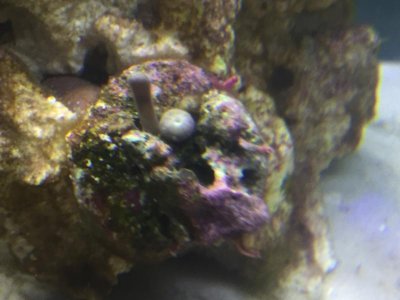
These corals won't open and I don't know why they've been closed for about a week I recently removed some of my substrate because it was like turning greenish it was super thick so I assumed it was rotting and it was pretty compact it's a bit thin now and I don't know why these corals are closed I only have a hermit crab and a emerald crab in this tank I don't have crazy lighting but I know it's good enough they just closed and won't open pest maybe? I don't have test kits
 

Attachments

  • image.jpg
    image.jpg
    46 KB · Views: 4
Well.. It could be a problem with the chemistry of your water.. but you don't have any test kits so you are SOL..
Corals sometimes do close,etc.. when they aren't happy/bad water parameters/wrong flow,etc...
 
Likely an alkalinity problem. YOu MUST have test kit for alkalinity; plus a refractometer for salinity; and meddling with your sandbed is not a good idea. If you have green growth, get a GFO reactor (fairly inexpensive) and remove the phosphate that's causing it.
 
Do a 25% water change with the same salinity and temperature of your tank, do this every week so the water can stay clear and with good parameters for corals. By the way, use a good quality salt made for corals.


Regards
 
I had a 3" or so thick layer of caribsea sand it wasn't live sand I've been wanting to get some to buffer my parameters I have a generic kind it only has white and blue but it sustained the corals before these problems I think it could be water parameter problems I have a hydrometer and I use instant ocean my salinity always hovers kinda high I had a gha outbreak a couple weeks ago that's why I got the emerald crab it seems cleared up now
 
#1-hydrometers are notoriously off.. You should ONLY use one after calibrating it with a known good meter (refractometer)
#2-You control the amount of salt.. If its high then add less salt next time or add more fresh water..
#3-If you want any chance of having a successful tank you will want to get (and routinely use) the following test kits at the very least.. Alkalinity, Calcium, Nitrates, Phosphates. (magnesium would be good too)

I don't understand why you think you need something to "buffer" your parameters but you don't even know what they are..
 
Last edited:
Would the master salt water test kits from api be reliable? And I would want to get a better substrate that can't compact so much like the one I have I know my parameters aren't too great so I'm just wondering if live sand would help I had a salt water tank before for i know how the salt stuff works if it's good high I know to add more freshwater and I test with a hydrometer a couple times
 
There is no need to add live sand to an existing (or any tank) really.. Dry aragonite sand is just fine.. Not sure what you have now.. Many people run "bare bottom" (no sand or anything) tanks too.. And disturbing an existing sand bed can really cause problems too.. So I would just leave it.. Focus on testing/stable parameters/water changes and go from there.. The sand/substrate is the least of your problems..

You don't want the regular API "master" kit.. You want the "Reef" Master kit ".
In general API test kits are "ok" and are fairly accurate.. But I like/trust Red Sea or Salifert kits much better..
You want this one..
https://www.amazon.com/API-Reef-Mas...=1484164674&sr=1-2&keywords=api+saltwater+kit
 
Would the master salt water test kits from api be reliable? And I would want to get a better substrate that can't compact so much like the one I have I know my parameters aren't too great so I'm just wondering if live sand would help I had a salt water tank before for i know how the salt stuff works if it's good high I know to add more freshwater and I test with a hydrometer a couple times

First how do you know your parameters aren't great if you don't have test kits? Secondly, I'd get salifert test kits, easy to use and accurate. Leave the sand you have where it is, no need to mess with it now, you'll only cause more issues. That green stuff you had was algae, certainly overkill removing the sand because of it. Use a siphon and just siphon the top layer, that should remove the algae. For supposedly having a tank before, you aren't asking questions someone with experience would ask. Bring your hygrometer and some water to someone who has a refracometer, have them test the water's salinity, then you test it. It won't be the same, but you'll then know the variation. For example, water is 1.025, your hygrometer measures 1.02. Now you know to add .005 whenever you test the water.
 
I know they aren't great because I don't do water changes very often I do it about every 2 weeks lately every week and i know it's not algae it's very Chunky so if you like kick up the sand some of it stays in brittle chunks and it spreads deep in to the sand bed it seems to have gone away or slowed down now that I reduced the sand bed but it's definitely not algae it's a blue ish green color
 
Doing water changes every 2 weeks is fine. You need test kits as mentioned above. First thing to do is check your salinity, then your parameters.
What kind of lighting? LED's? T5's? MH? How old are the bulbs if it's T5, or MH?
More info is needed to try and help you. Can you post a pic of this blue/green matter?
 
The sand issue could easily be blue/green cyano.. It may cause sand to be clumpy (not hard but softly clumped)..

Get your test kits.. continue working on maintaining stable parameters for salinity, calcium, alkalinity and get nitrates/phosphates as low as possible via water changes..
Start there.. Keep that going for a while (4 weeks or so) and then adjust as needed later
 
Back
Top