Clown ID

texas1977

New member
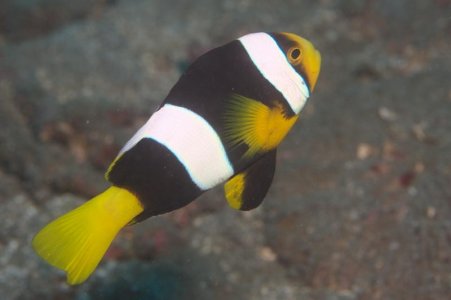
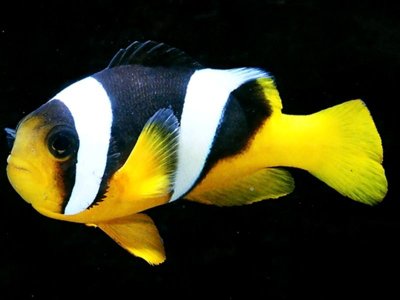
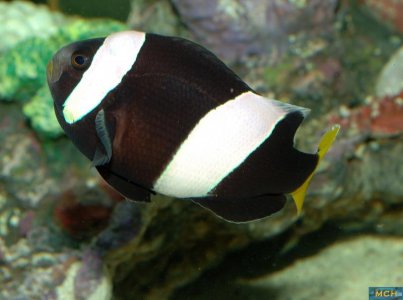
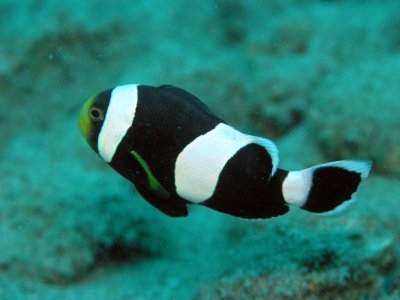
Thought id post this question in here. This was sold to me at the LFS as sebae. Someone said Clarkii. I think they may be right. Anyone?
75cac9d02a90377a6b7b4c50ce9bfdf3.jpg
9ff1da5e6f13d80551df8d95dc0a215b.jpg


Sent from my LM-V405 using Tapatalk
 
By the raised mouth I'd say Clarkii and not occilarious, they typically have a lower mouth that shows more prominent "œfrown" than a clarkii clown. Also the mouth is a lot lower in the jaw line.


Sent from my iPhone using Tapatalk
 
Definitely a type of clarki. Sebae clowns are a morph of clarkis just like allardis or African clowns

Sent from my SM-G920F using Tapatalk
 
... Sebae clowns are a morph of clarkis just like allardis or African clowns

A. sebae does not belong to the same complex as A, clarkii but is rather closely related to A. polymnus.

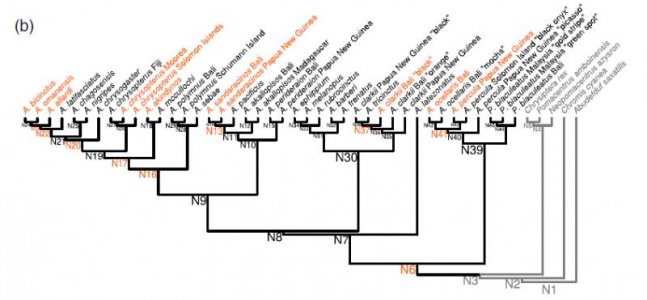
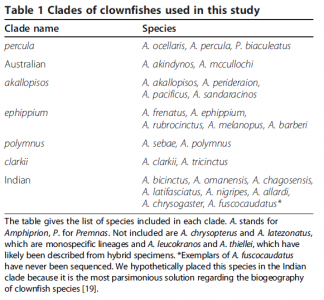
Actually, genetic research has shown that none of the African clownfish (bicinctus, allardi, chrysogaster,...) are closely related to A. clarkii despite their similar looks. The closest relatives of clarkii are A. tricinctus and the tomato clowns (ephippium, melanopus, frenatus,...)

attachment.php


attachment.php

(from "Hybridisation and diversification in the adaptive radiation of clownfishes", Glenn Litsios and Nicolas Salamin
 

Attachments

  • Capture.jpg
    Capture.jpg
    42.5 KB · Views: 4
  • Capture2.PNG
    Capture2.PNG
    65.8 KB · Views: 4
Last edited:
Very interesting thank you for this info. I always thought they were related based around looks and hosting preferences

Sent from my SM-G920F using Tapatalk
 

Neither of those fish in that video is an A. sebae but more likely it is a pair of clarkiis. The different coloration of the tail fin is sex related with claekii from some locations.

A. sebae has a distinct body shape, more round in cross-section and elongated, but usually not as extreme as with A. polymnus. Also very typical for sebae is that the bar on the body is curved or slanted back and extends into the soft dorsal fin.
Adult A. sebae also never have a third band on the base of the tail fin (the third band is typical for A polymnus) and sebae have always a yellow tail fin.

Color forms of A. sebae:

attachment.php


attachment.php


attachment.php


A. polymnus (melanistic form):

attachment.php
 

Attachments

  • ampseb1.jpg
    ampseb1.jpg
    29.2 KB · Views: 4
  • sebaeclown.jpg
    sebaeclown.jpg
    34.7 KB · Views: 4
  • GJR_8591_mwtmk.jpg
    GJR_8591_mwtmk.jpg
    45.5 KB · Views: 4
  • Amphiprion_polymnus_s.jpg
    Amphiprion_polymnus_s.jpg
    36.7 KB · Views: 4
Agreed, both the clowns in that video are clarki clowns, just different color forms.

The clown in the OP is also a clarki clown. Sebae used to be the common name for clarkis in the aquarium trade for some reason, and it is still being used by some wholesalers and LFSs. It tends to create a lot of confusion especially since many wholesalers and collectors can't seem to tell the difference.
 
Thanks for your response. I agree, you are correct. It's tricky to ID Texas1977 fish, better photos would help.

The issue is mainly that it is still a juvenile. Clarkii and the clarkii-like members of the African clade have very similar coloration as juveniles. Time will probably tell what it is.
 
Back
Top