

King-Kong
New member
I currently have a 90g SPS tank. The SPS are thriving and I am getting over 1" growth/mo. on certain types.
In this tank I have a newly formed pair of Cinnamon clowns, and I would really, really, like to get them an anemone.
Now, from what I've been able to read, all anemones will move if unhappy -- that is unavoidable. What I am trying to attempt, however, is to create a rock with a good enough base/hole in it that the anemone will at least feel satisfied with 1 attribute out of its many, and will stay put on that rock. I also hope that by aiming for a h. crispa instead of a BTA, I can further reduce the chance of movement, and spare me the possible death of my precious SPS corals.
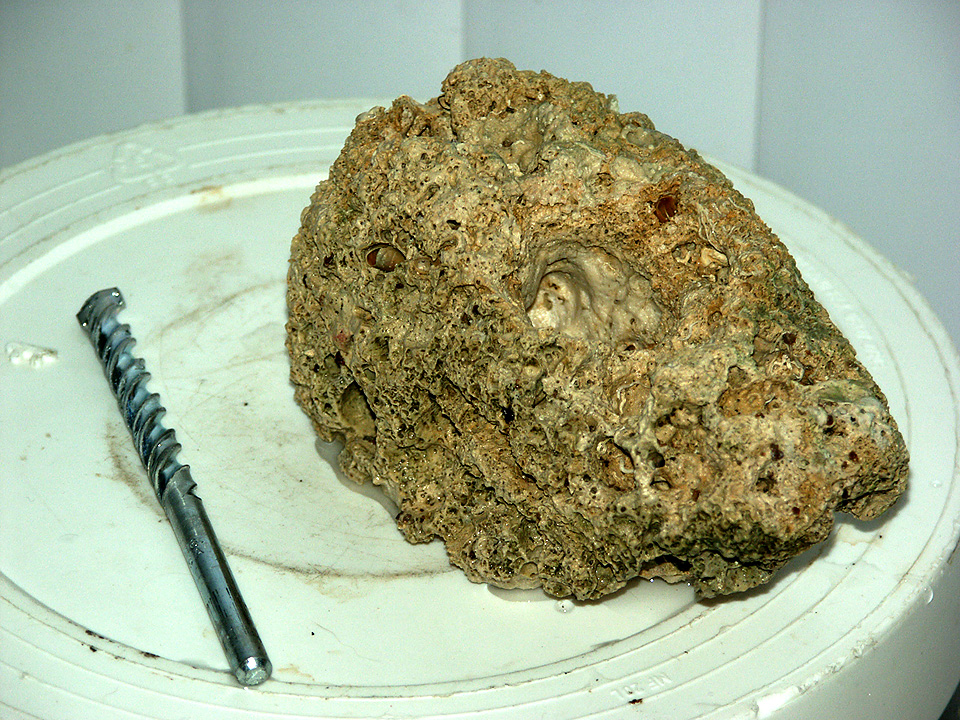
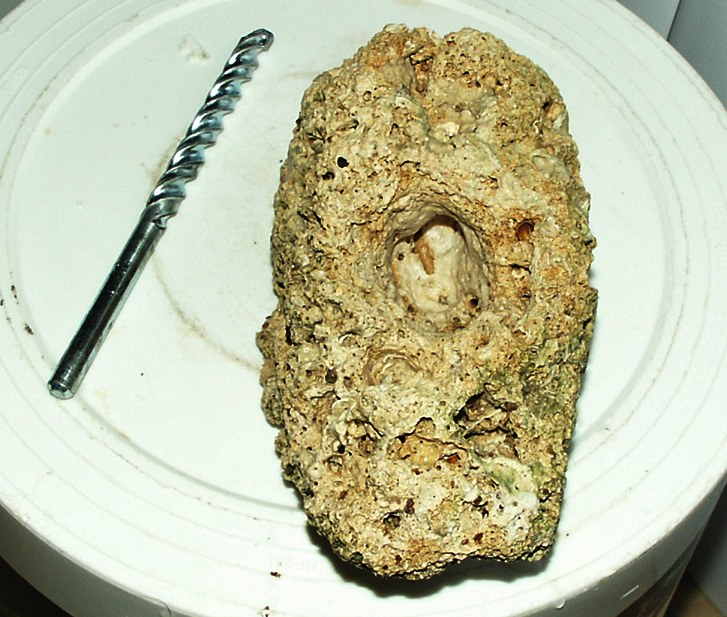
Here is a picture of the rock I made. The hole curves into the rock and is the depth of my index finger (aprox 3.5"). The opening in the top is aprox. 1.5" wide:
So what do you think? Will I be doing this anemone a service? Make it's base feel more protected/secure?
In this tank I have a newly formed pair of Cinnamon clowns, and I would really, really, like to get them an anemone.
Now, from what I've been able to read, all anemones will move if unhappy -- that is unavoidable. What I am trying to attempt, however, is to create a rock with a good enough base/hole in it that the anemone will at least feel satisfied with 1 attribute out of its many, and will stay put on that rock. I also hope that by aiming for a h. crispa instead of a BTA, I can further reduce the chance of movement, and spare me the possible death of my precious SPS corals.
Here is a picture of the rock I made. The hole curves into the rock and is the depth of my index finger (aprox 3.5"). The opening in the top is aprox. 1.5" wide:
So what do you think? Will I be doing this anemone a service? Make it's base feel more protected/secure?


