Crisis!

oscarmeir

New member
Need some help here
4 ft, 90 Gallon tank, minus rock, plus sump maybe a bit more total volume.

Past few fish added didn't last long.
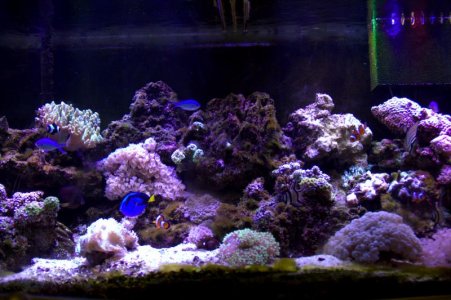
Current fishes include 9 clowns, 2 bangai cardinals, some red goby, blue tang, chocolate tang, some chromises, a few blue footed hermits, some turbos, chonches and a brittle starfish.
Tank was thriving for a bout 14 months. The only change I did was started feeding my corals coral frenzy, about 2-3 of those tiny spoons to a cup of water and target fed with a pipette.

Recently I've been over run with brown hair algae which I'm assuming is from the extra nutrients. But its really bad and spreading.

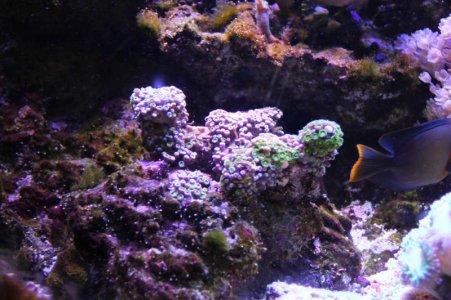
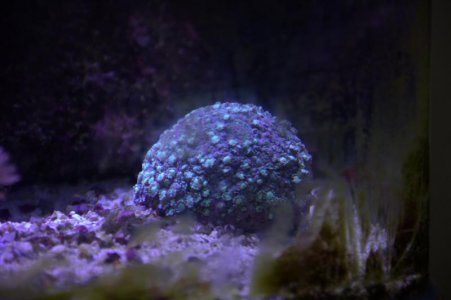
My Zoa's used to be growing like mad are all closing up and stating to get coated by brown slime. Hammer's and Euphillia are starting to retract. Ginopora hasn't fully extended in a while now. Elegant has its moments, today is looking really stressed.
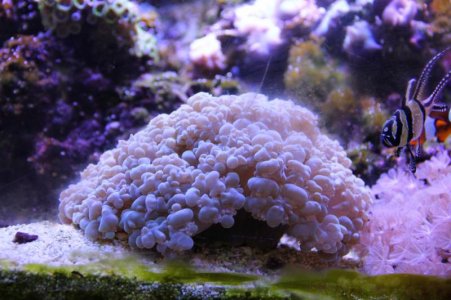
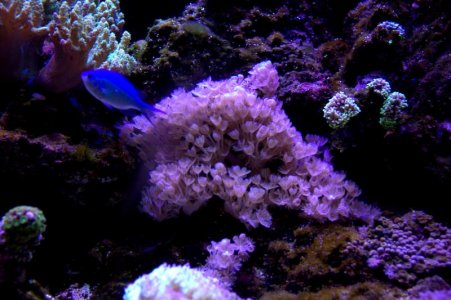
But, Xenia is spreading like crazy, and my bubble coral is happy. Leather is so so.

Salt is high, I have a lot of evaporation about 50-60 liters a week and I could be better with my top offs.

Salt is 1.031
Ph 8.2
Ammonia 0
Nitrite 0
Nitrate 0
23-24 degrees Celsius.
Calcium 500 - also I'm attributing to Evap, but if the PH is ok is that a sign thats not the cause of my issues?
I dose with A B Formula once a week about 20 cc each and Lugol's solution, 3 drops once a week.

Tried a Chemi Clean but it didn't do much.

Those are all the tests I have. What else should I be testing for?
I ordered a 36w UV filter to control the algae and am still looking for a r/o system, been using tap plus prime. Red Sea Salt Coral Pro.

Any pointers?
 

Attachments

  • 11-IMG_1033.jpg
    11-IMG_1033.jpg
    36.8 KB · Views: 4
  • 02-IMG_1022.jpg
    02-IMG_1022.jpg
    76.1 KB · Views: 4
  • 04-IMG_1025.jpg
    04-IMG_1025.jpg
    67.2 KB · Views: 4
  • 07-IMG_1029.jpg
    07-IMG_1029.jpg
    79.3 KB · Views: 4
  • 05-IMG_1027.jpg
    05-IMG_1027.jpg
    71.8 KB · Views: 3
But why would the corals start having issues after being ok for so long. There's got to be something is the water. If ammonia and nitrates are ok doesn't that indicate it's not the fish population?
 
Not convinced it's cyno as its more hairy them sheets of algae, has lots of bubbles too, I think you should be able to get a good idea from the pictures.
 
dkh? Phosphate? Maybe try a different nitrate test. Doesn't look like cyano. Definitely too much nutrients. As fish grow they create more nutrients. You have a lot of fish in there IMO and as they get larger they will pollute the tank more. Definitely should use RODI water not tap for algae control.
 
First I would say the RO/DI is the first thing you need to get. You don't know (unless you have had your water tested) what exactly is in your tap. Conditioner or not you could be inadvertently feeding it with combination of some of the new additives you are putting in the tank.

At 14 months I would say that you shouldn't be getting any ammonia and nitrite readings or so low that they wouldn't read. I would recommend a good phosphate test. I am not going to advocate for a specific brand but sometimes the extra couple dollars in a test kit is worth the thousands you have in the tank (and stress levels). If you plan to have more corals in the tank Calcium, Alkalinity, and Magnesium are things that I test for but not necessary.

I am a big believer in UV sterilizer but again not necessary and I know there is much debate.

Have you changed your lighting recently? Do you have a good clean up crew?

Don't start adding more things to combat other things. Best thing is to stop adding all the things in general.

And lastly and again get an RO/DI system. BRS has some very reasonable and easy to follow videos that can help you pick a system that is right for you. Any system is better than no system at this point.

Hope this has provided some help.
 
just curious but is there any reason you are running your salinity at 1.031? i would think most people would say that's much higher than necessary. 1.024-1.026 would be more ideal.
 
Once, you have an established tank. You should test the BIG 3, mag/cal/ALK. But, I would bet the farm it's the tap water. Level of phosphate has built up over the last 12 months or so. And, this could be your main cause. Secondly, you need to get the salinity in check. Stay up on top off, an ATO would be the way to go. Run some GFO to help with the algae problem. Manually removal of algae would also help in the long haul. Happy reefing.
 
Let's just try to straighten out the tank before addressing the fish load---but it will be a problem down the road and is contributing to the problem now.

Most urgently, be sure your refractometer is properly calibrated: if you don't have one, get one immediately: you need to be sure of your salinity, which needs to be slowly adjusted down to 1.025.

You need an autotopoff working off a ro/di water reservoir. Mine is Avast, which is very simple to set up and also inexpensive as topoffs go.

You need tests for alkalinity, calcium, magnesium. The readings should match the numbers in my sig line. If they don't, raise magnesium first, then alkalinity, then calcium.

For now, stop dosing anything but alk, cal, mg. And do it by the tests.

Don't use any more chemical treatments such as Chemiclean: there's just too much going on here to complicate it further, and what you've got likely isn't cyano.

I think your plague is dinoflagellates. Here's an article on ph and dinos. http://reefkeeping.com/issues/2006-11/rhf/index.php

That said, fix your alkalinity, for starters. Ph and alk are related. Once you have your water in balance, then pursue the dino cure.

To help get this started, [you DO have a large skimmer, right? You need a skimmer, especially with this fish load]---do a 20% water change, then wait two days and do another 20% change. BE CAREFUL with your salinity. It's safer to drop salinity than to raise it rapidly, so at least you won't be going in a bad direction.

Generally, to achieve a perfect 1.024 salinity, its 1/2 cup salt mix to 1 gallon of ro/di water.

I've given you a list of things to try,one after another, but I think the best thing to do is to start with the two water changes, with 1.024 water. BUT BE SURE of the saliniity.

Once you've done the water changes, continue to adjust the salinity to 1.025 by small addition of pure ro/di water. If you can't get ro/di immediately, use bottled ro water from the supermarket kiosk.


Your brown pro
 
Your salt looks waaay high as others have stated. Many will tell you too that if all your parameters look good check your salt. Mine stays between 1.024_1.026 and my corals look great. That would be the first thing I would work on....if it was me..
 
Even go to the LFS and get some or the grocery store and get some distilled water. So you don't have to wait for,the unit.
 
Even go to the LFS and get some or the grocery store and get some distilled water. So you don't have to wait for,the unit.

The kind they sell for ironing and medical equipment?

The wife has some old bottles she used to use for ironing, sat for a few years, can I pour it into the sump?
 
What are the phosphates?

As many stated, the RO/DI will help a lot with that. Get a GOOD unit, not the cheapest thing you can find. Get one with dual DI cartridges, you will get a lot more life out of the final if you get a roughing cartridge as the first DI. There are several brands out there that are very good. If you go cheap, you will regret it as you will be replacing that DI cartridge often.

The second thing is to get a GFO reactor setup, they are fairly inexpensive overall. Small pump, and something like an MR1, or BRS, etc., just pick one you like that fits your installation. Then get some good media like Rowaphos, it will drop like a rock.
 
If your measure is accurate 1.031 sg is too high. the natural seawater average is 1.0264. I'm not surprised the xenia favor it , they come from the REd sea wher sg is relativively high. High sg dehydrates the animals throing off thier internal sg which is critical for homeostasis. Low sg is also a concern for invertebrates. 1.025 to 1.027 works well for me.

Calcium at 50ppm is not a concern.

73 to 75 F( 23 to 24 C) is low. Try 77 to 79.

Could be diatoms;maybe dinos. A picture would help.

Reduced feeding along with a good skimming ,some granulated activated carbon and a phosphate remover like gfo might be necessary with the large fish population.

Fish disease may be or become a problem absent qaurantine. Watch the clowns,females will fight .
 
Last edited:
Well, your bioload will decrease once the 9 clowns kill off each other and you are left with 2.

I'd assume the new fish dying is a result of: (1) crazy high salinity and not proper acclimation to that high of a salinity, and (2) high aggression in the tank as a result of overcrowding.
 
Back
Top