For the last Month or two In have fighting Cyano. I do a water change every month of 30 gallons. I use reef crystals. Two weeks ago I turned my halides of for three days and only let my strip of 5 Cree LEDs run. It totally disappeared and now two weeks later it is coming back. I run a Carbon reactor and a GFO reactor. My halides are new and my Parameters are good. Any ideas?

You are using an out of date browser. It may not display this or other websites correctly.
You should upgrade or use an alternative browser.
You should upgrade or use an alternative browser.
Cyano
- Thread starter Teddy03
- Start date
Chuongj510
Member
Turning off lights is only hiding the problem. Are you using ro/do water. If so how when was the last you changed the filters.
cantonreef
New member
Have you tested your Phosphates?

Reefin' Dude
New member
how long has the tank been setup? where is the cyano mainly located?
G~
G~

steveo9043
New member
Over feeding? That is what caused mine.
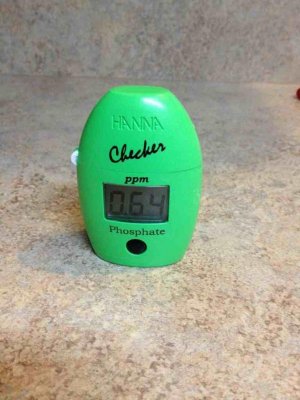
I checked with a Hagen test last time trying to color match. Big difference. They should be around 0.25 right? I just did a 30 gallon change yesterday. I guess I should go ahead and do another 30 gallon water change?
how long has the tank been setup? where is the cyano mainly located?
G~
Tank has been up for seven months. I bought the whole setup from someone getting out. He had it running for five years. The cyano is only the sand bed. It is not any rock, coral.

danil
New member
Your phosphate is a bit high. I would try to lower it to 0.0X range. Cut on feeding and keep running GFO to slowly lower your phosphates. Since level is high at this moment you might need to change GFO more often. You might have old tank syndrome (not sure here) when after years of observing your live rock and sand start releasing it to the water column. In this case you have to do more research for what should be done.
Also if you dose any amino or carbon (vodka etc) I would stop doing that too. GL!
Also if you dose any amino or carbon (vodka etc) I would stop doing that too. GL!

SchnitzelReef
Active member
Do u carbon dose? Vodka?
Had an issue with cyano after about 8 months of vodka dosing. I switched to vinegar and that fixed my problem
Sent from my iPhone
Had an issue with cyano after about 8 months of vodka dosing. I switched to vinegar and that fixed my problem
Sent from my iPhone
Reefin' Dude
New member
Tank has been up for seven months. I bought the whole setup from someone getting out. He had it running for five years. The cyano is only the sand bed. It is not any rock, coral.
replace the substrate, or at the very least wash it thoroughly to remove all detritus that is in there. there is a reason why the cyano is growing on the substrate. that is where the phosphates are coming from.
the person that had the system before you probably did nothing to the substrate for those 5 years. being a fantastic phosphate binder the calcium carbonate just did its thing and kept binding phosphates. working them deeper and deeper into the substrate. when you got the tank, you disturbed the substrate, even if just a little, or a lot if you took the substrate out then put it back in. this mixes up the layers and allows new resources to be used by the bacteria to remove the phosphates from the calcium carbonate matrix. with the substrate mixed up it also allows phosphate laden calcium carbonate to be up near the surface. the bacteria doing its job of removing phosphates and making them inorganically available is all the encouragement the cyano needs to thrive.
you must break this cycle. rinsing the substrate will get the largest bits of detritus out, and make room for more as the bacteria do its job. if you already rinsed once, then you will need to do it again to get the newly formed detritus out of the substrate. eventually the cyano will go away once the top layers of the substrate are purged of phosphates by the bacteria and the bacterial mulm work its way deeper into the substrate where the cyano can not access it as easily.
what are your alk levels. they are probably low.
G~
Reefin' Dude
New member
i am one to recommend replacing or at least rinsing a substrate anytime a system is moved. i am also one that does not like to use substrates at all because of having to keep them clean (though i prefer to keep an oligotrophic (nutrient poor) biotope) you may want to keep a more eutrophic biotope, in which case some substrate can be helpful. just like any other pet, a reef tank needs to be kept clean. one must clean up after the organisms that are kept in the system. just like a birds cage the substrate needs to be cleaned on a regular basis in order to keep it functioning properly. in the case of a reef tank, as a phosphate binder. unfortunately, this idea still seems to be absent in most reef keepers so it is not unusual to come across tanks from other users that have never touched a substrate, what has unfortunately been encouraged in the past. when getting a system that has been maintained by somebody else, you are unsure on where they stand on the methodologies of cleaning up after your pets, it is a good idea to either replace the substrate (if you need one, either for looks, or because there is a certain organism that must need it) or at the very least rinse it clean of all detritus. this way you are sure where you stand on the substrates ability to bind phosphates.
in your case you did not do anything with the substrate, which explains the cyano. how you want to go from here is up to you. if it was me, i would pull everything out and replace the substrate with new dry substrate, or go bare bottom (i say BB because you are unsure on the maintenance in general by the previous owner and being comprised of calcium carbonate, the LR can also be high in phosphates, just not as high as the substrate, i can go into this more if you would like and provide references about how phosphates and calcium carbonate behave together). you do not need to worry about a "cycle". there will be plenty of bacteria in the LR to deal with the nitrogenous compounds. it is the phosphate cycle that you are trying to get ahead of. you can try gravel vacuuming, but that can be tough depending on how coarse the substrate is. if it is a coarse substrate, the it could be pretty easy, if not, then it is going to be a real pain and i would just get new substrate if you feel you need it.
there are not any critters that would help. if there were, then we would not be having this discussion. : this is one of those myths that is still going around in the reef hobby. that there are critters that help migrate detritus upwards through a substrate instead of downwards. in fact there are two basic kinds of critters that can be in the substrate the predators, and the "detrital eaters". the "detrital eaters" help in migrating the detritus deeper into the substrate (which helps is keeping the substrate viable for as long as possible) by moving the grains around and allowing gravity to pull the detritus deeper into the substrate. the predators on the other hand eat the detrital eaters. not necessarily a good thing. we need the detritus to migrate downward. eating all of the detrital eaters in the top few inches of a substrate can cause the substrate to become clogged with detritus leading to dead areas, which then lead to anoxic areas, which then leads to the dreaded hydrogen sulfide. the LR will provide the critters needed to keep the substrate functioning pretty well. the thing to remember is that all organisms poo. i have yet to see an organism with its mouth deep in the substrate and its butt in the water column. until this organisms if found nutrients are always going to build up in a substrate. in other words. one must clean up after all of the organisms that one keeps. whether it is cattle, and the ranger rotates the grazing areas to keep the poo away from the cattle, or a bird in a cage, where the birder replaces the newspaper on the bottom, or a reef keeper keeping bristleworms and nematodes in a substrate and siphon detritus or replace the substrate on a regular basis. not cleaning the substrate on a regular basis is a lot like not taking out the trash in the house ever and letting the roaches, maggots, rats, and mice take care of it, or never flushing the toilet and hoping that putting a potted plant in the toilet is going to make the wastes go away. we flush and take out the trash, why should our reef tanks be any different? we all must clean up after our pets.
have you thought about what critters you are wanting to keep?
G~
in your case you did not do anything with the substrate, which explains the cyano. how you want to go from here is up to you. if it was me, i would pull everything out and replace the substrate with new dry substrate, or go bare bottom (i say BB because you are unsure on the maintenance in general by the previous owner and being comprised of calcium carbonate, the LR can also be high in phosphates, just not as high as the substrate, i can go into this more if you would like and provide references about how phosphates and calcium carbonate behave together). you do not need to worry about a "cycle". there will be plenty of bacteria in the LR to deal with the nitrogenous compounds. it is the phosphate cycle that you are trying to get ahead of. you can try gravel vacuuming, but that can be tough depending on how coarse the substrate is. if it is a coarse substrate, the it could be pretty easy, if not, then it is going to be a real pain and i would just get new substrate if you feel you need it.
there are not any critters that would help. if there were, then we would not be having this discussion.
: this is one of those myths that is still going around in the reef hobby. that there are critters that help migrate detritus upwards through a substrate instead of downwards. in fact there are two basic kinds of critters that can be in the substrate the predators, and the "detrital eaters". the "detrital eaters" help in migrating the detritus deeper into the substrate (which helps is keeping the substrate viable for as long as possible) by moving the grains around and allowing gravity to pull the detritus deeper into the substrate. the predators on the other hand eat the detrital eaters. not necessarily a good thing. we need the detritus to migrate downward. eating all of the detrital eaters in the top few inches of a substrate can cause the substrate to become clogged with detritus leading to dead areas, which then lead to anoxic areas, which then leads to the dreaded hydrogen sulfide. the LR will provide the critters needed to keep the substrate functioning pretty well. the thing to remember is that all organisms poo. i have yet to see an organism with its mouth deep in the substrate and its butt in the water column. until this organisms if found nutrients are always going to build up in a substrate. in other words. one must clean up after all of the organisms that one keeps. whether it is cattle, and the ranger rotates the grazing areas to keep the poo away from the cattle, or a bird in a cage, where the birder replaces the newspaper on the bottom, or a reef keeper keeping bristleworms and nematodes in a substrate and siphon detritus or replace the substrate on a regular basis. not cleaning the substrate on a regular basis is a lot like not taking out the trash in the house ever and letting the roaches, maggots, rats, and mice take care of it, or never flushing the toilet and hoping that putting a potted plant in the toilet is going to make the wastes go away. we flush and take out the trash, why should our reef tanks be any different? we all must clean up after our pets. have you thought about what critters you are wanting to keep?
G~
No, I did not have any in mind. I already have. Ton of nasarrius,queens and one sand sifter so obviously they are not helping the situation. I made 30 gallons yesterday so I am going to start vacuuming, it would be very hard for me to replace it because of the 400 lps of live rock, tons of sps, an lps. I am going to start vacuuming every water change. I have left the sand alone in all my previous tanks with no problem but I guess it finally caught up with me so I will start treating it like my cat!! I really appreciate your taking the time to explain that to me and your knowledge on it.

coralsnaked
New member
Thts qute a bio load as many of those fish are quite large and five cubes per day is a lot of waste coming out of those fish. Thats about 1/3 cube per fish and they excrete much of the PO4 right back into the water. You say lots of rock, are we talking 250lbs of rock. That would be about 1.5 lbs per gallon and is considered the short side of a lot of rock. Anything short of that is just the minimum and anything South of 175lbs is less than required for a reef tank.
With that said that should be an indicator of how well your filtration can handle all that waste. Things you can do to help filtration is a reactor running lots of GFO for the PO4 waste and a Hanna meter to check the results. A skimmer rated for around 250 gal tank running wt skimmate for best results. You can add carbon to the reactor if you have nitrates higher than 3 ppm, and in some casses I have added a Purigen bag w/ Phosguard in addition to the GFO / Carbon reactor. I place the bag in a high flow area of the sump. But this can cause some temporary retraction of some LPS and soft corals as this will strip down the trates and phates pretty fast. And finally if your tank needs a good cleaning, do it. Remove all the excess cyano and then use Chemiclean to oxidize all the remaining Cyano. Its reef safe if you follow the instructions and dose a little on the conservative side. It will really clean up the tank nicely. Many LFS now use it on a regular 6 month schedule as part of routine maintance. If you do this all together you will solve your problem pretty much garunteed. Wouldn't hurt to lower that bio load as well. And if you are short on rock, then get some cooking in a can till cured and nitrifyed and add 10% of your current amount per week until you have at least 1.5 lbs per gal.
Merry Skerry
With that said that should be an indicator of how well your filtration can handle all that waste. Things you can do to help filtration is a reactor running lots of GFO for the PO4 waste and a Hanna meter to check the results. A skimmer rated for around 250 gal tank running wt skimmate for best results. You can add carbon to the reactor if you have nitrates higher than 3 ppm, and in some casses I have added a Purigen bag w/ Phosguard in addition to the GFO / Carbon reactor. I place the bag in a high flow area of the sump. But this can cause some temporary retraction of some LPS and soft corals as this will strip down the trates and phates pretty fast. And finally if your tank needs a good cleaning, do it. Remove all the excess cyano and then use Chemiclean to oxidize all the remaining Cyano. Its reef safe if you follow the instructions and dose a little on the conservative side. It will really clean up the tank nicely. Many LFS now use it on a regular 6 month schedule as part of routine maintance. If you do this all together you will solve your problem pretty much garunteed. Wouldn't hurt to lower that bio load as well. And if you are short on rock, then get some cooking in a can till cured and nitrifyed and add 10% of your current amount per week until you have at least 1.5 lbs per gal.
Merry Skerry
Similar threads
- Replies
- 3
- Views
- 2K


