Cyano and nutrients

18 months is still a very, very young tank IMO. I’d be interested in you PO4 levels. When I had the worst case of Cyano I’ve ever had, it turned out it was because my NO3 and PO4 levels were out of whack.

Go slow, don’t make drastic changes and keep doing what you’re doing…regular water changes, maintain parameters.
 
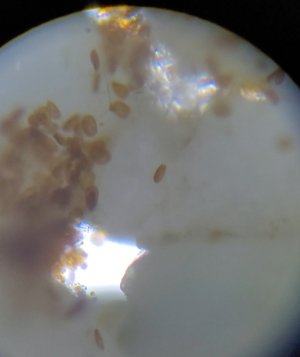
Oddly things are worse than usual and kind of came out of nowhere. The stuff looks red under blue light but complete brown under white light. Looks like instead of guessing, just gonna have to get a microscope to determine wtf it is lol
20251125_154010.jpg
 
I believe due to the outstanding issues and the longevity of it, I was assuming the worst as this has been an issue for quite a long time.

I was able over the last few weeks, change salt to fritz rpm from seachem vibrant sea, which literally mixes like dog poop lol.

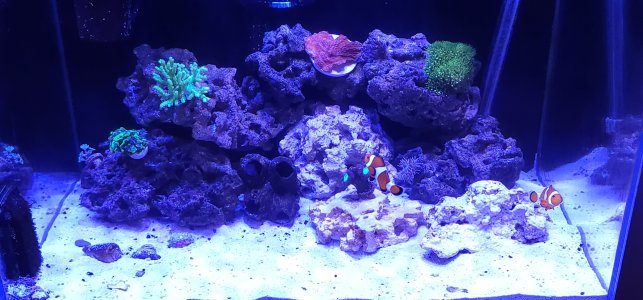
Finally got a decent sized clean up crew of about 5 astrea and 2 star astrea, a small conch, and a few nassarius snails. I also recently picked up some rowaphos for po4 and silicate removal, mainly silicate removal. I understand I still require some patience and good husbandry skills, but wanted to share a picture of my tank since it finally looks like I'm on the road to a better healthier system
 

Attachments

  • 20251129_134505.jpg
    20251129_134505.jpg
    1.1 MB · Views: 11
Rowaphos has been kicking ass. Since adding it, it's seemed to really knock back the po4. My Hanna ulr reagents should have been here today but will likely see them in the morning and can finally test po4. My corals are all happier since adding this stuff as well. Musta had a crap ton of po4 in the water that wasn't readable due to the diatoms. Since adding the rowaphos, that brown cinnamon stuff is barely able to make a presence. But still little bits in areas with low flow
 
Rowaphos has been kicking ass. Since adding it, it's seemed to really knock back the po4. My Hanna ulr reagents should have been here today but will likely see them in the morning and can finally test po4. My corals are all happier since adding this stuff as well. Musta had a crap ton of po4 in the water that wasn't readable due to the diatoms. Since adding the rowaphos, that brown cinnamon stuff is barely able to make a presence. But still little bits in areas with low flow
Sounds like great progress.
 
Finally got my Hanna reagents. Po4 last two tests was 0.03 and 0.05. this is great that I'm able to measure it and the diatoms not being much present, have allowed some detectable po4 in the water. No3 is about 12 ppm

Sand hasn't looked this good in a long time.

I think the end of this lately has been a majority of diatoms, but still find it extremely strange that this stuff appears red under blue light.

Will continue with weekly 25% water changes and will monitor my no3 and po4 weekly. Mag seems to have dropped but am slowly bringing it back up to 1300 to 1400. Alk seems a bit low at 7.5 but have been dosing 2 part to slowly bring that up as well.

Maybe now that the nutrients aren't being absorbed by dinos, my corals are able to now use some which is also absorbing alk consistently.
 
Hi all, just providing an update

I can see now a clear relationship with this diatoms/cyano type stuff and high phosphates.

Been able to keep a consistent reading of 10ppm no3. However, my po4 is staying practically steady at 0.1.

Only seem to have the majority of this stuff in dead zones, but it does accumulate throughout the week on my sand, but very light.

I think due to my rocks being old from my previous tank , it's very likely they are leaching po4 as for the first week of more that I used rowaphos, the diatoms/cyano stuff was almost non-existent, but still managed to keep po4 at about 0.5.

Think I need to run rowaphos on a monthly basis, then monitor to remove this excess po4.
 
20251231_133055.jpg

Happy new year all and hope everyone had a great holiday so far.

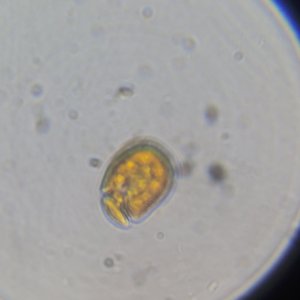
finally bought a microscope lol. Can confirm now that I absolutely have dinos. Would anyone be able to tell me what kind this is?
 
What is the gallonage of your tank, it's size

Asking because your challenge is about to grow considerably, this is the succession we see in just about every tank that alters parameters to try and starve out or outcompete an invasion. If your tank is large, many gallons, you will have to hold course and hope

But if this is a nano, a year ago you had an option to beat the cyano using no testing or dosing at all. You'd set your parameters to what grows coral and we'd have fixed the cyano in a couple weeks using 100% opposite methods.

Nanos have fully different cure options than large tankers do is why I'm asking. Maybe we'll get lucky and the tank isn't large
 
No matter what option you choose: your light levels are a main driver of both issues now

Your lighting power should be reduced, whites reduced or removed, using more windex style lighting during your battle
It doesn't harm corals

White spectrum and too much light was a larger player in your original problems vs parameters.

Regardless of tank size it's a rare fix trick to know that keeping the exact same light levels without alteration sets us up for increased challenges. In nature the light is not always 100% max power, there's shady weeks at times, this can benefit an ailing reef tank. What we've been able to attain in my example work threads using lighting adjustment as a core factor in tank repair is absolutely undeniable, wanted you to know that.
 
That is a major good stroke of luck!

Study this, we worked hard on these systems.

If you want a custom tune for this approach we can build it right here on reefcentral. Study the job there though, so I don't have to retype it all.

Look at what we do to sandbeds there: dinos aren't hiding in sandbeds after we're done.


notice species ID in my thread: none. ID does not factor for fixing nanos, it only factors when fixing large tanks because your options are restricted to water only actions.

Do the lighting adjust now even if you don't use this method right off the bat, you can fall back on it if needed.

Don't let your tank descend too far, this buys you back into control.


Study those outcomes: this isn't a shock or a harm to your tank at all, it's a refreshment that's why everyone's after pics glowed like we showed.

Notice in the thread: the invasion species you have doesn't matter. Once you run that surgery on your tank it emerges clean, regardless of the target species.

we didn't test for any param there. That's a cleaning action thread and I have ten more besides that one for a total of about 500+ rip cleans logged across tanks of all sizes.


**this action will be delayed when you run it meaning we didn't run this early when the invasion mass was new, it's after several months of storing up waste in the system from internal kill of the original target. Small crevices will still retain some dinos cells, your first rip clean makes the tank look great but it will try and rebound with a few cells... that's why we adjusted lighting in every job, to anticipate grow back.

If you're really pressed to do this based on how your tank presents (post a full tank picture let's see your details) study really well there for preps but we will customize and run it here.

Don't feel pressured this just adds another tool to consider but yep if you get tired of playing around and want to boot camp that tank we can run a custom rip clean right here, then I'll add this reefcentral link example into my other rip cleans across forums. We all share example work.

 
Back
Top