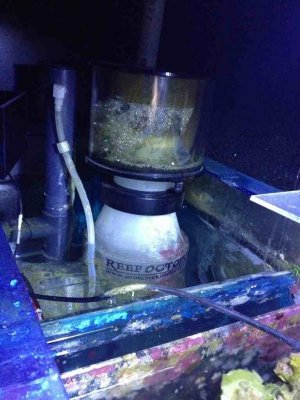
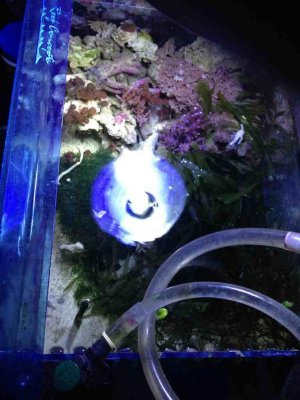
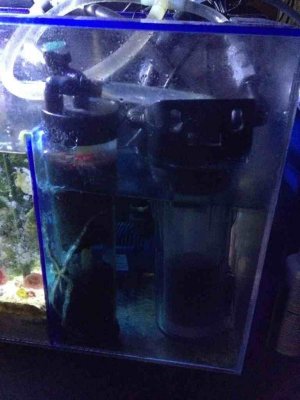
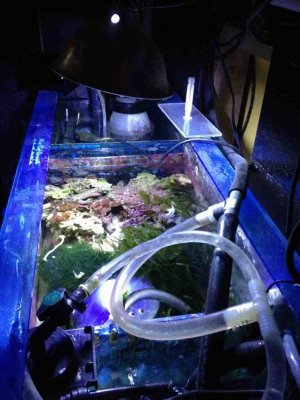
actually the Nassarius and conch are not that bad. they are not really feeding on what is in the substrate, they are more using it for hiding. the starfish on the other hand is feeding on the benthic inverts in the substrate. which can be a catch 22 for you. how clean do you want to keep the substrate to get rid of the cyano compared to how much you want to feed the starfish.
lets talk about phosphates. the phosphates that are the problem are inorganic phosphates, not organic phosphates. we want organic phosphates. this is the big confusion in this hobby. everyone throws the words phosphates around without actually understanding the phosphates. the phosphates that you can test for are inorganic phosphates. this are also in high demand by lower organisms, bacteria and algae, not for the critters we want to keep. inorganic phosphate does not come from food, or poo directly. inorganic phosphates have to be released from food/poo rotting. the bacteria have to free it. this is where it gets confusing. people are so worried about feeding their tanks to much to keep phosphates down, when in fact the amount of food you feed the tank is not very important. it is the amount of food/poo that one removes is what is important. the faster the poo/uneaten food is removed the less inorganic phosphates there are going to be in the system. i had no problems feeding my system 3-5 times a day. i would feed an entire small cube of frozen food each time. with a strong skimmer and a dedicated area for detrital (poo/uneaten food) collection i could keep the phosphate levels extremely low. so low that algae is not able to grow. finding exact phosphate level for an oligotrophic reef area is difficult, but the values needed are still beyond what the current group of phosphate tests available can do. this is why we see people say they have zero phosphates when algae is still growing. a value of 0.0ppm phosphates is a lot different than 0.005 ppm phosphates. which one is zero? just because it is zero to us, does not mean it is actually zero. the fact that the algae/cyano is growing proves that phosphates are available.
all critters need to eat. we know this. animals need their phosphates organically bound. this includes the fish, snails, and even the corals. the zoax in the corals do use inorganic phosphates. when feeding corals it is important to know how the zoax expect to get the inorganic phosphates. softies expect some inorganic phosphates from the water column, SPS on the other hand expect the inorganic phosphates from the wastes of the corals and not from the water column. browning occurs when the zoax in the SPS are getting their fix of inorganic phosphates from the water column and not from the coral. this is how they have evolved to live in these oligotrophic environment. this is why it is difficult to keep mixed reefs healthy for all corals.
all of this to get to the point that using GFO, chemi-pure, algae, and even the calcium carbonate itself all are only able to do anything with inorganic phosphates. there are a lot of process that have to happen before these binders have a chance at any phosphates. they all require that the phosphate become free. that the poo/uneaten food must first have to rot. why keep it around long enough for this to happen? wouldn't it just make more sense to just get it out of the system before any of this can occur? think about how easy a system is to maintain when the whole variable of how much poo/uneaten food is left to rot in the system? remove the source of the phosphates instead of waiting for the phosphates to be released then try and remove it using another method, that is not going to be anywhere near the actual source of the phosphates. the cyano and algae in the display is going to have first crack at these newly released inorganic phosphates. hence the reason why when testing for phosphates, the tests always show zero.
certain biotopes do prefer different levels of inorganic phosphates, so removing all detritus as quickly as possible will work wonders for someone keeping an oligotrophic SPS system, it will not work as well for a borderline eutrophic Zoas/softie system. one must know the biotope that they would like to emulate to know how much inorganic phosphates would be acceptable for the corals.
G~