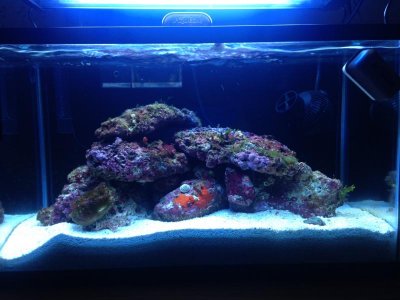
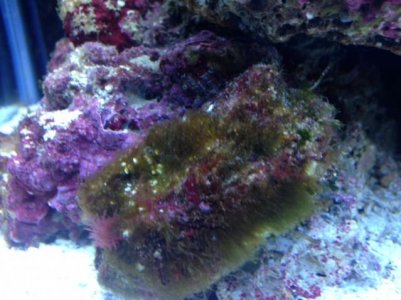
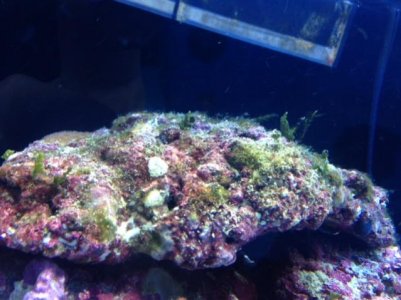
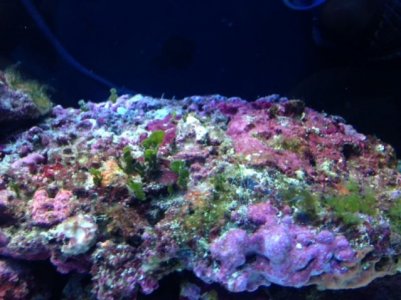
hey guys im extremely new to the hobby and learning how to discuss over the forums hoping to gather some honest feedback over my setups infancy rock placement should i remove the algae the brains helath or any thing that might stirke you as concerning

You are using an out of date browser. It may not display this or other websites correctly.
You should upgrade or use an alternative browser.
You should upgrade or use an alternative browser.
day 19 10g
- Thread starter mcavoy
- Start date

aadams22
New member
Hi there, im pretty new to saltwater myself, and like you i also have a ten gallon.
Overall, your tank strikes me as awesome! I cant tell you how many times i rearranged my rocks when i first started out lol. I wouldnt bother the algae, youll be growing alot more of it when you get fish, you'll have crabs and snails by then to take care of it for you
The only thing that bothers me is the sand bed, although some will disagree with me, i personally think a shallow or no sand bed is better in a nano tank. Mine is .5". Its no big deal, but i would do the research yourself and see what conclusion you come too
A few questions
Have you cycled yet?
Water parameters?
Lighting?
Like i said, looks nice to me!
Overall, your tank strikes me as awesome! I cant tell you how many times i rearranged my rocks when i first started out lol. I wouldnt bother the algae, youll be growing alot more of it when you get fish, you'll have crabs and snails by then to take care of it for you
The only thing that bothers me is the sand bed, although some will disagree with me, i personally think a shallow or no sand bed is better in a nano tank. Mine is .5". Its no big deal, but i would do the research yourself and see what conclusion you come too
A few questions
Have you cycled yet?
Water parameters?
Lighting?
Like i said, looks nice to me!
wow awesome thank you adam and yes i rearranged some much in the first week that the brain detached from the rock i almost die but it seems to be doing fine and the sand bed is only 2.5 inches at peak and 1.5 inches at its lowest point its just deep enough for a pistol shrimp and a nassarius snail both i find very amusing and very active
i have cycled ammonia nitrite nitrate all read 0 but im going to catch grief for this im using api
sg 1.025 check twice daily and add fresh as needed
ph 8.3 digital meter
using ro/di
light going to be lynched for this its a odyssea 18w x 4 2 actinic 2 10'000k
i have cycled ammonia nitrite nitrate all read 0 but im going to catch grief for this im using api
sg 1.025 check twice daily and add fresh as needed
ph 8.3 digital meter
using ro/di
light going to be lynched for this its a odyssea 18w x 4 2 actinic 2 10'000k
aadams22
New member
You should be fine with that sand bed then  especially with nassarius snails, they should keep it plenty clean
Your definitley coming out ahead of the game so far! Dont worry about api, i use their kits too. As long as you give bottle #2 a good shake before using they are just as accurate as any. I also should be using ro/di, but i dont, i just use filtered and conditioned tap :/ hasnt killed anything yet lol
Your lighting is vastly better than mine and should be able to sustain most corals, looking forward to seeing you get some
No need to check your sg though btw unless your doing a water change. As long as you top off to the same spot youll be fine
One thing that will work wonders in your tank is chaetomorpha macro algae. It will keep the ugly algae and nitrates in your tank under control. My second hob filter is packed with chaeto next to a blue led strip, keeps the water super clean
But yeah, it looks great and i cant wait to see it develop!
especially with nassarius snails, they should keep it plenty clean Your definitley coming out ahead of the game so far! Dont worry about api, i use their kits too. As long as you give bottle #2 a good shake before using they are just as accurate as any. I also should be using ro/di, but i dont, i just use filtered and conditioned tap :/ hasnt killed anything yet lol
Your lighting is vastly better than mine and should be able to sustain most corals, looking forward to seeing you get some
No need to check your sg though btw unless your doing a water change. As long as you top off to the same spot youll be fine
One thing that will work wonders in your tank is chaetomorpha macro algae. It will keep the ugly algae and nitrates in your tank under control. My second hob filter is packed with chaeto next to a blue led strip, keeps the water super clean
But yeah, it looks great and i cant wait to see it develop!
from what ive seen on here ro/di is the most important foundation to a reef tank its not the fish we should worry about its the inverts and corals because of the metals in tap water and i dont think conditioners remove them your lfs should sell the water for .50 cents a gal
and i like that idea convert something like a aqua clear to house the chaeto
and i might get some frags next weeks theres an expo in town
and i like that idea convert something like a aqua clear to house the chaeto
and i might get some frags next weeks theres an expo in town
aadams22
New member
Your absolutely right, the fish will be fine but regardless im still a dumb**** for using tap. Maybe thats why half my shrimp and crabs are MIA already  by all means if you can get rodi in your area do use it!
Yeah any filter will work for the chaeto, the bigger the better. Plus itll increase your flow rate
Post some pics if you get any corals or change anything!
by all means if you can get rodi in your area do use it! Yeah any filter will work for the chaeto, the bigger the better. Plus itll increase your flow rate
Post some pics if you get any corals or change anything!

soulpatch
New member
your nitrates are actually higher then zero but all that algae is consuming it before you can get it tested. Chances are you have a decent amount of phosphates too. That is a pretty large algae bloom for a brand new tank. I would manually remove as much as possible and go lights out for a bit since you have no live stock.
Exactly what are you using for filters and what do you have in them media wise?
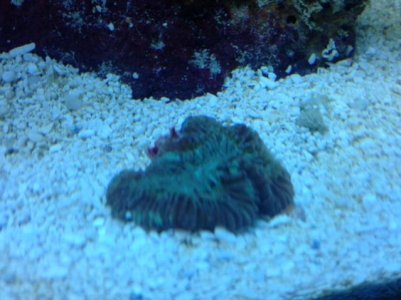
Your brain looks pretty deflated and ****ed off. Are you feeding him anything? What do you mean it fell from the rock? Did you glue its base/plug onto the rock or just put it somewhere and let the current force it off? There is a decent chance it is not getting enough light on your sand bed though I do not know your light or its outputs to know for sure.
Not any filter will work for chateo. It needs to be able to tumble to be fully productive so you need to keep that in mind.
Exactly what are you using for filters and what do you have in them media wise?
Your brain looks pretty deflated and ****ed off. Are you feeding him anything? What do you mean it fell from the rock? Did you glue its base/plug onto the rock or just put it somewhere and let the current force it off? There is a decent chance it is not getting enough light on your sand bed though I do not know your light or its outputs to know for sure.
Not any filter will work for chateo. It needs to be able to tumble to be fully productive so you need to keep that in mind.
hey soulpatch thanks for digging deeper than that guy who works for my lfs who advised me to buy snails 7 in fact and stated everything looked par for the course i showed him the same pics now im doubting his motives
where are the phosphates coming from im using ro/di and test tds to .00 to .01
no filter but have a red sea prizm skimmer with carbon in the media basket
the light is a odyssea t5 ho 4x18w how many hours should it be on while providing for the brain the light is 12.5 inches from top of sand
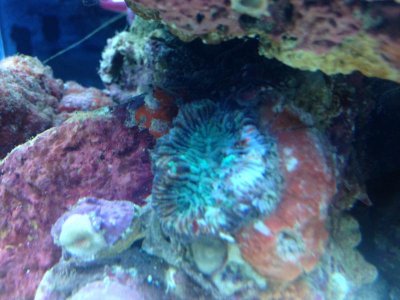
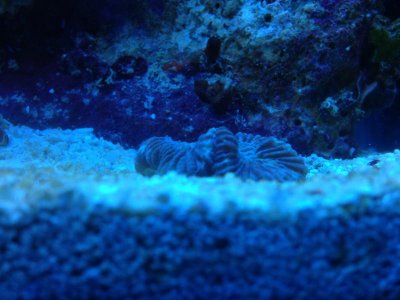
and the brain came as unseen on my live rock lfs stated it came from the caribbean and just got the shipment the day i bought 20lbs and after moving the rock a zillion times it detached after about 5 days i never glued it to the rock it hitched a ride to its new home and it was only the size of a nickel when i got it now its the size of a quarter ill add before and a sand level current view ive been feeding it 2 thawed brine shrimp when its feeders extend which seems like every 4th day and i thought the sand was there natural placement
where are the phosphates coming from im using ro/di and test tds to .00 to .01
no filter but have a red sea prizm skimmer with carbon in the media basket
the light is a odyssea t5 ho 4x18w how many hours should it be on while providing for the brain the light is 12.5 inches from top of sand
and the brain came as unseen on my live rock lfs stated it came from the caribbean and just got the shipment the day i bought 20lbs and after moving the rock a zillion times it detached after about 5 days i never glued it to the rock it hitched a ride to its new home and it was only the size of a nickel when i got it now its the size of a quarter ill add before and a sand level current view ive been feeding it 2 thawed brine shrimp when its feeders extend which seems like every 4th day and i thought the sand was there natural placement
soulpatch
New member
Your rock and sand will leach phosphates for a while. My rock is leaching so I dose to take care of that and keep things in check. The algae is par for the course early on as things leach and the tank stabilizes. That said it doesnt mean you shoudl let it go out of control. The snails will do some things but as it grows longer then they leave it alone.
Carbon in the media basket of what? This looks like a regular 10 gal tank or is it a AIO unit?
As for the brain yeah sand is a normal type of placement for them but you have to have decent light for them at that level. If you light is weaker then it might have to be placed higher in the tank. If it is feeding then that is good but from your pic is looked deflated. Could just be a deceiving picture.
Carbon in the media basket of what? This looks like a regular 10 gal tank or is it a AIO unit?
As for the brain yeah sand is a normal type of placement for them but you have to have decent light for them at that level. If you light is weaker then it might have to be placed higher in the tank. If it is feeding then that is good but from your pic is looked deflated. Could just be a deceiving picture.
what should i dose with
yes it is a standard 10
the carbon is in a media basket made for the red sea prizm protein skimmer
and you def know more than i im the F N G
i know my lights not great like a mh but better than a pc how do i test? to make sure the brain is okay on the substrate
did you check the 2 new pics i added
yes it is a standard 10
the carbon is in a media basket made for the red sea prizm protein skimmer
and you def know more than i im the F N G
i know my lights not great like a mh but better than a pc how do i test? to make sure the brain is okay on the substrate
did you check the 2 new pics i added
soulpatch
New member
weird never saw a media basket attachment to a skimmer. How does that impact the skimmer as the media gets old and slows flow?
Your lights could be judged via a par meter. Your LFS might have one you could loan for a day. Though so long as the brain is not receeding and is growing as you state it should be ok. The pics you posted are still a bit flat though might just be that brain.
Your lights could be judged via a par meter. Your LFS might have one you could loan for a day. Though so long as the brain is not receeding and is growing as you state it should be ok. The pics you posted are still a bit flat though might just be that brain.
Good advice in the thread, and it sounds like you had a solid foundation when setting up the tank (RODI, etc.)
One piece of advice I have is rearrange your rocks. You want as an objective in the rearrangement to have as little rock touching sand as possible. Anywhere that rock touches sand is a liability, because nutrients/detritus can settle there. You have flat pieces of rock, which makes it easy to pile them up, but really, try turning them on their sides, on their ends, do something neat that creates some cool overhangs and pass-throughs. Think of how neat it would be if/when you have fishes swimming through looking for amphipods in the crevices.
Also, API is fine for ammonia, nitrite, nitrate. For salinity, keep your eyes out for a cheap refractometer. They can be had used for $20-30, and new about $50-120, they last forever, are easy to use, and most importantly are very accurate.
Early on in the hobby, you shouldn't really be running carbon, and honestly, I would just remove the skimmer and put it in the "backup supplies/failed experiments" basket. That particular model (unless it has changed in the 15 years they've been selling it) isn't very good, and is likely just a distraction from fixing real problems in your tank. You should be focusing on doing bi-weekly water changes for the first year or so in the hobby, until you really have developed an understanding for fishes and corals and their demands, from a biological and chemical standpoint. And skimming on a 10g tank isn't a very useful endeavor. It's hard enough trying to skim 29g. 10g or less, I wouldn't bother IMO.
If you are having algae problems, water changes and let your cycle go for a month or two, and then after a month or two you can add GFO products (TLF Phosban, ROWAPhos, etc) to absorb phosphates.
I would also move the brain to the rockwork, and closer to the top of the tank until you're more familiar with the brain coral, it's needs, and your lighting setup.
One piece of advice I have is rearrange your rocks. You want as an objective in the rearrangement to have as little rock touching sand as possible. Anywhere that rock touches sand is a liability, because nutrients/detritus can settle there. You have flat pieces of rock, which makes it easy to pile them up, but really, try turning them on their sides, on their ends, do something neat that creates some cool overhangs and pass-throughs. Think of how neat it would be if/when you have fishes swimming through looking for amphipods in the crevices.
Also, API is fine for ammonia, nitrite, nitrate. For salinity, keep your eyes out for a cheap refractometer. They can be had used for $20-30, and new about $50-120, they last forever, are easy to use, and most importantly are very accurate.
Early on in the hobby, you shouldn't really be running carbon, and honestly, I would just remove the skimmer and put it in the "backup supplies/failed experiments" basket. That particular model (unless it has changed in the 15 years they've been selling it) isn't very good, and is likely just a distraction from fixing real problems in your tank. You should be focusing on doing bi-weekly water changes for the first year or so in the hobby, until you really have developed an understanding for fishes and corals and their demands, from a biological and chemical standpoint. And skimming on a 10g tank isn't a very useful endeavor. It's hard enough trying to skim 29g. 10g or less, I wouldn't bother IMO.
If you are having algae problems, water changes and let your cycle go for a month or two, and then after a month or two you can add GFO products (TLF Phosban, ROWAPhos, etc) to absorb phosphates.
I would also move the brain to the rockwork, and closer to the top of the tank until you're more familiar with the brain coral, it's needs, and your lighting setup.
thanks reefwreak i will overhaul the rock arrangement honestly wasnt happy with the look
and i did spring for the refractometer and it was on the cheaper end of your scale but got the calibration fluid just to be sure
forget carbon check and the skimmer seems useless i have hardly anything in my collection cup and ive been changing a gal every week so far
moving brain up to rocks
going to reed on gfo
and i did spring for the refractometer and it was on the cheaper end of your scale but got the calibration fluid just to be sure
forget carbon check and the skimmer seems useless i have hardly anything in my collection cup and ive been changing a gal every week so far
moving brain up to rocks
going to reed on gfo
Similar threads


- Replies
- 0
- Views
- 751

