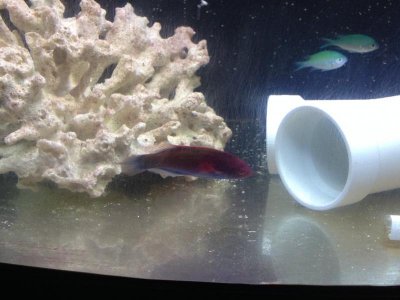
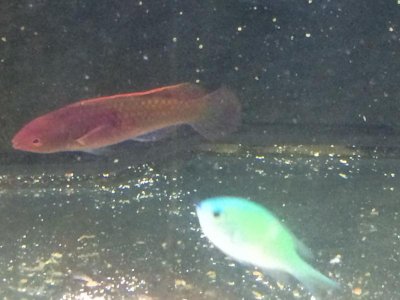
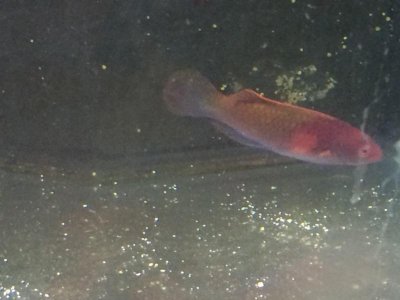
Picked up this wrasse at the LFS yesterday, sold to me as a purple scaled fairy wrasse. Would like to know the exact species. Let me know if you need a better pic. Thanks in advance!
See if these pics will help you narrow it down. Probably as good as I can get with an iPhone. Does the spot that is only on one side indicate an initial phase male turning terminal or is it just an individual variation?
Also what is the best QT procedure for this fish? I've read mixed reviews on these wrasses and prazipro and copper. The fish is under observation now and appears to be healthy and is eating everything I offer.
Also what is the best QT procedure for this fish? I've read mixed reviews on these wrasses and prazipro and copper. The fish is under observation now and appears to be healthy and is eating everything I offer.
I always recommend at least 2 rounds of prazi. I tend to avoid copper and don't worry about ich unless it appears. I always QT for a least 6, preferably 8, weeks.
The cf stands for confer or compare, so it is not scientifically described yet, but has physical similarities wth cyanopleura, so when being described the taxonomist would look at the scientific description of cyanopleura to see if there are enough differences to warrent a separate species designation.
This site uses cookies to help personalise content, tailor your experience and to keep you logged in if you register.
By continuing to use this site, you are consenting to our use of cookies.