My tank is a 36 gallon bowfront.
Tank Parameters:
pH 8.1
Ammonia: 0ppm
Nitrite: 0ppm
Nitrate: 5ppm
Temperature: 77F
Specific Gravity: 1.024
Tank Inhabitants:
3 Hermits. (1 week in)
2 peppermint shrimp. (2weeks in)
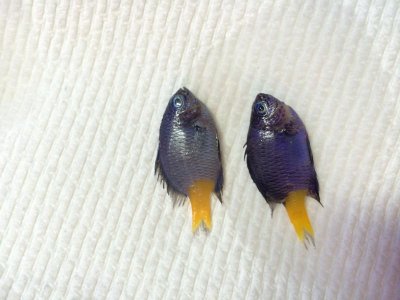
2 Yellowtail Damsels. (3 weeks in)
1 Green Brittle Star. (4 weeks in)
CUC Snails Nerites, Nassarius, Florida Cerith and Dwarf Cerith (4 weeks in)
1 Cleaner Shrimp. (5 weeks in)
1 Favites Brain Coral (6 weeks in)
1 Royal Gramma (3 weeks ago -DECEASED after 5 days in tank)
2 Ocellaris Clownfish (1 week ago- DECEASED as of yesterday.
The Royal Gramma was hiding the first 3 days but was swimming about and being social with my Damsels the night before the morning I found it dead.
The two clownfish were doing well and sticking together or separating and doing their thing. They slept together on the sandbed. I found them both dead on Sunday morning. Saturday night the larger clown wasn't eating and stayed on the sandbed in his sleeping motion while the small clown swam about happily. I found the large one being eaten by my peppermint shrimp and it was stiff. The smaller clown was upside down on the sandbed but still flexible. I checked water parameters were normal.
Sunday the two damsels were acting abnormally and swimming separately in 1 place. 1 in the shade of the power head. The other in the shade by the tank center brace high in the water column. When I fed them later at night, adding the frozen mysis shrimp spooked the one up top and he went to go hide under a rock by the sandbed. He stayed there for the remainder of the night. The one by the power head was no where to be found. I have 37lbs of rock so I figured it was hidden inside.
My girlfriend called me and said that when she fed the fishes this morning, neither of the two damsels were to be found. I won't be able to tend to the tank until I get off work.
I know there isn't any pistol shrimp/worms/mantis shrimp eating anything since the fish bodies were all in tact and just on the sandbed.
I really do not know what is wrong, why the new fishes all died and why my damsels are behaving strangely now. I will have to try and find them later tonight.
Any suggestions on what to do? Or what could be happening?
Tank Parameters:
pH 8.1
Ammonia: 0ppm
Nitrite: 0ppm
Nitrate: 5ppm
Temperature: 77F
Specific Gravity: 1.024
Tank Inhabitants:
3 Hermits. (1 week in)
2 peppermint shrimp. (2weeks in)
2 Yellowtail Damsels. (3 weeks in)
1 Green Brittle Star. (4 weeks in)
CUC Snails Nerites, Nassarius, Florida Cerith and Dwarf Cerith (4 weeks in)
1 Cleaner Shrimp. (5 weeks in)
1 Favites Brain Coral (6 weeks in)
1 Royal Gramma (3 weeks ago -DECEASED after 5 days in tank)
2 Ocellaris Clownfish (1 week ago- DECEASED as of yesterday.
The Royal Gramma was hiding the first 3 days but was swimming about and being social with my Damsels the night before the morning I found it dead.
The two clownfish were doing well and sticking together or separating and doing their thing. They slept together on the sandbed. I found them both dead on Sunday morning. Saturday night the larger clown wasn't eating and stayed on the sandbed in his sleeping motion while the small clown swam about happily. I found the large one being eaten by my peppermint shrimp and it was stiff. The smaller clown was upside down on the sandbed but still flexible. I checked water parameters were normal.
Sunday the two damsels were acting abnormally and swimming separately in 1 place. 1 in the shade of the power head. The other in the shade by the tank center brace high in the water column. When I fed them later at night, adding the frozen mysis shrimp spooked the one up top and he went to go hide under a rock by the sandbed. He stayed there for the remainder of the night. The one by the power head was no where to be found. I have 37lbs of rock so I figured it was hidden inside.
My girlfriend called me and said that when she fed the fishes this morning, neither of the two damsels were to be found. I won't be able to tend to the tank until I get off work.
I know there isn't any pistol shrimp/worms/mantis shrimp eating anything since the fish bodies were all in tact and just on the sandbed.
I really do not know what is wrong, why the new fishes all died and why my damsels are behaving strangely now. I will have to try and find them later tonight.
Any suggestions on what to do? Or what could be happening?