
Fluval 12G With Fluval MINI

joejiz

New member
Hi

I am new to salt water aquariums but have ran fresh water tanks for 20 + years.

Tank : Fluval 12 Gallon
Filtration: Stock Fluval Mini with charcoal / sponge
Heater: Set for 76F
Sand : Fine sand, came with tank, previous ran as salt water
Coral: Purple branching coral and rock coral

Water: Seller provided their old salt water

Steps:

1- Inserted supplied water into tank
2- Ran tank for 7 days
3- Checked hydromoter - pegged at top, way above normal

Actions:

1 - Removed 1/4 of the water and add straight Vancouver BC water (which had sat stored for a week )

2 - Check hydrometer right after and it dropped

3 - checked hydrometer a couple days later - pegged

What I'd like to run in tank

1 - Single Jelly Fish
1 - Single or multiple plants on coral

Keep it simple for first time.

Any suggestions? I know I have no sump or skimmer but the tank is super small at 12G so I'm hoping
 

Attachments
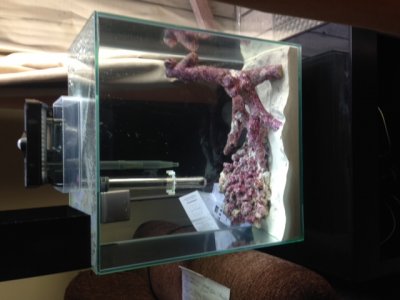
  • tank.JPG
    tank.JPG
    82 KB · Views: 3
Last edited:
I would do more research on the jelly fish. I believe they do best in species only tanks due to their requirements.

This is 100% true, a jelly tank and a reef tank have different requirements, you don't want to try and mix those.

If you really want a jelly tank, I would order one of the "made for jellies" tanks that are out there. I know one company makes a 2 gallon tank that you can keep on your desktop. Then you can set up the 12 gallon tank you purchased as a reef tank, and you get the best of both worlds.
 
Update

Update

Oh I didn't know that, I read up on moon jelly fish and I would have to remove some objects from the tank and turn the fluval way down.

If I was to do a coral tank, could you tell me how to get the salinity down in the tank please?
 
Oh I didn't know that, I read up on moon jelly fish and I would have to remove some objects from the tank and turn the fluval way down.

If I was to do a coral tank, could you tell me how to get the salinity down in the tank please?

Add freshwater..

But RODI water, which is Reverse Osmosis Deionized water, which is pure H20

I think you're looking at this like a sprint, and not a marathon. Keeping a reef in a 14 gallon tank is going to be nearly impossible, and even the experts have trouble with it.


I would also trash the hydrometer and get a refractometer, there is a nice one on amazon for around 20 bucks.
 
you'll need to maintain the water level at a constant height in order for the salinity to not raise so high due to evaporation. Its going to be tough on a small tank like that, you'll need to add water every day and maybe multiple times. I'd highly recommend either a bigger tank (to make things easier for you) or to buy an auto top off of some sort if you can't keep a watch on the water level.
 
really good news

really good news

Ok, thanks for tip on refractometer, we actually use those in automotive class to check Antifreeze! (not that I'd cross-use the device for salt water).

Tank has been running for 2 weeks, I added another jug of fresh water two days ago. Not RODI though.

My temp is a solid 80F and my salinity finally dropped!

Salinity is down to:

1.02450 - 33

I haven't decided what to run in the tank.

I've been doing a lot of reading on it.

I totally understand it's not a sprint but marathon and that a salt water tank this small is a tough one but I still want to give it a go.

Some tips I'm going to remember.

1 - Add freshwater that has been RODI correctly prior.
2 - Watch evaporation rate/Check salinity levels often, DOCUMENT
3 - Prepare salt water prior in bucket with correct salinity level (close lid)
4 - Do a water change of of say 25% once every week or two weeks ( not sure how this will work affect tank until I try it)

Is there some sort of fish that can go in it that is cheap to continue the cycle of preparing the tank?

THANKS EVERYONE!!
 
Sorry I should do this when preparing buckets of salt water:

tip: Mix your salt water a day in advance and let it air out or use a powerhead pump in a bucket. This allows the water to reach its carbon dioxide, oxygen, and pH equilibriums. Try to have your replacement water match the salinity, pH, and temperature of the tank before doing a water change to minimize stress on your animals.
 
Back
Top