
You are using an out of date browser. It may not display this or other websites correctly.
You should upgrade or use an alternative browser.
You should upgrade or use an alternative browser.
Halichoeres ID
- Thread starter JJIM
- Start date

Deinonych
New member
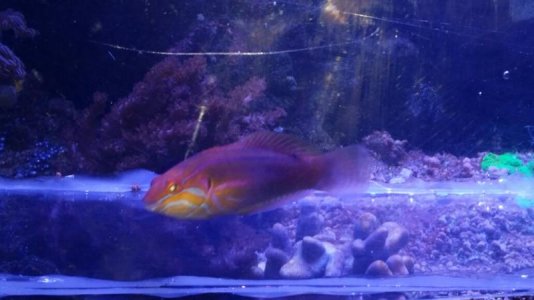
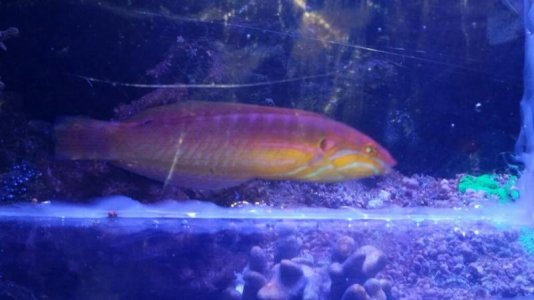
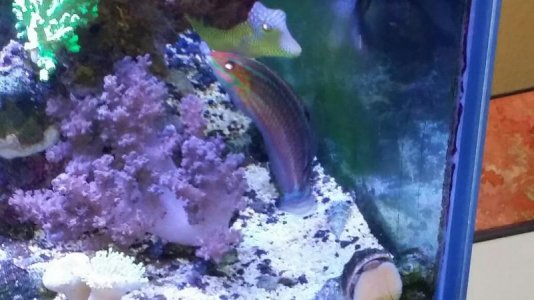
I've never seen one in the flesh (simply don't get them over here) but it looks more like a Coris Venus ta than a halichoeres. I wait to be corrected though.
Agreed - it does look like a C. venusta female/IP.

JJIM
Member
That it is indeed! Thank you for helping me identify it. I have never seen one like this, which is what intrigued me. Found this small write up, which is a perfect depiction of what my fish looks like.
http://www.qualitymarine.com/News/Species-Spotlight/Highly-Underrated-Fish---Coris-venusta-(01/20/16)
How big does she get, and should I expect it to become male over time being protogynous hermaphrodite? I don't see too much on the net about this fish. I did find this, but it the male version changes so much from picture to picture - http://www.marinelifephotography.com/fishes/wrasses/coris-venusta.htm
Anyone know of a good male picture or video?
http://www.qualitymarine.com/News/Species-Spotlight/Highly-Underrated-Fish---Coris-venusta-(01/20/16)
How big does she get, and should I expect it to become male over time being protogynous hermaphrodite? I don't see too much on the net about this fish. I did find this, but it the male version changes so much from picture to picture - http://www.marinelifephotography.com/fishes/wrasses/coris-venusta.htm
Anyone know of a good male picture or video?
Deinonych
New member
They grow to 7" in the wild, so probably less than that in captivity. Likely it will transition to male over time. They are endemic to the Hawaiian Islands. Very beautiful fish. The TP male pictured here is similar to what I have seen on dives and in my Hawaiian fish book: http://www.marinelifephotography.com/fishes/wrasses/coris-venusta-male.jpg
JJIM
Member
Are they a rare find, or why are they not more readily available if from Hawaii?
I was worried about my dominant male Halichoeres melanurus and Halichoeres ornatissimus roughing her up, but to my pleasure, she has held up very well. She eats very well, and competes for food just fine. Likely being a Coris, rather than the Halichoeres, helps defuse the tension =)
I was worried about my dominant male Halichoeres melanurus and Halichoeres ornatissimus roughing her up, but to my pleasure, she has held up very well. She eats very well, and competes for food just fine. Likely being a Coris, rather than the Halichoeres, helps defuse the tension =)
Are they a rare find, or why are they not more readily available if from Hawaii?
I was worried about my dominant male Halichoeres melanurus and Halichoeres ornatissimus roughing her up, but to my pleasure, she has held up very well. She eats very well, and competes for food just fine. Likely being a Coris, rather than the Halichoeres, helps defuse the tension =)
That's good to here as mature ornatissimus can be pugnacious little so and so's.
They grow to 7" in the wild, so probably less than that in captivity. Likely it will transition to male over time. They are endemic to the Hawaiian Islands. Very beautiful fish. The TP male pictured here is similar to what I have seen on dives and in my Hawaiian fish book: http://www.marinelifephotography.com/fishes/wrasses/coris-venusta-male.jpg
That they are. Saw a few of them and others too last week while diving. I'd say around 25 - 47' depth range is when I caught them. I'll have to see if I caught any of them on my camera. I was surprised when I saw some very large Kole Tangs at 90' while diving one wreck. For some dumb reason I was expecting them to be a shallower fish like the Yellow Tang.
Deinonych
New member
I was surprised when I saw some very large Kole Tangs at 90' while diving one wreck. For some dumb reason I was expecting them to be a shallower fish like the Yellow Tang.
Interesting. I would have thought the same. Typically see Naso and Eyestripe tangs at those depths.
Interesting. I would have thought the same. Typically see Naso and Eyestripe tangs at those depths.
Agreed! I'm actually combing through some of my videos to make sure but I'm positive on the ID. I did see a couple Naso's with some very long tail streamers. Very plump I might add. I've not paid much attention to them before but they look nice. Not something I could house though if ever.
JJIM
Member
Deinonych, what does the IP refer to after female in your initial post?
Surprised such a beautiful fish is not more available. This is the first time I have seen one, at least from what I recall. According to http://www.qualitymarine.com/News/Species-Spotlight/Highly-Underrated-Fish---Coris-venusta-(01/20/16 , the Coris Venusta appear to be good tank-mates and their size is conducive to most mid size aquariums.
Surprised such a beautiful fish is not more available. This is the first time I have seen one, at least from what I recall. According to http://www.qualitymarine.com/News/Species-Spotlight/Highly-Underrated-Fish---Coris-venusta-(01/20/16 , the Coris Venusta appear to be good tank-mates and their size is conducive to most mid size aquariums.
Deinonych
New member
Deinonych, what does the IP refer to after female in your initial post?
Surprised such a beautiful fish is not more available. This is the first time I have seen one, at least from what I recall. According to http://www.qualitymarine.com/News/Species-Spotlight/Highly-Underrated-Fish---Coris-venusta-(01/20/16 , the Coris Venusta appear to be good tank-mates and their size is conducive to most mid size aquariums.
IP = initial phase. Wrasses typically have three lifecycle stages: juvenile, initial phase male (IP) and terminal phase male (TP). The IP stage is usually indistinguishable from females.
Deinonych
New member
Agreed! I'm actually combing through some of my videos to make sure but I'm positive on the ID. I did see a couple Naso's with some very long tail streamers. Very plump I might add. I've not paid much attention to them before but they look nice. Not something I could house though if ever.
Which island were you on? We just got back from Maui, but prefer Hawai'i Island (aka Big Island) for diving.
Which island were you on? We just got back from Maui, but prefer Hawai'i Island (aka Big Island) for diving.
Kapolei area on Oahu. Not the greatest as I'm sure you are aware mostly stony corals, urchins, and fish local to the area. First dive of the morning was usually a wreck. Second was shallower. It has been a few years since I've dove there but was pleased to see more stone type corals(compared to last time they seem more abundant and healthier). Good fish population also. Then again it could be due to the side of the island we are on.
I can't complain because I'm typically diving in the Northern California waters around Monterey and the water is 49 degrees F at depth and 54 at surface. 73 - 79 degrees F is bath water

IP = initial phase. Wrasses typically have three lifecycle stages: juvenile, initial phase male (IP) and terminal phase male (TP). The IP stage is usually indistinguishable from females.
Learn something new everyday. I like this forum - great information on fish which prevents me from buying something foolish or taking better care of what I do buy.

evolved
Wrasse Nut
They're a bit hit and miss on availability.Surprised such a beautiful fish is not more available. This is the first time I have seen one, at least from what I recall. According to http://www.qualitymarine.com/News/Species-Spotlight/Highly-Underrated-Fish---Coris-venusta-(01/20/16 , the Coris Venusta appear to be good tank-mates and their size is conducive to most mid size aquariums.
Can be a bit hard on motile inverts with age, and can also sometimes be mildly aggressive with maturity.

