Have challenge. Need experts. All corals dying

bonedoc

New member
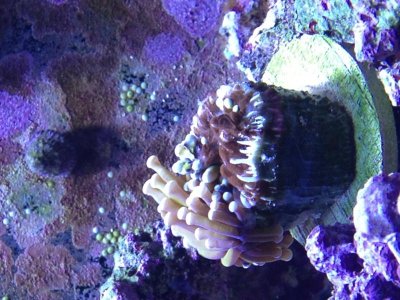
I'm hoping someone can help me. i am ready to pack in a reef tank because it is upsetting that i can't keep any coral alive and two 'expert' services can't figure out wth is going on. my tank is over three years old and my LPS corals did well for two years. in fact, i had a beautiful show piece frogspawn that i purchased as a small frag. there were also multiple beautiful LPS and acros that all florished. parameters were and remain acceptable. everything i put in the tank thrived for two years. then suddenly all of my SPS and LPS died off within two months. the flesh of the corals disintegrated into a brownish slime. my local service had no answer and i eventually switched to another service. both services have had a hard time keeping my calcium up but that has always been the case. my fish, leathers, and two giant clams have been thriving. there is one tank raised large torch frag which was added about three weeks ago and is still doing well. a large elegance and SPS were added several days ago and i just noticed the slime on both. several attempts have been made to add LPS to the tank but they all die. i have a 265 gallon reef tank with live rock. Ca today is 360. pH, nitrate, nitrite, temp all ok. i am getting very frustrated and my tank is no longer a source of enjoyment and is only stressing me out every night. please, someone, help. what questions do you have?
 
Last edited:
you would begin research by reading up on brown jelly disease

and post pics here of your setup surely some were snapped w phone maybe

a tank that size and money spent is massively insured and benefitted by having a grossly oversized UV pond sterilization setup on hand. doesnt have to be continually used.

If I had a reef that big i would have enough pond sterilization for 5,000 gallons ready to run just for cases like this.

wouldnt waste time with a single uv unit, again its oversize or not utilize the option.
its nice because its not a huge chemical insult/ change for your tank but its mega powerful in certain outbreaks reefkeepers can have
cyano can be fought with a powerful uv for sure

some fish diseases, truly this is indispensable to have on hand, a cheat well done every once in a while

thats more protection in the future and not everyone agrees, many opinions abound


certain temperatures are better to run at than others with BJD its in the reading somewhere I cant recall but have seen it.

Eric Borneman covered it in his book corals as well

if it was mine I would test removal ability by picking a sacrificial polyp to simply siphon some off the bjd top and see if the polyp underneath survives

some invasions respond to direct biomass removal until exhausted

leaving the brown jelly in the system, and on the corals, is optional in some cases we could have tested earlier to see much more info about this invader imo
 
Last edited:
thanks so much for quick reply. starting research now. i do not have UV sterilizer but will have one going ASAP. starting research now. is it typical for brown jelly to stick around dormant for some time and make resurgence when LPS reintroduced? again, thanks so much.
0
 
we need to see pics though, corals that are dying are subject to invasion as well curious to get opinions on primary or secondary cause


the UV thing has been debated online for 15 yrs, they are optional

buying a single commercial unit is nothing like the ones that clear out koi ponds which can be stored in the garage for occasional blasting use for example

keep expectations low if you go with a normal setup.
if we burn the planktors out of the water going after a bad invader, tomorrows feeding and origination from the live rock surfaces overnite will fix that condition right up. even if you run the uv for two weeks

after cessation, the live rock will always begin cycles of putting plankton right back into the tank on a normal feeding schedule etc, its a nice way to not impact your tank long term thats why I love it and will always have one ready.


there is no guarantee it will cure this invader, but it starts to address biological details that may or may not help.

if that organism has a water transitory phase then UV has a great chance, its more of a handy tool to always have as an option

knowing if that invader can be removed without leaving a bare white skeleton underneath is a telltale

it is very challenging to run giant tanks that are always hands off. in this way I feel thankful for tiny reefs where one can just do a 100% water change at the slightest question to avoid almost all conditions. But you guys get the fish lol

considering the vectors for reinfestation I dont think we can say if it was dormant or not

big tanks take a long time to stock, what you battle today might just come in again on the next substrate import. it also makes sense an outbreak never truly controlled could have been part of a long time chronic condition, too many variables for us to guess there.

this isnt even getting into medication dosing for the aquarium, and that borders on filter bed insulting as well so these physical options and assessments via pics are the best start.

another variable

some people on here specialize in looking at reef organisms through microscopes. they may not know every organism, but they are the resources here and thats helpful to know. if something doesnt repond to known temperature alternates, water stripping, physical removal trials, then a scientist who will take a look under a scope cannot hurt, they can only possibly point you further.

the guy is pants, he hangs out in the chem forum looking at samples of dinoflagellates.
 
Last edited:
truly I would lightly siphon it off as soon as it starts on any given polyp, who knows how practical that would be to apply to a whole tank, just trying to figure any known character of it. what does a test polyp reveal...

it would seem in short time that the dead polyp can likely come right off the corallite skeleton with a rough siphon, but a careful one that pulses and hopefully catches the jelly before it attaches through whatever means might at least buy time. maybe something for the more prized colonies, anything vs hands off while we read up I havent seen that in a long time.
 
again thx for reponse. this problem has been going on for 6 months and that pic was from a coral that is long gone. my research has helped my understanding but it doesn't seem like there is any definitive treatment or prevention. i am more concerned about recurrence. it sounds like whatever the problem is, it is established and prevalent in the tank and needs to be eliminated tank wide and not just treated symptomatically. it seems that the offending agent has killed off so many corals that treating one or two would be futile. seems like it would just come back as it is established in the ecosystem

other possibly related issues are that i have noticed large bristel worms or fire worms (not sure what the difference is), a ton of majanos and recently some aiptasia are popping up all over.

i'm losing confidence in my reef service and my love for the hobby.

i sent a txt to my reef guy and he wants to bring an ozone sterilizer by. will that help?

is there anyone in new york that anyone knows that can consult on my tank?

i feel like i'm wasting time, SOOO much money and killing beautiful coral....
 
Did you ever clean your substrate? You say your tank is over three years old. If it's been over three years since you've cleaned your substrate....???
 
Have you thought about a tear down and set back up. But some new sand is really all you'll need have a fish store or buddy hold your livestock. If your that frustrated it can come to that sometimes. Cook the rock or get new rock. Have you ever dosed copper in the tank
 
Another useful bit of information for the troubleshooters here would be dKH and magnesium readings (That will also get you on track with why your calcium level isn't rising). I would say that while it isn't the direct cause of the Brown Jelly disease, there is some stressor that is causing those protozoans to infect supposedly healthy corals.

If I were in that situation, I would also stop adding corals. Just deal with what you have and get all the information and advice you can process.

That's just my 2 cents though! I hope you can get everything back to normal, I really do!
 
Back
Top