Help me decide if this tank setup is worth it?

Looks like a 72 gallon bow front tank. Those can be worth a little more than a standard 75 gallon tank. Why can't you just take the RO/DI and hook it up yourself?

It is a bow front, I won't cry over 3 gallons.


I believe the guy who owns the tank "rents" it from the water provider. I'm honestly not sure. He said he's pays $15 a month for it but I do believe there was a initial investment to get the equipment on-site. He said he also pays $100 per year to have the tank replaced and I think he was referring to the DI tank? Not sure.

Anyway, if it's possible to remove the filtration setup then it will happen.
 
I have the same tank. Paid $150 for it used with just a return pump. After buying everything else I'm probably well over $1500 closer to $2k
 
The equipment is not bad, I would not say top of the line. It would appear to be a decent setup, if your happy with the price then it is a good deal. good luck
 
Since I am new and before I start a thread that already exists 20 times, can anyone point me to a thread that explains how to properly transport a large tank? I am moving it 120 miles.

I would also like to see a thread on how to properly level a new setup.
 
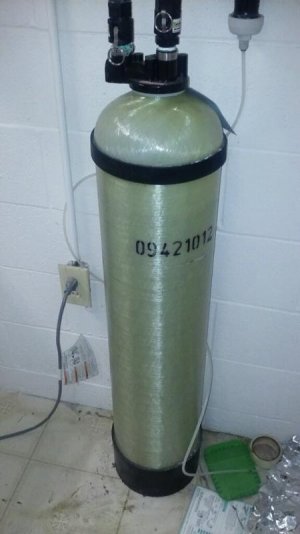
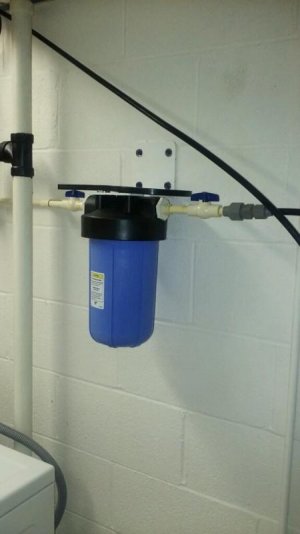
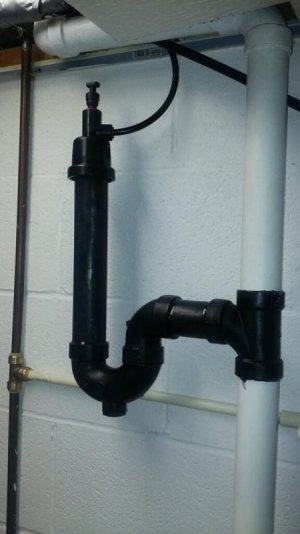
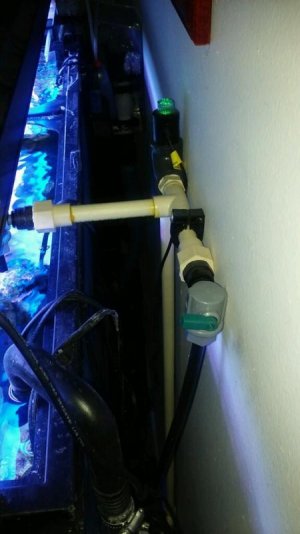
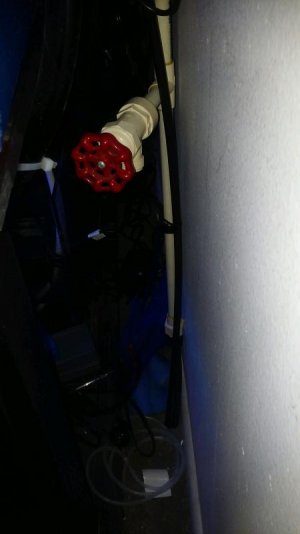
See the below pictures, this is the water treatment system that can possibly come with the system. I don't know much about water systems and maybe someone can explain this and if it's worth it. And I'm really interested in whats above the basement and whats behind the tank. Behind the tank is a valve to hook up a hose and fill up your buckets quickly to mix salt. Above the tank is a faucet for top offs with a flush valve and some sort of meter that turns red or green depending on the status of the water. If the light is green you can use it, if it's red you need to flush until it turns green.

Looking at the equipment in the basement it does not look like a RO setup? Is it DI only?
 

Attachments

  • IMG_2952.jpg
    IMG_2952.jpg
    33.8 KB · Views: 4
  • IMG_2953.jpg
    IMG_2953.jpg
    28.4 KB · Views: 3
  • IMG_2954.jpg
    IMG_2954.jpg
    36.2 KB · Views: 3
  • IMG_2955.jpg
    IMG_2955.jpg
    38.8 KB · Views: 3
  • IMG_2956.jpg
    IMG_2956.jpg
    25.6 KB · Views: 4
I think we just found where he spent the $4,100. I've never seen or heard of a setup like that before. It looks custom and expensive.
 
I think we just found where he spent the $4,100. I've never seen or heard of a setup like that before. It looks custom and expensive.

It was a $300 investment to get the equipment onsite and installed, then he pays the water company $15 a month and $100 a year to replace the larger tank. What is setup behind the tank seems to be pretty slick.
 
I have no idea what that is, but it doesn't look like an ro/di setup to me.

Is that C02?

Looks like a big DI tank. I have seen this done before.

What they basically do is run a sediment/ carbon stage, then feed it through that huge tank filled with DI resin.

No RO membrane.
 
ultimately sounds like a setup where the guy called a LFS and said "what do I need", then called the water utility and said "what do I need".

Cheaper to buy a good ro/di unit than rent something like that.
 
with out knowing the flow of the system I would say the large cylinder is either carbon or mixed bed DI resin, the smaller inline housing is either a sediment filter or could be a DI cartridge in it.

The third picture looks like where the purified water goes upstairs.

The fourth picture looks like there ATO. I would guess it comes off of the system downstairs. There is probably a conductivity or TDS probe some where that will cause the light to turn green or red.
 
Ok. I researched that and there are TONS of ro/di suppliers. Can someone tell me what the best brands are? I like to have good equipment. Right now im thinking of buying a buckeye hydro setup but i dont know of their quality.
 
Pola - we've been a Reef Central sponsor since the bronze age. I encourage you to do a search of Reef Central for us.

Let us know if we can help you.

Russ
 
That little green light is called a Resilite. It is essentially an inline TDS meter. Various models are available where the indicator light triggers anywhere from 0.25 to 95 ppm tds, depending on the model.

Russ
 
Last edited:
Back
Top