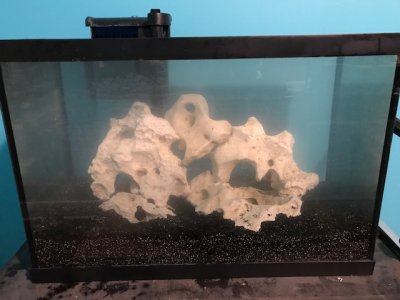
How would you stock the tank?
If I was starting a new 29, I would add a small CUC first, as suggested by others, and see how that works. If the CUC was doing well, I would then add a yellowhead jawfish, because they are one of my personal favorites and they seem to acclimate much better when they are the first fish. I like the fact that they build their own burrow, and if they are alone in the tank it gives them a chance to find their preferred spot without intrusion. In fact, they may build several burrows before they decide on the one they like best. Once their home is established, I find their behavior fascinating. They seem to sense when it's feeding time and hover above the burrow almost begging for food. They are lightning quick and keenly aware of their surroundings, darting out to snag bits of food and darting in when they sense the slightest danger. This skittishness can be a drawback though, unless the tank is fully covered. It seems like even if there's only one small hole, a jawfish will eventually find it and wind up on the floor. At least that's been my experience.
These are just my thoughts on what I would do if it was starting a new 29. It's your tank, so you can do whatever you want. You've made a wise decision to plan carefully ahead of time. Make a stocking list and add the new inhabitants slowly in the proper order. As a general rule, you'll want to add the more peaceful fish first and the more aggressive fish last. Don't add any fish or corals that will get too big or too aggressive for a small tank, and by all means, don't overstock. The most important thing you can do is research. Some fish are small and cute as juveniles, but get big and mean as adults. Some corals will poison their neighbors, overpopulate, and take over the entire tank.
Other than that, the possibilities are wide open at this point. Just remember to proceed patiently and cautiously. Most people that run into trouble in this hobby don't follow that one simple rule, myself included. If you notice that a recent addition is causing problems or not doing well, stop, assess the situation, and make the necessary corrections before moving on. Good luck, and enjoy your first reef tank!



 But I like to get ideas/advice from more seasoned reefers.