
You are using an out of date browser. It may not display this or other websites correctly.
You should upgrade or use an alternative browser.
You should upgrade or use an alternative browser.
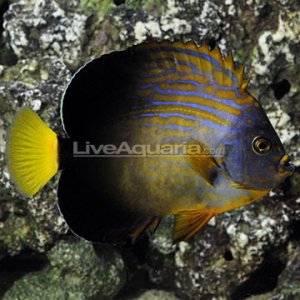
I wanna see more pictures of this guy
- Thread starter t4zalews
- Start date

rgentry123
Member
how much did it go for?

olemiss reb
Molon Labe
That guy went too quick, how much was he?

AquaKnight
Active member
I suspected it would sell that fast. It's a good price for a Maze. Esp. would you compare the rarity to the Conspic, which is more expensive.
Though sort of weird DD would remove the links so fast. Usually you can view them for a while afterward. They took the Maze down immediately :crazy1::thumbdown
Though sort of weird DD would remove the links so fast. Usually you can view them for a while afterward. They took the Maze down immediately :crazy1::thumbdown
Last edited:

ccampbell57
Premium Member
There are differing thoughts on the Maze geneology.
Personally I think that it is a blueline x bluespot hybrid that started it off and it is now it's own breed.
Personally I think that it is a blueline x bluespot hybrid that started it off and it is now it's own breed.


Ian
I <3 Corals!
Is a maze angel a morph of a blueline angel or hybrid or is it its own species?
Maybe we can get Jeremy to give us his opinion :lol:


Kieth71
New member
There are differing thoughts on the Maze geneology.
Personally I think that it is a blueline x bluespot hybrid that started it off and it is now it's own breed.
Yesterday 06:17 PM
Ahh ok ty chris..If it has started to breed between its own and not just a random morph or hybrid i am guessing from the cost of the fish it is still very rare and not an easy to find fish?In other words still a pretty small population?
Last edited:
ccampbell57
Premium Member
This fish is found in a very small area and definitely not common.
There is also a HUGE range of "maze" angels. The one that sold on DD was a great example of a true Maze that had a very dark back with the blue spots and a very orange face.
There are some mazes that look just like morphed bluelines and therefore are less expensive. I have 3 examples of different classes of mazes...I will post shortly to show the variance.
There is also a HUGE range of "maze" angels. The one that sold on DD was a great example of a true Maze that had a very dark back with the blue spots and a very orange face.
There are some mazes that look just like morphed bluelines and therefore are less expensive. I have 3 examples of different classes of mazes...I will post shortly to show the variance.

copps
Premium Member
What a fish! Wow... wow... wow... an absolutely stunning specimen! a blueline that fades to black!
The "maze" and "orangeface" angels are a confusing bunch by themselves, made worse by years of propagated misinformation on them combined with our ambitions to define things as black or white when they are sometimes shades of gray... anyway... here's my take...
These fish are all a mix of two, and sometimes three legitimate species... as I've spoken about with other "hybrid swarms" in the past, this is not necessarily a result of having a parent of both species, as the hybrids are likely fertile, breeding back into the population. The result is a dizzying array of intermediate color forms of mixed genetics, not 50/50 hybrids... trying to give these fish a scientific name (Chaetodontoplus chrysocephalus or C. cephalareticulatus), or even a common name like maze or orangeface, runs you into issues, as no two fish are the same and some have just a small percentage of one species and the majority of another...
Many of these scientific names were given out ages ago before we could even see these fish in their natural habitat, based on one specimen collected... and given to fish that are actually hybrids... this has happened with angelfish before, as is the case with "Holacanthus townsendi", now known to be a H. ciliaris/ H. bermudensis cross, and "Apolemichthys armitagei", now known to be an A. trimaculatus/ A. xanthurus cross... I believe this is the case with these fish also.
The three species of concern here are C. septentrionalis- the blue line angel, C. melanosoma- the black velvet (the yellow tailed variant), and C. caeruleopunctatus- the blue spotted angel... The fish listed by LA appears to be a combination of the first two species. I prefer to call this fish a septentrionalis hybrid or septentrionalis/melanosoma hybrid... as we understand more about these fish in nature it's becoming more clear that these fish are indeed hybrids also... this particular hybrid shown here has a decent range in nature actually, but has only been found singly or with groups of full blooded septentrionalis... and is not a self sustaining population of intermediate color form like the Centropyge flavicauda of the Maldives or the Centropyge cf. vroliki found at Rowley Shoals off Australia... or we would see them more often... if it was a regional color form we'd see them more often, as they are not a deepwater species...
Anyway, the genetics need to be looked at to be sure, and I've teamed up with a few ichthyologist friends with the funds and desire to look at many of these fish... so perhaps soon we'll have the answer... I have a line of things to be looked at...
Oh... and I'll post more pictures for you guys when I receive this fish...:celeb1:
Copps
The "maze" and "orangeface" angels are a confusing bunch by themselves, made worse by years of propagated misinformation on them combined with our ambitions to define things as black or white when they are sometimes shades of gray... anyway... here's my take...
These fish are all a mix of two, and sometimes three legitimate species... as I've spoken about with other "hybrid swarms" in the past, this is not necessarily a result of having a parent of both species, as the hybrids are likely fertile, breeding back into the population. The result is a dizzying array of intermediate color forms of mixed genetics, not 50/50 hybrids... trying to give these fish a scientific name (Chaetodontoplus chrysocephalus or C. cephalareticulatus), or even a common name like maze or orangeface, runs you into issues, as no two fish are the same and some have just a small percentage of one species and the majority of another...
Many of these scientific names were given out ages ago before we could even see these fish in their natural habitat, based on one specimen collected... and given to fish that are actually hybrids... this has happened with angelfish before, as is the case with "Holacanthus townsendi", now known to be a H. ciliaris/ H. bermudensis cross, and "Apolemichthys armitagei", now known to be an A. trimaculatus/ A. xanthurus cross... I believe this is the case with these fish also.
The three species of concern here are C. septentrionalis- the blue line angel, C. melanosoma- the black velvet (the yellow tailed variant), and C. caeruleopunctatus- the blue spotted angel... The fish listed by LA appears to be a combination of the first two species. I prefer to call this fish a septentrionalis hybrid or septentrionalis/melanosoma hybrid... as we understand more about these fish in nature it's becoming more clear that these fish are indeed hybrids also... this particular hybrid shown here has a decent range in nature actually, but has only been found singly or with groups of full blooded septentrionalis... and is not a self sustaining population of intermediate color form like the Centropyge flavicauda of the Maldives or the Centropyge cf. vroliki found at Rowley Shoals off Australia... or we would see them more often... if it was a regional color form we'd see them more often, as they are not a deepwater species...
Anyway, the genetics need to be looked at to be sure, and I've teamed up with a few ichthyologist friends with the funds and desire to look at many of these fish... so perhaps soon we'll have the answer... I have a line of things to be looked at...
Oh... and I'll post more pictures for you guys when I receive this fish...:celeb1:
Copps

Rare Angels
New member
John,
I had this fish in my cart and you must have completed your order before me. Better luck next time I hope for my sake. Enjoy it and make sure to take a ton of pictures.
Dave
I had this fish in my cart and you must have completed your order before me. Better luck next time I hope for my sake. Enjoy it and make sure to take a ton of pictures.
Dave
copps
Premium Member
Thanks Dave... I will probably display this fish with an existing Taiwanese blueline I have, and potentially add a full C. melanosoma too... that would be neat... and mixing Chaetodontoplus is relatively easy in relation to other angel genera...
Oh, and anyone reading this far in will want to pick up the next issue of Reef Life Magazine, where Kevin Kohen will have an article on these fish published...
Oh, and anyone reading this far in will want to pick up the next issue of Reef Life Magazine, where Kevin Kohen will have an article on these fish published...

jmaneyapanda
Commencing hatred
huzzah, coppster.
Rare Angels
New member
John,
I recieved my copy of Reef Life on Monday and seen the article. That's why I really wanted the fish when I seen it for sale on DD.
Dave
I recieved my copy of Reef Life on Monday and seen the article. That's why I really wanted the fish when I seen it for sale on DD.
Dave
Rare Angels
New member
Hey John,
I just thought of something while I was writing my last reply. The armitage angelfish you have was purchased from DD also, that is another fish I really wanted and you got to it before me, now this maze angel. WOuld you leave some for the rest of us? just kidding, you have a great collection of angels
Dave
I just thought of something while I was writing my last reply. The armitage angelfish you have was purchased from DD also, that is another fish I really wanted and you got to it before me, now this maze angel.
WOuld you leave some for the rest of us? just kidding, you have a great collection of angelsDave
melanotaenia
New member
Beautiful fish.


