jupiter
New member
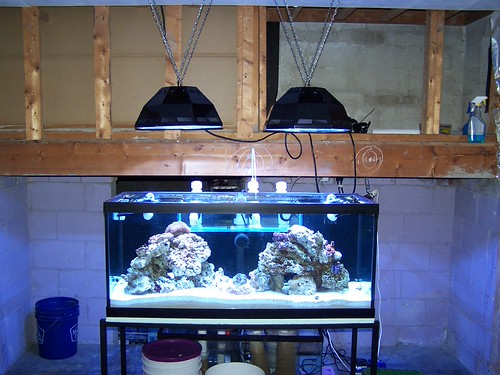
I was out of the hobby for 6 years. During that time I moved into my house. I was putting off starting a new tank until I was "œready". Well who knew when that would be so I thought, "œLife is too short to wait," so I went to the LFS during Boxing Week (Canada) and picked up a 75 gallon tank (48x18x21). Originally I wanted to go with a 60 gallon cube (24x24x24) but I had trouble finding one. When I did, it was 3x the cost of the 75 and I still wasn't even sure I wanted to return to the hobby at that point. I could have gone with a 90 gallon (3" taller) but the focus was the sea anemone and the shallower 75 allowed the anemone to be closer to the lights.
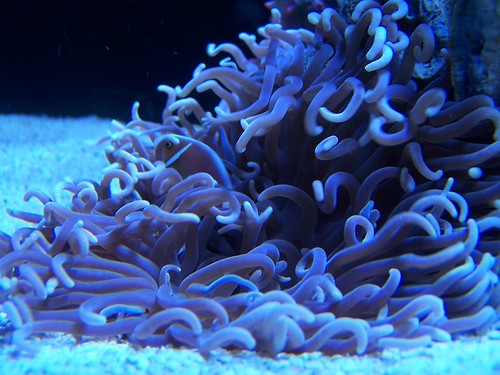
The tank is dedicated to a host sea anemone and clowns. I hadn't exactly decided which clown species I would go with but I did know I wanted a natural host for the clowns. That meant I could potentially limit the species of clown (or anemone) I could choose. I also wanted a clown that isn't very common but also, isn't trendy (and ugly). Ultimately, A. clarkii would have been the best clown choice based on their anemone preference (since they like every anemone) but I wanted something a little different. So I made the decision to go for A. nigripes (black-footed or Maldives clownfish). Unfortunately these aren't the easiest clowns to find and when they are found they tend not to survive import. So I did my pre-planning and asked a local dealer if he could import them for me. After several weeks he contacted me and can provide tank-raised fishes. I still haven't got them yet and it's been a couple of months but I'm trying to be patient.
With Maldives clowns, the only natural host is the Ritteri (Heteractis magnifica) which is a very difficult anemone to keep. I'm still on the fence about whether I want to risk one. The idea is that I will upgrade the tank in the near future so it wouldn't be in the 18" wide tank too long. We'll see what the future holds.
With host anemones, there are certain requirements:
1) Clean water
2) Strong lighting
3) Strong flow
And based on the species of anemone there are more requirements:
4) Sand bed depth
5) Tank size
6) Quantity of rockwork
7) Neighbours
The tank is dedicated to a host sea anemone and clowns. I hadn't exactly decided which clown species I would go with but I did know I wanted a natural host for the clowns. That meant I could potentially limit the species of clown (or anemone) I could choose. I also wanted a clown that isn't very common but also, isn't trendy (and ugly). Ultimately, A. clarkii would have been the best clown choice based on their anemone preference (since they like every anemone) but I wanted something a little different. So I made the decision to go for A. nigripes (black-footed or Maldives clownfish). Unfortunately these aren't the easiest clowns to find and when they are found they tend not to survive import. So I did my pre-planning and asked a local dealer if he could import them for me. After several weeks he contacted me and can provide tank-raised fishes. I still haven't got them yet and it's been a couple of months but I'm trying to be patient.
With Maldives clowns, the only natural host is the Ritteri (Heteractis magnifica) which is a very difficult anemone to keep. I'm still on the fence about whether I want to risk one. The idea is that I will upgrade the tank in the near future so it wouldn't be in the 18" wide tank too long. We'll see what the future holds.
With host anemones, there are certain requirements:
1) Clean water
2) Strong lighting
3) Strong flow
And based on the species of anemone there are more requirements:
4) Sand bed depth
5) Tank size
6) Quantity of rockwork
7) Neighbours