Maxima clam

gareth.hubbarde

New member
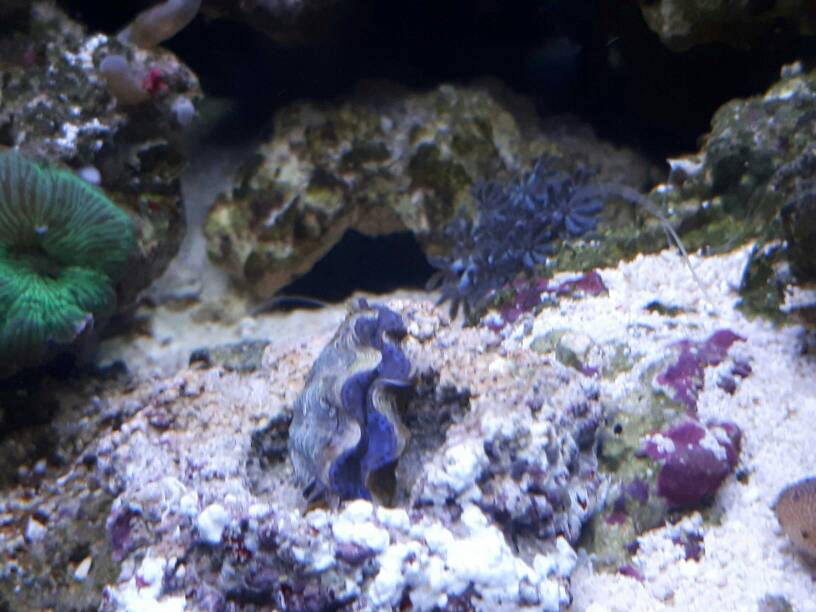
Getting a maxima clam from Lfs this weekend. It's quite a pricey investment so thought I'd ask advice on here. Have done research and feel that it should live at the bottom of my tank, possibly on a low rock or the sand. I believe it is already attached to a rock. My lighting is leds which are having a solid growth from my 3 lps corals so should be enough for the clam. Will also be dosing small amounts of live phytoplankton which is also having a good effect on my corals.
Does anyone have any more advice for me regarding this please?

Sent from my SM-A520F using Tapatalk
 
Sounds like you did some research. You should be ok. If you have not checked out the threads here in the clam section please do. If you have problems, post your question there. You should get quick answers.
 
I'm not a clam guy...

I was thinking maximas were really light demanding, and belong higher in the rockwork. T. derasa and gigas in the sand.
 
Yeah I agree with nereefpat. Clams require a lot of light, even the ones that require the least light still require more light than most SPS corals, let alone LPS corals. So that should not be your measure for a clam. For example, most montipora and acropora corals require a minimum light intensity of 80 to 110 µE/m2/s (PAR), and these are SPS corals that we assume require lots of light.

Clams that are found living in dimmest conditions still require 150 PAR as a minimum. This 150 is actually for T. tevoroa, which is a species of clam that I have never seen in the hobby. T. maxima corals require the most light among commonly kept clams (second if you assume Tridacna crocea is common), I would assume somewhere around 500 PAR. Check the article below I attached if you have not already.

I doubt you can get this much of light on sand bed unless you have MH lights or a strong LED-T5HO combo or a very strong LEDs. Some people also claim clams dont do good under LED lights.


http://www.advancedaquarist.com/2011/3/inverts


In addition to the light, clams can suck up a lot of calcium and alk, so be sure the measure these a lot and supplement when necessary, esspicaly in a small tank.

Also make sure you get a healthy specimen.
 
How big is your clam? How strong is your LED lighting ( in par)?
Very small, young Maximas could burn if suddenly thrust into intense lighting. If yours is, place it with its rock at the BOTTOM of your tank and leave it there for a couple of weeks. After then it can gradually be brought up closer to the lighting over the course of several weeks.
If your clam is large move it as close to the top of your aquarium as possible. Adult Maximas need a LOT of light. They get their nutrients from this light to photo synthesize, NOT from phytoplankton.
I had a nice Derasa AND a Maxima. They did well until my little Coral Beauty suddenly developed a hankering for them. She out of the blue developed the munchies! Had to give the clams to my LFS.
:confused::(
 
Last edited:
How big is your clam? How strong is your LED lightong ( in par)?
Very small, young Maximas could burn if suddenly thrust into intense lighting. If yours is, place it with its rock at the BOTTOM of your tank and leave it there for a couple of weeks. After then it can gradually be brought up closer to the lighting over the course of several weeks.
If your clam is large move it as close to the top of your aquarium as possible. Adult Maximas need a LOT of light. They get their nutrients from this light to photo synthesize, NOT from phytoplankton.
I had a nice Derasa AND a Maxima. They did well until my little Coral Beauty suddenly developed a hankering for them. She out of the blue developed the munchies! Had to give the clams to my LFS.
:confused::(
No idea about par. Suffice to say my lps are doing well. It's only small about 2-3 inches.

Sent from my SM-A520F using Tapatalk
 
All sorted, nicely situated in the tank.
5081c6539aa60f42304d50641427aec4.jpg
1bb33607cbe6dd420024d1d398eca869.jpg


Sent from my SM-A520F using Tapatalk
 
Healthy, open, slit not gaping, lots of light but start on the bottom, move up to the top slowly, make sure calcium alk and mag are always on point, twice a week phyto is a plus
Clams are not hard but need perfect water and for this specimen lots of light
 
Healthy, open, slit not gaping, lots of light but start on the bottom, move up to the top slowly, make sure calcium alk and mag are always on point, twice a week phyto is a plus
Clams are not hard but need perfect water and for this specimen lots of light
At the bottom attached to a rock. Will leave it there for a while as it grows. How will I know when to consider moving it upwards?

Sent from my SM-A520F using Tapatalk
 
I mean that's always a great question...when to move.
Firstly and I am sure you know this, once attached by the bysal gland thread, never pull him away, this mostly ends in death.

Secondly...behavior.....is his mantle open and nicely spread over the shell, colour is consistent with no white marks....then he's OK.....so I can leave him here....or move up to half way....

Then we go through the process above again, watch behavior, opening and colour, then I can leave him here or move him to the top.

This clam gets 75% of its food from its zooa, so light is important but hard to judge without a PAR meter.

Keep in mind, that water must be perfect, spot on NSW, consistent, supplement phyto but not overkill and polute the water, watch your cal, Alk, and mag ( which you need to do regardless) and dose manually strontium.......clams are great...really expensive but just beautiful.....
 
I mean that's always a great question...when to move.
Firstly and I am sure you know this, once attached by the bysal gland thread, never pull him away, this mostly ends in death.

Secondly...behavior.....is his mantle open and nicely spread over the shell, colour is consistent with no white marks....then he's OK.....so I can leave him here....or move up to half way....

Then we go through the process above again, watch behavior, opening and colour, then I can leave him here or move him to the top.

This clam gets 75% of its food from its zooa, so light is important but hard to judge without a PAR meter.

Keep in mind, that water must be perfect, spot on NSW, consistent, supplement phyto but not overkill and polute the water, watch your cal, Alk, and mag ( which you need to do regardless) and dose manually strontium.......clams are great...really expensive but just beautiful.....
Thanks for the reply. Will monitor closely. It is small at the moment but stunning. You're right it was expensive and I did research it beforehand. Going to enjoy looking after it and watching it grow.

Sent from my SM-A520F using Tapatalk
 
Hoping he's at least 2 inches, under this makes them Harder to keep as they do not have a large enough surface area and zooa in the mantle for photosynthesis....if under two inches, maybe double the phyto frequency.....if two inches or more, should be just fine..
 
Hoping he's at least 2 inches, under this makes them Harder to keep as they do not have a large enough surface area and zooa in the mantle for photosynthesis....if under two inches, maybe double the phyto frequency.....if two inches or more, should be just fine..
Should I target feed the phytoplankton or is it enough to just put it in the water and let it get dispersed so things can filter feed?

Sent from my SM-A520F using Tapatalk
 
Should I target feed the phytoplankton or is it enough to just put it in the water and let it get dispersed so things can filter feed?

Sent from my SM-A520F using Tapatalk

Disperse it. You might want to turn of the skimmer. You cant target feed clams, they will cough out what you try to feed. Be careful not to over-do it, phyto can spike nutrients very easily.

Also, according to James Fatherree clams smaller than 3 inches needing feeding is a myth.

http://www.advancedaquarist.com/2010/7/inverts
 
Disperse it. You might want to turn of the skimmer. You cant target feed clams, they will cough out what you try to feed. Be careful not to over-do it, phyto can spike nutrients very easily.

Also, according to James Fatherree clams smaller than 3 inches needing feeding is a myth.

http://www.advancedaquarist.com/2010/7/inverts
Thanks for the information. Don't have a skimmer running so dispersion works well with the lps corals. Hopefully the clam will appreciate it too.

Sent from my SM-A520F using Tapatalk
 
Think so.
60fdaf46076eff7c24077229b9958f33.jpg


Sent from my SM-A520F using Tapatalk
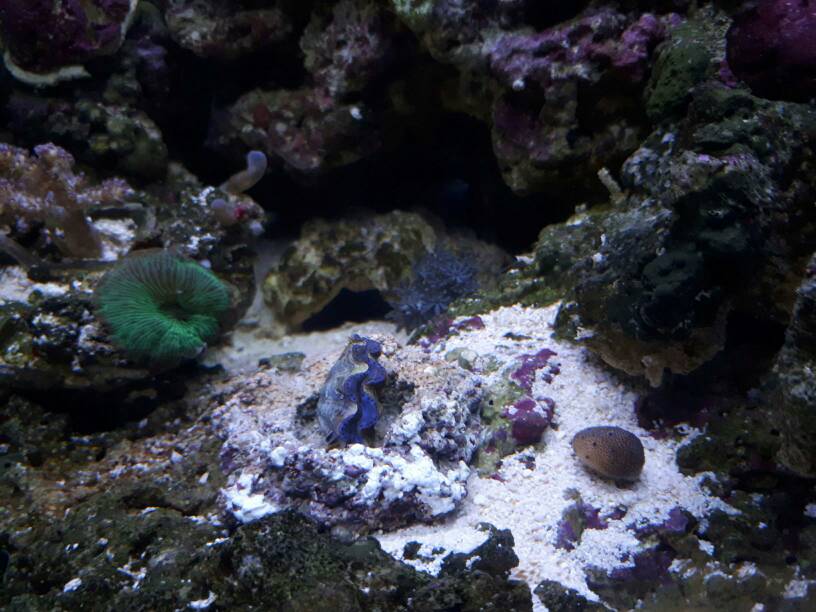
Hard to see from the picture. It is generally not easy to see unless the clam retracts its mantle. Generally, it is easier to see it when the lights are off since clams partially retract their mantes during the night. It is normal for newly acquired clams to sometimes not have any new growth (shipping stress, new lights and etc.).Try to keep a record of how much new shell materiel is added per month. A young clam like that should grow rapidly for the first year or so. If it doesn't show any shell growth for a month, it indicates it is starving. If so you might want to move it up.

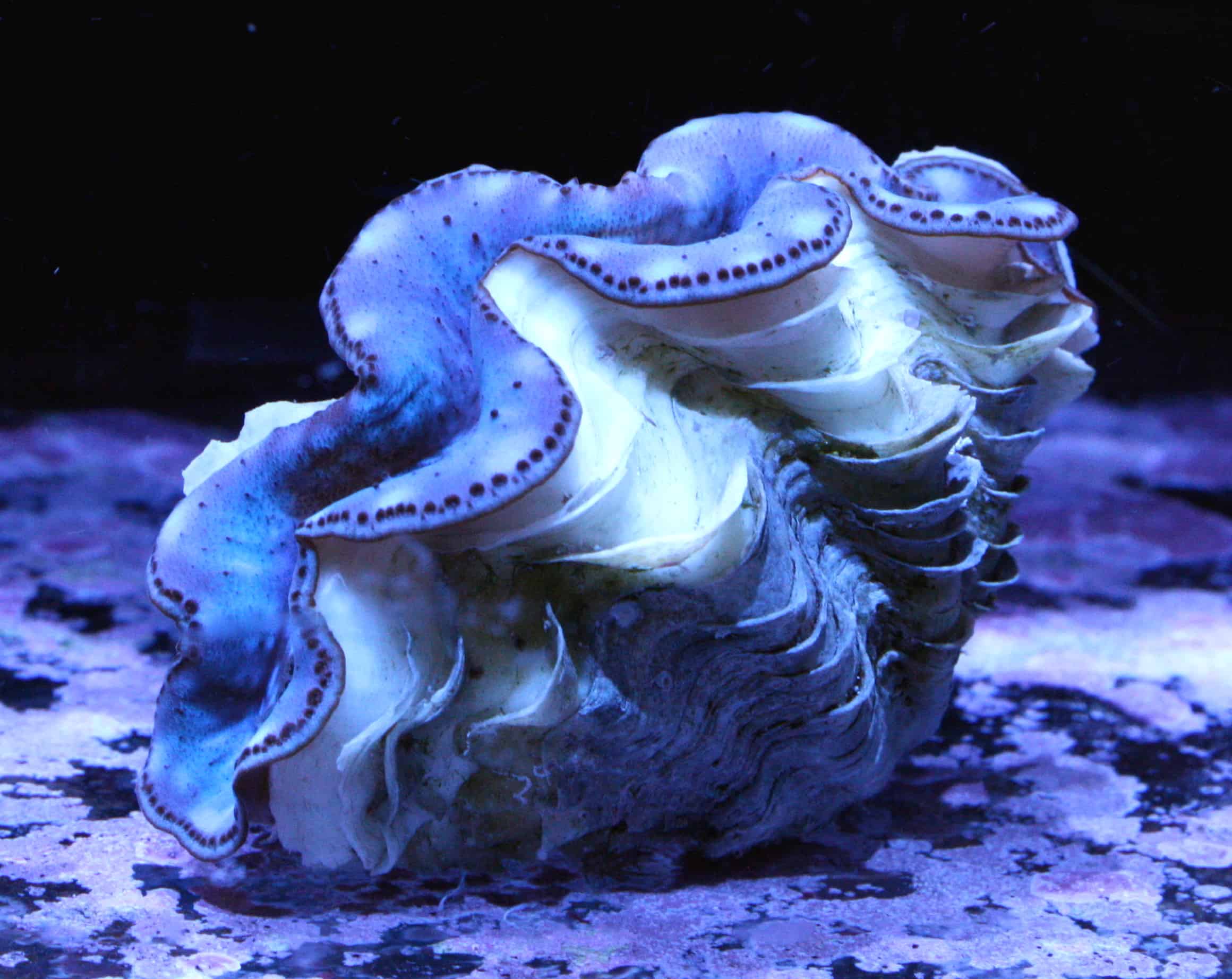
New growth would be very clean white like porcelain (and should be outside of the shell, shell is always white inside). It should look something like this;

IMG_1382.jpg
 
Back
Top